


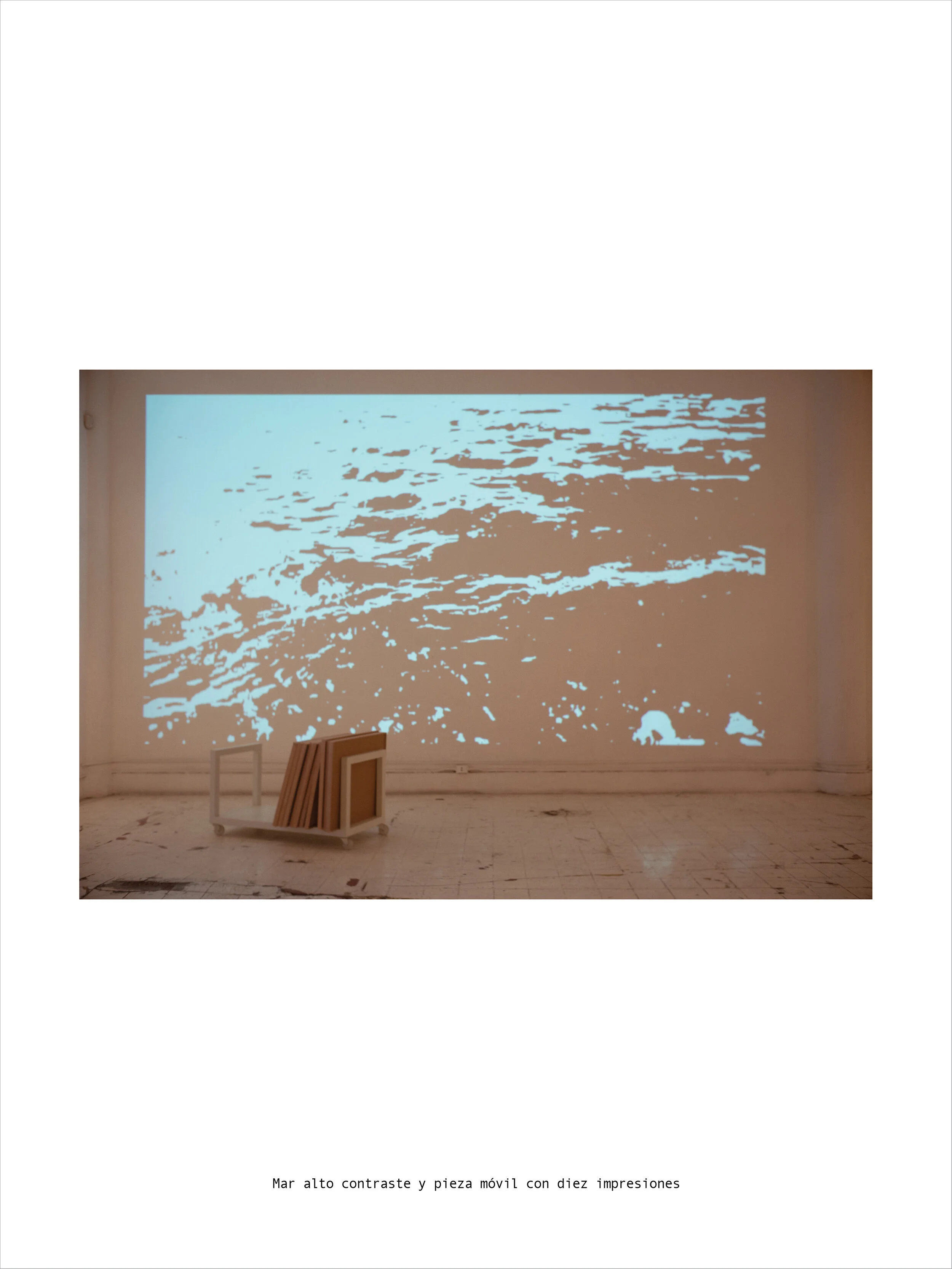


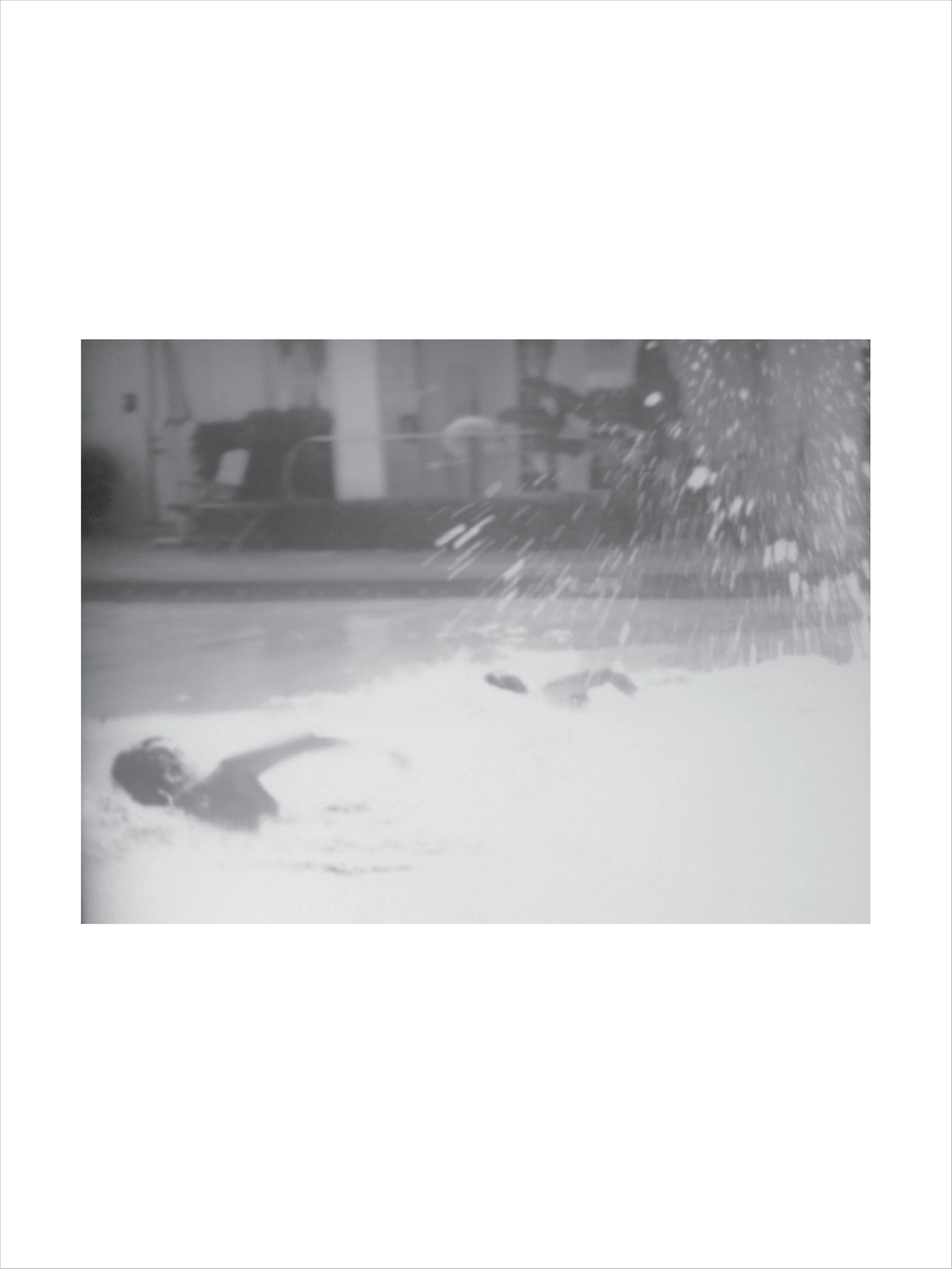


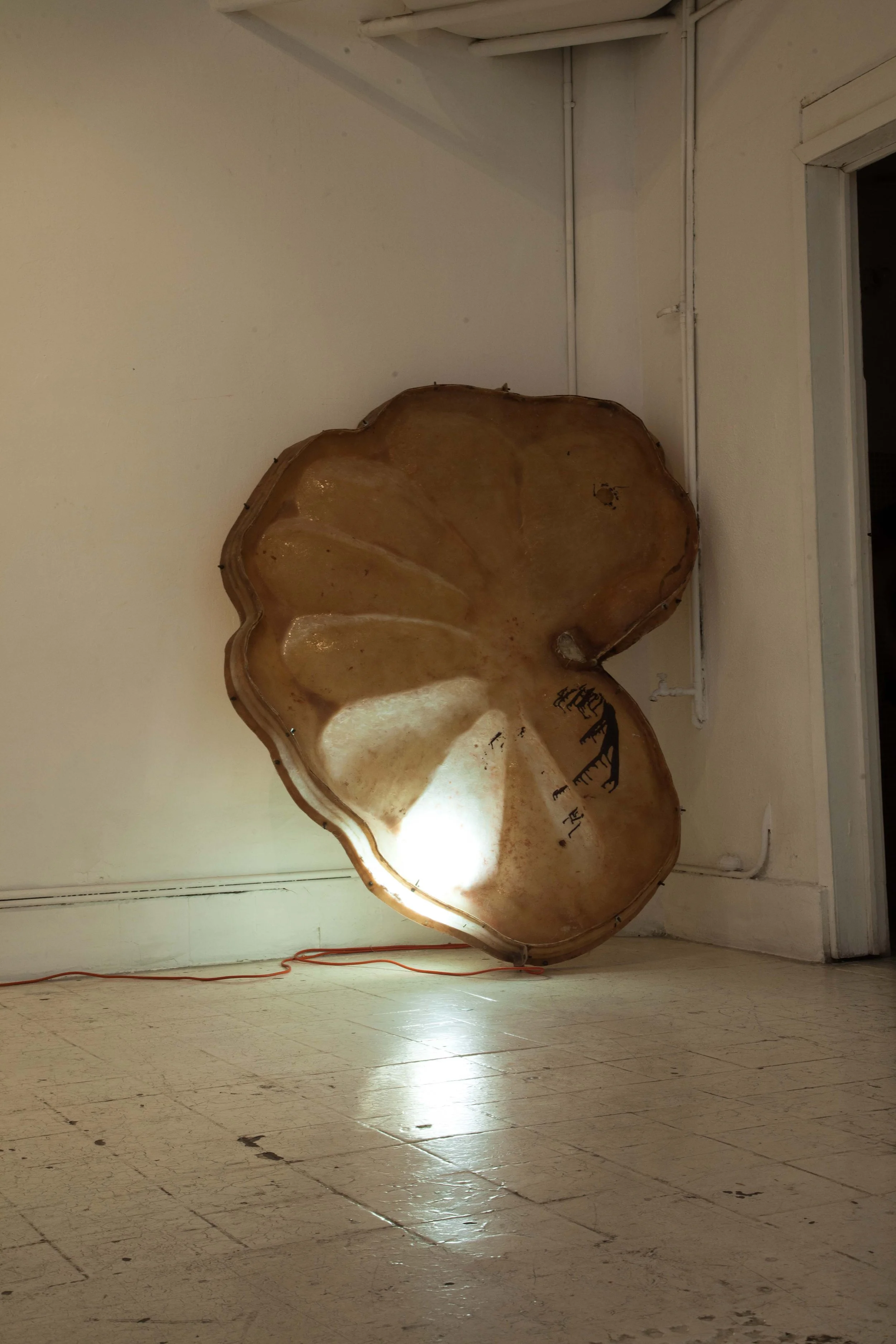
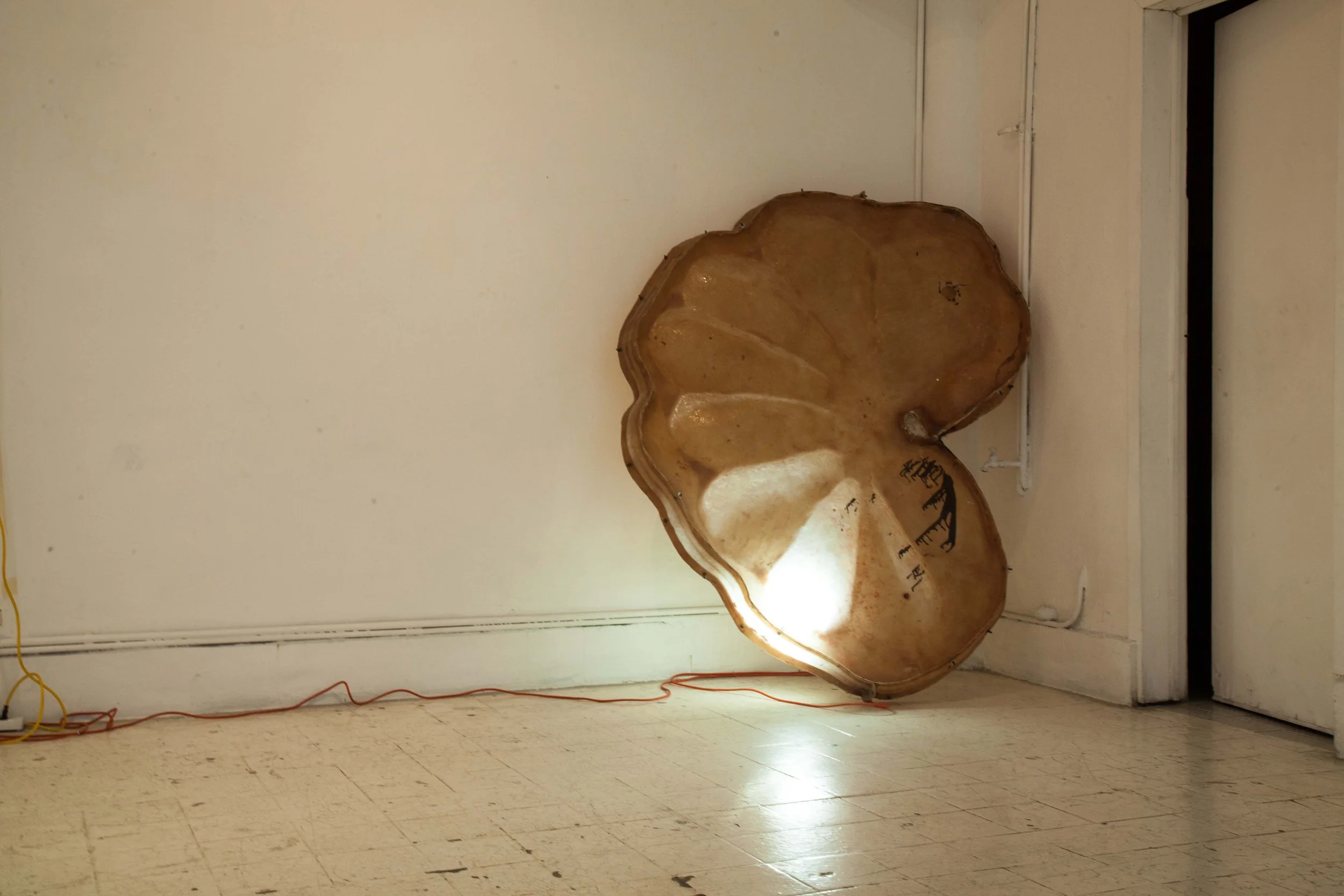
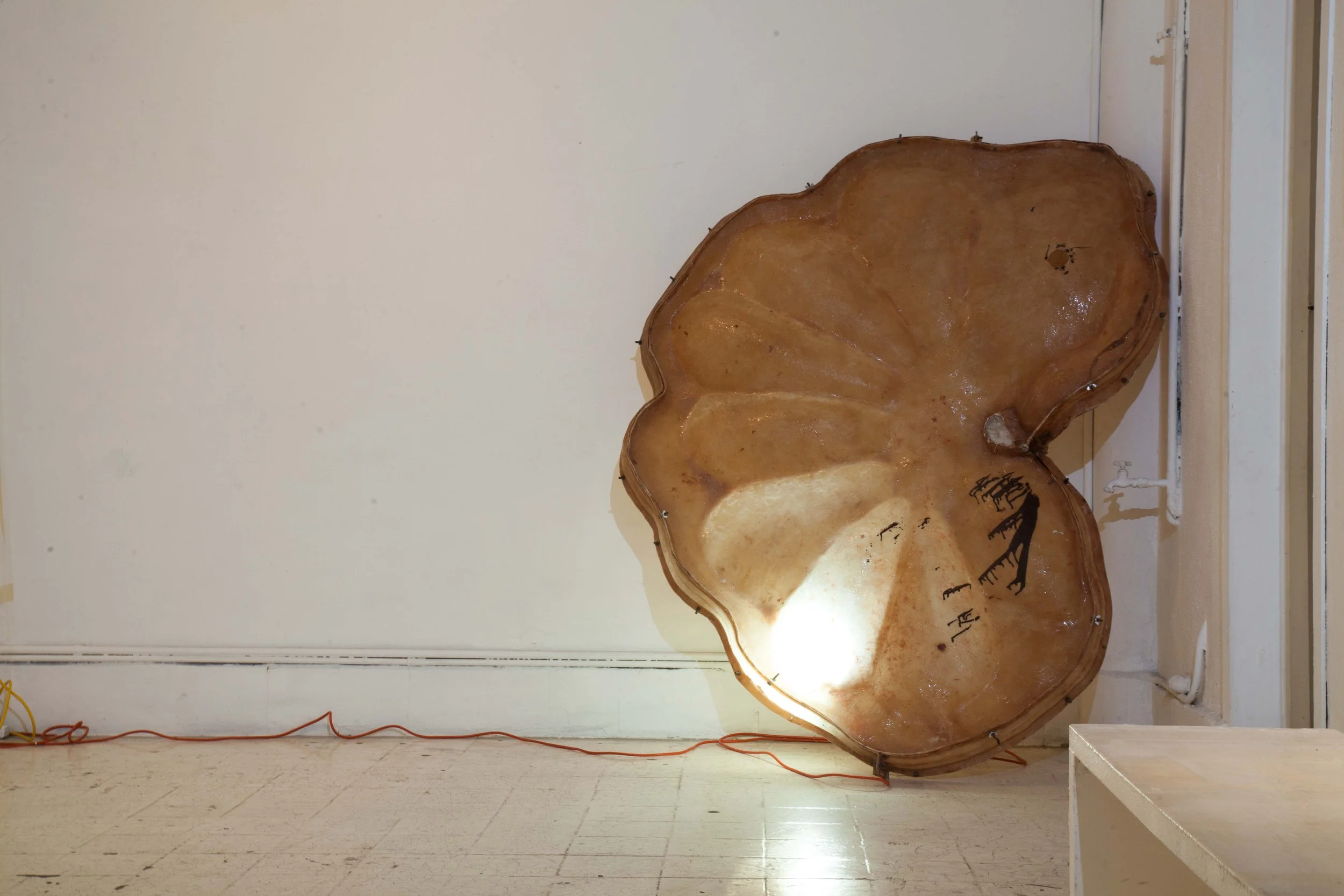
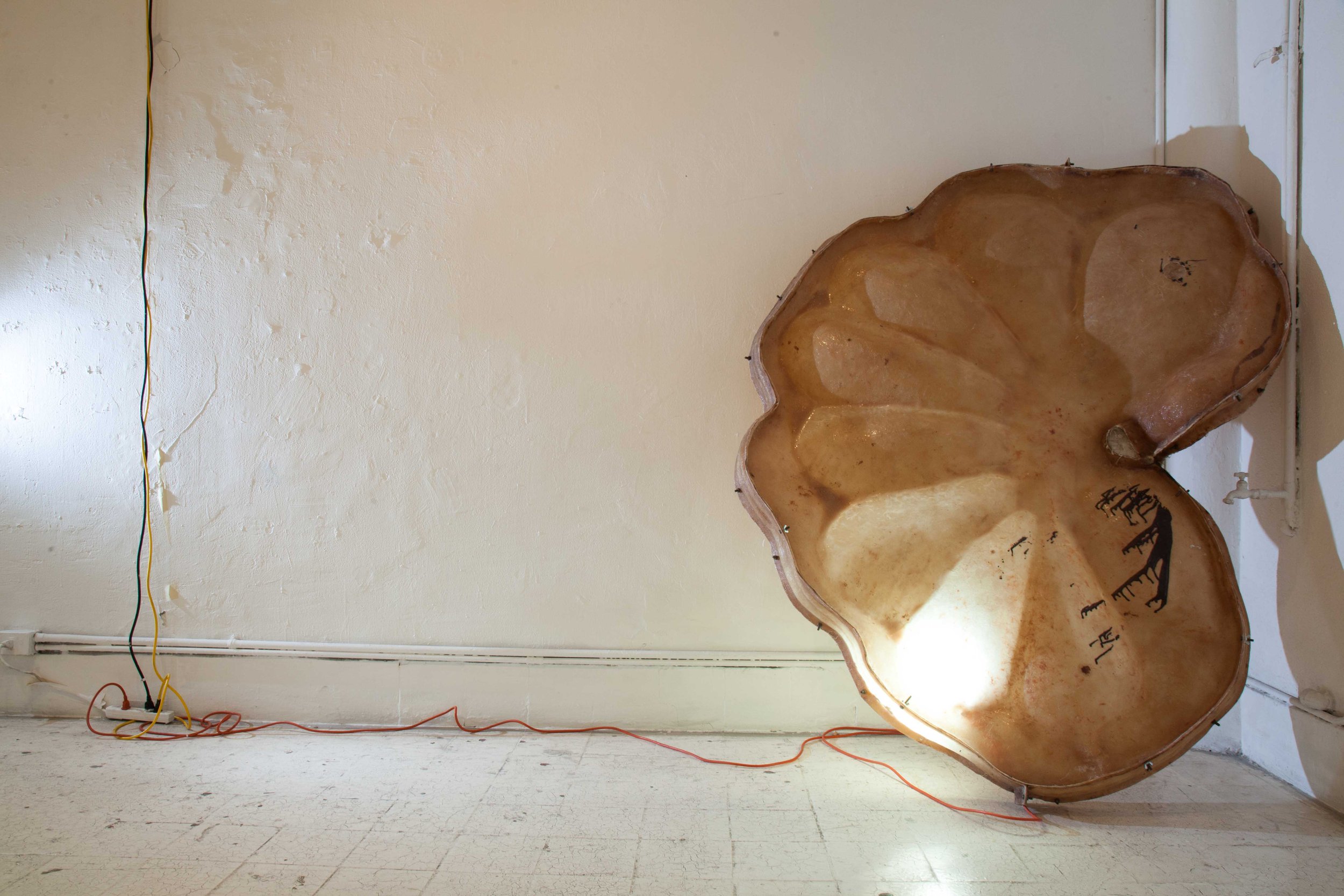
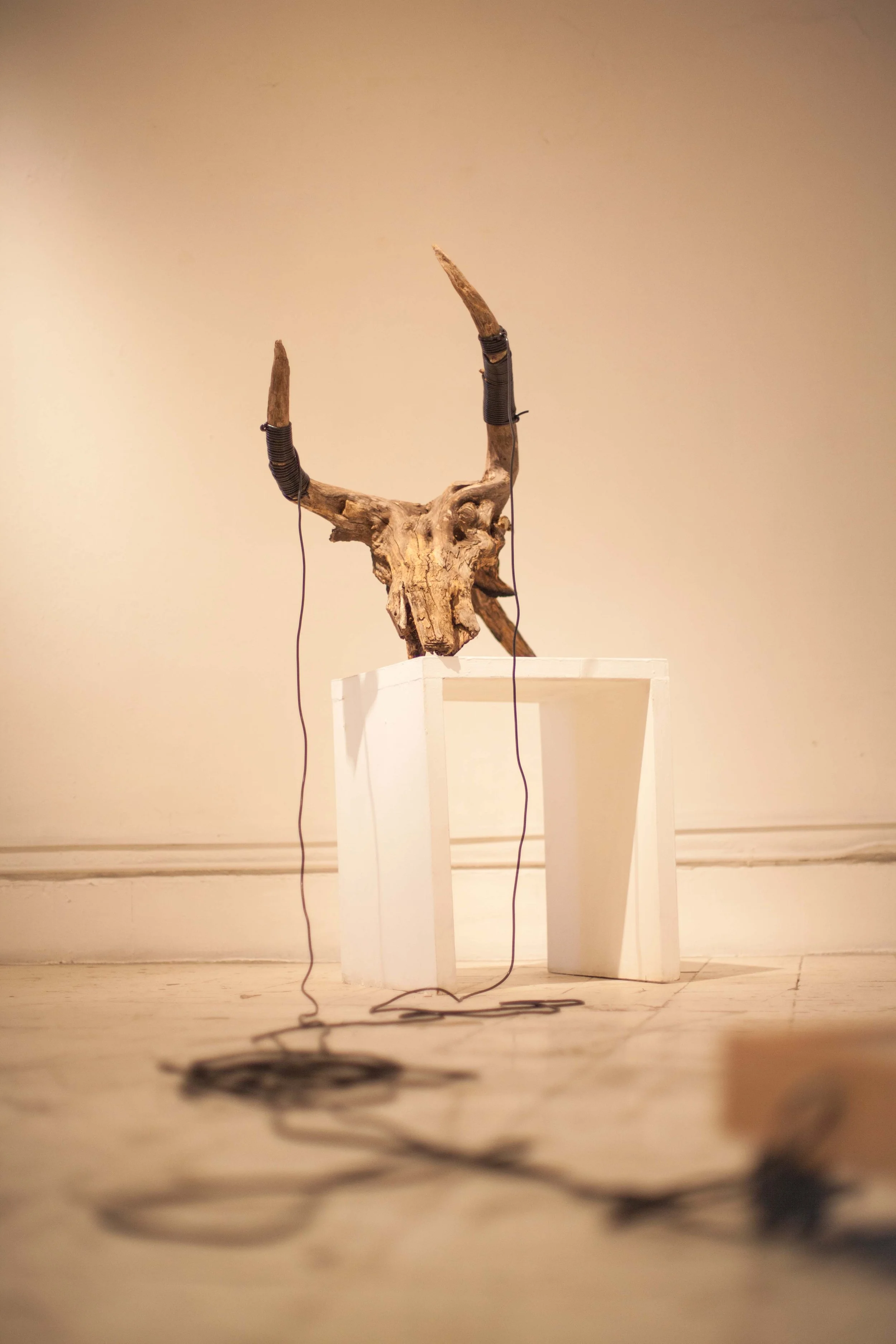
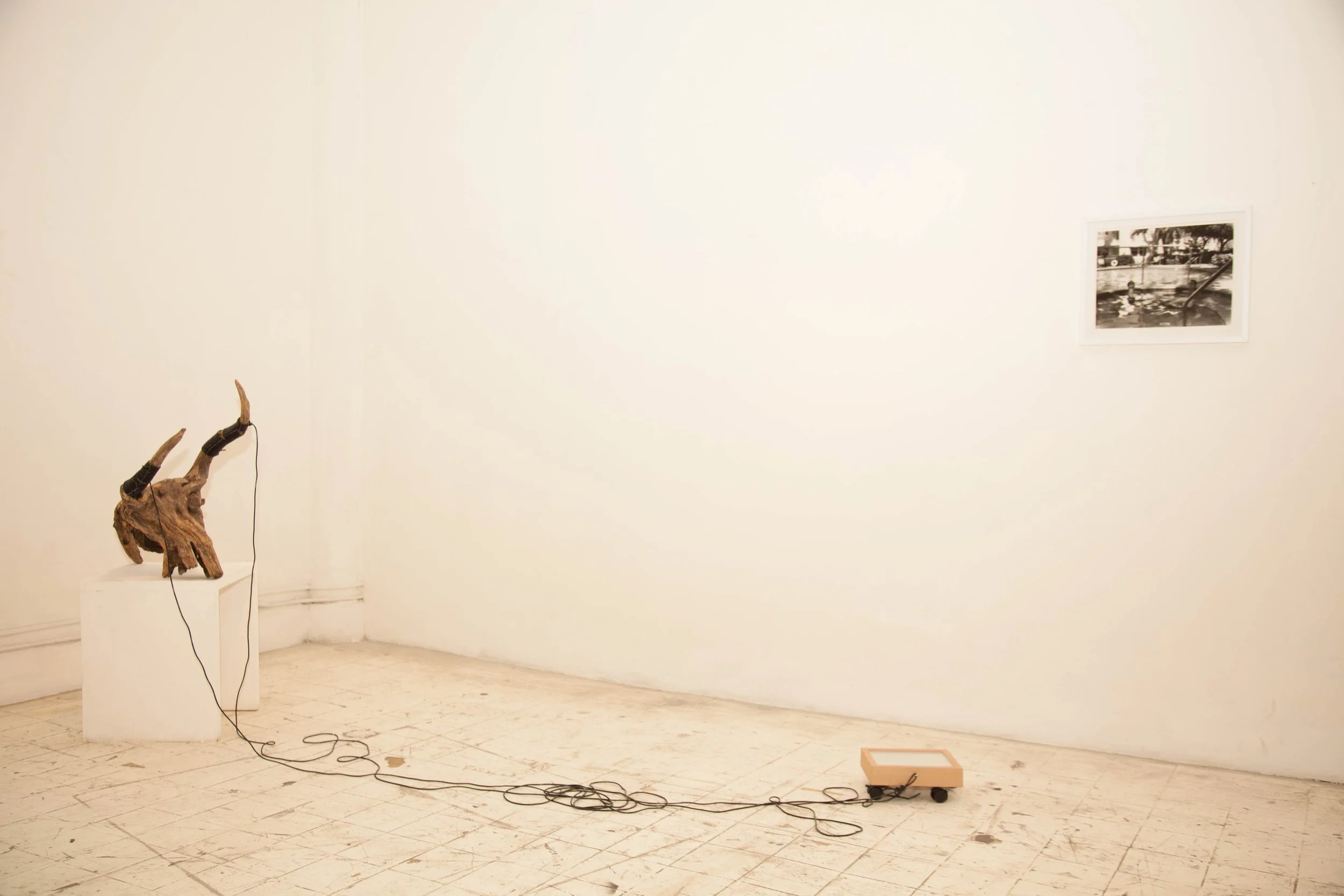
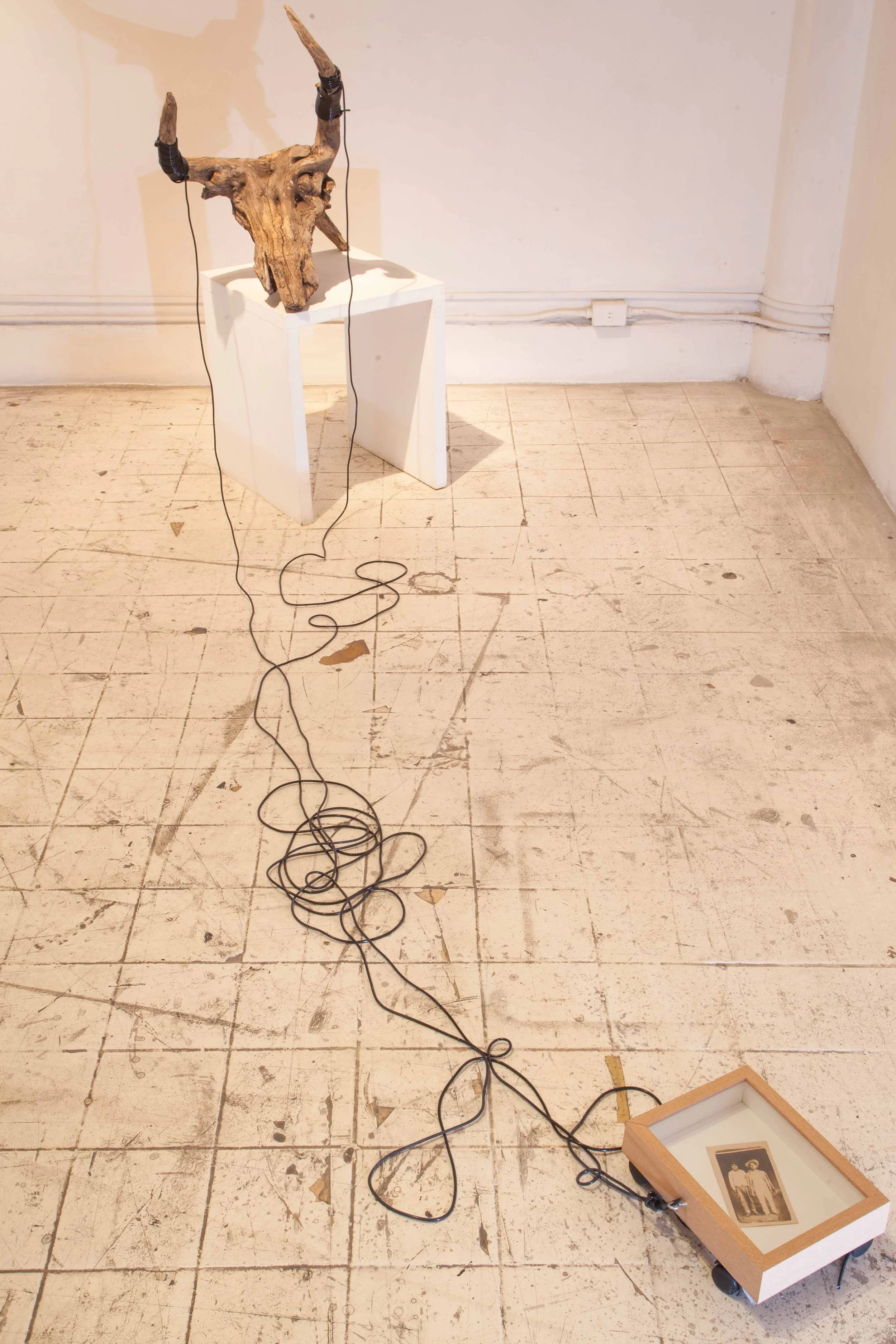
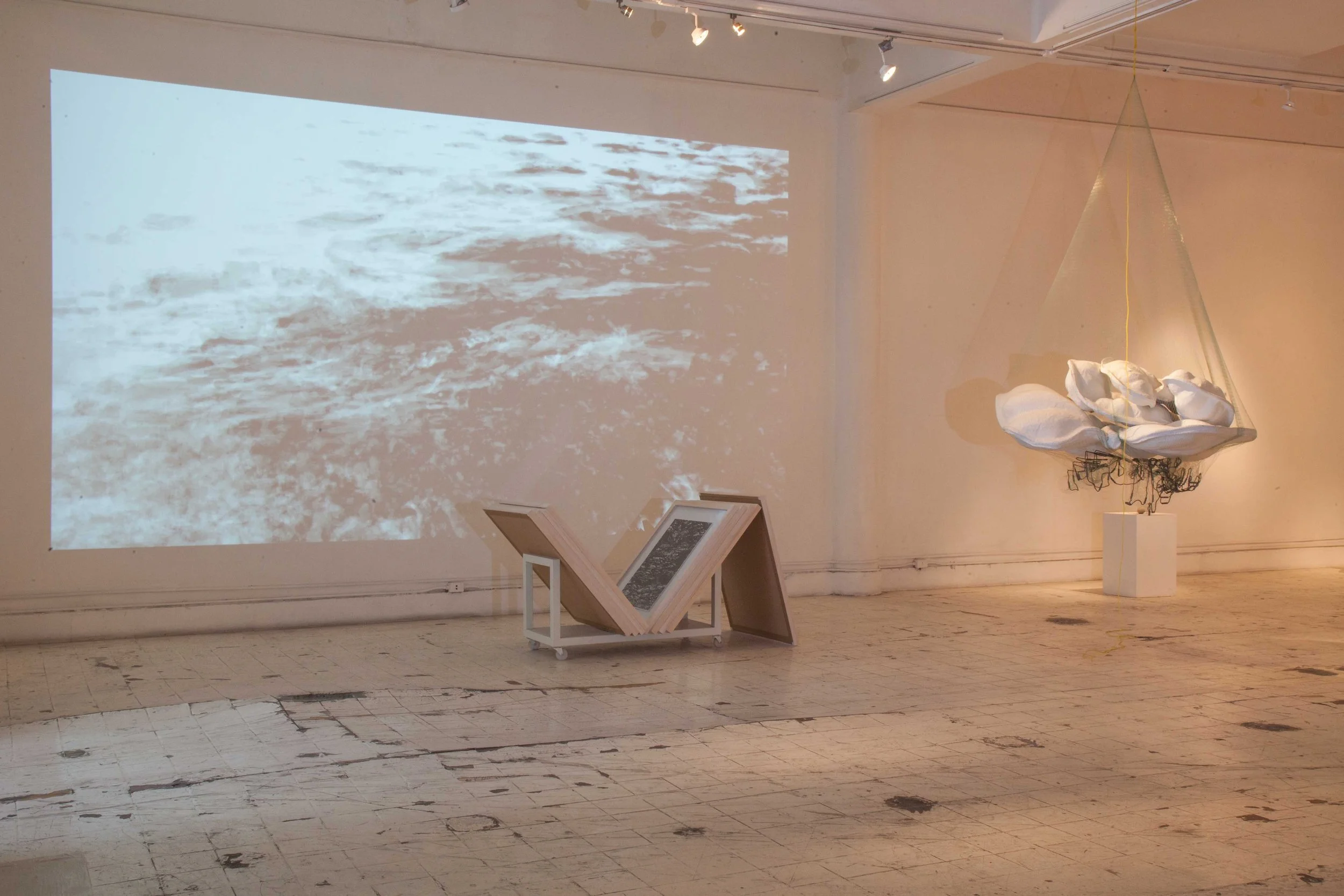
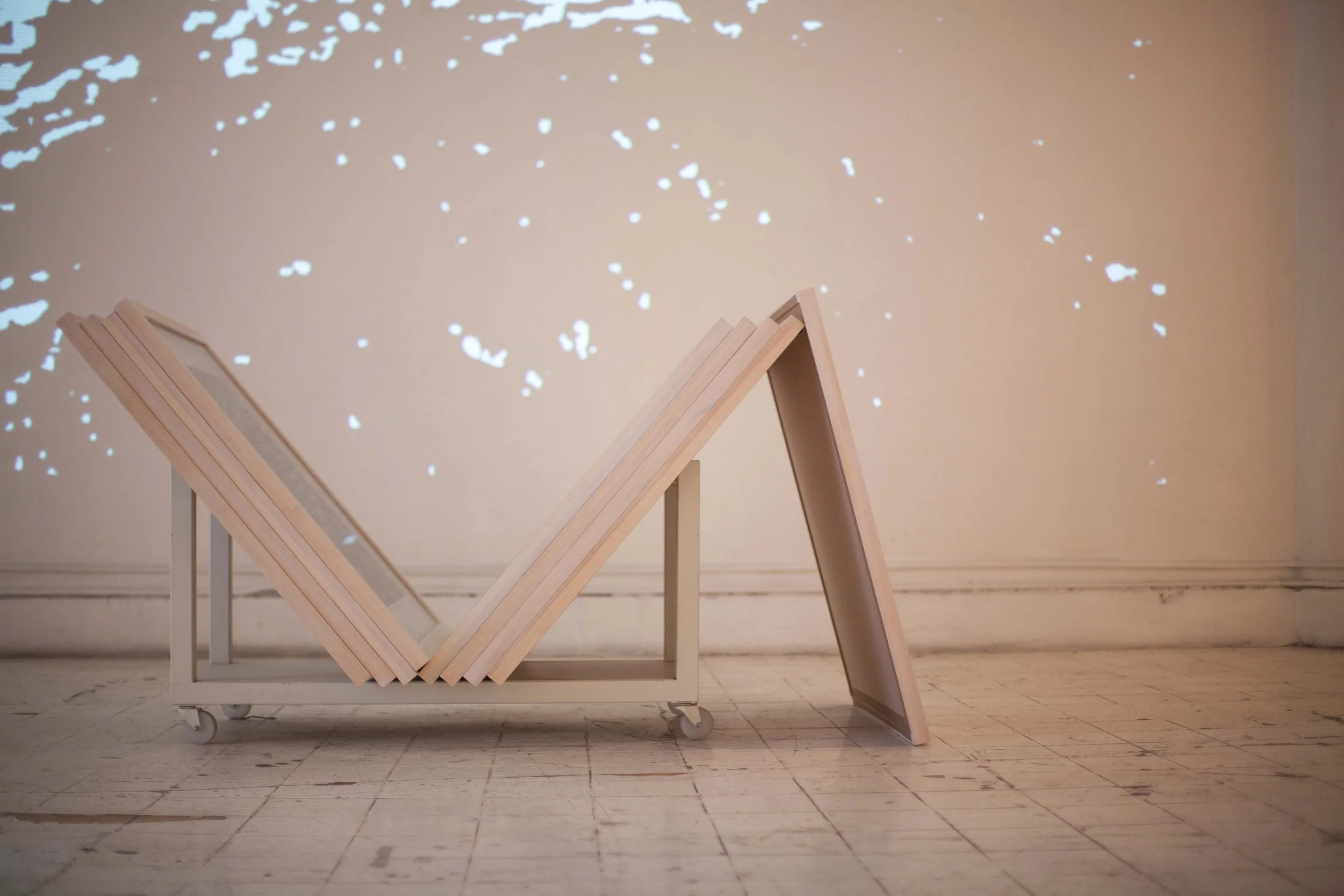
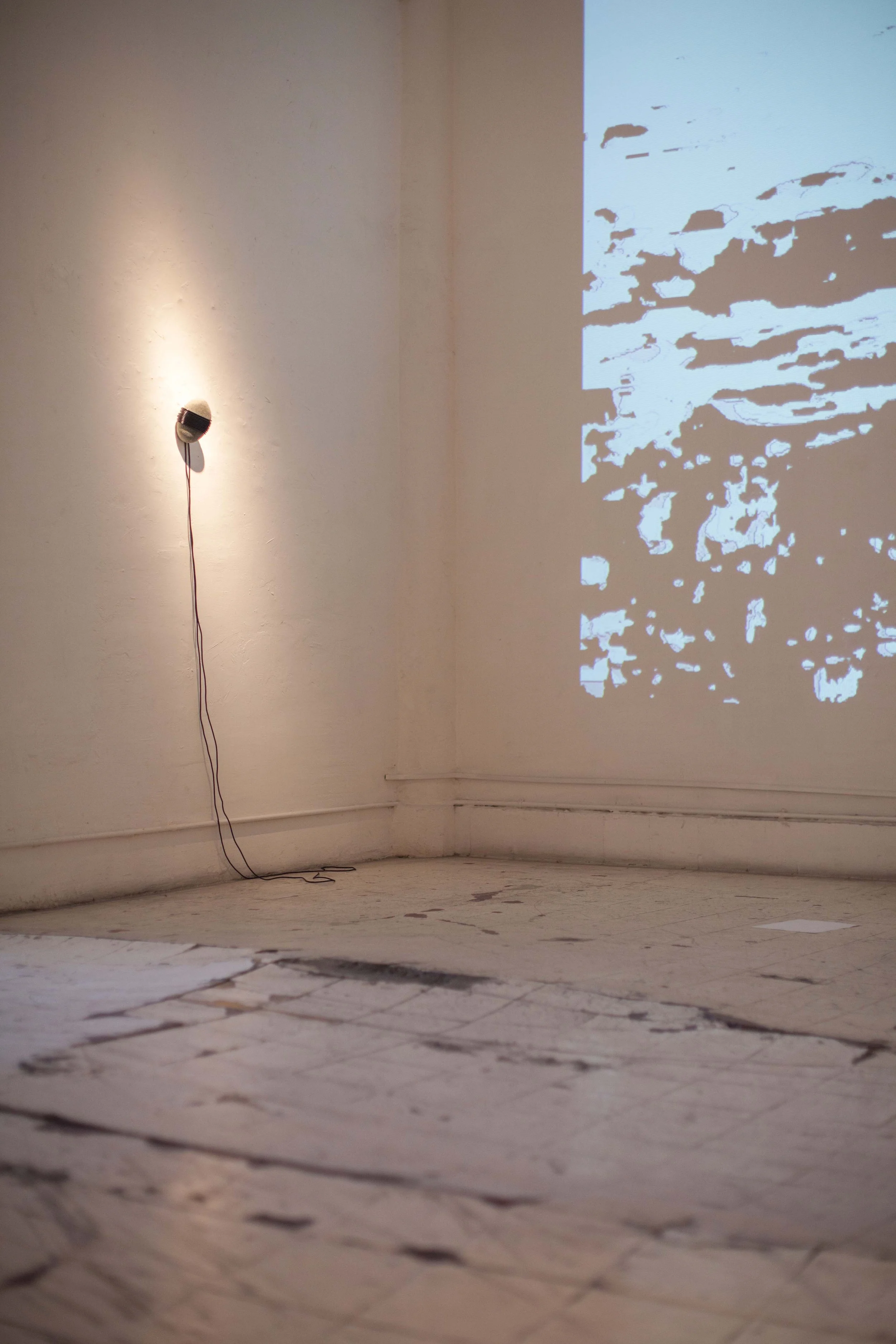
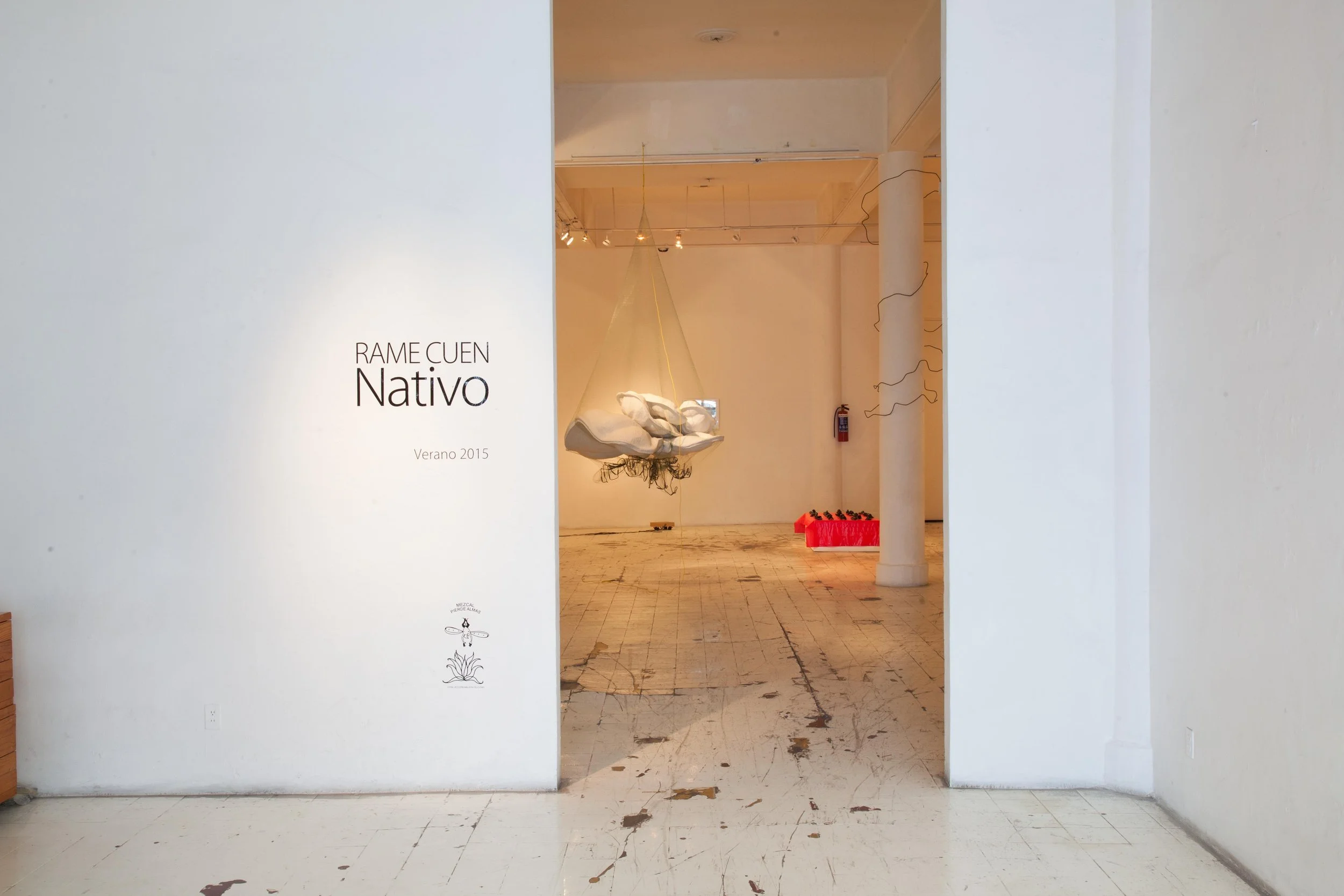
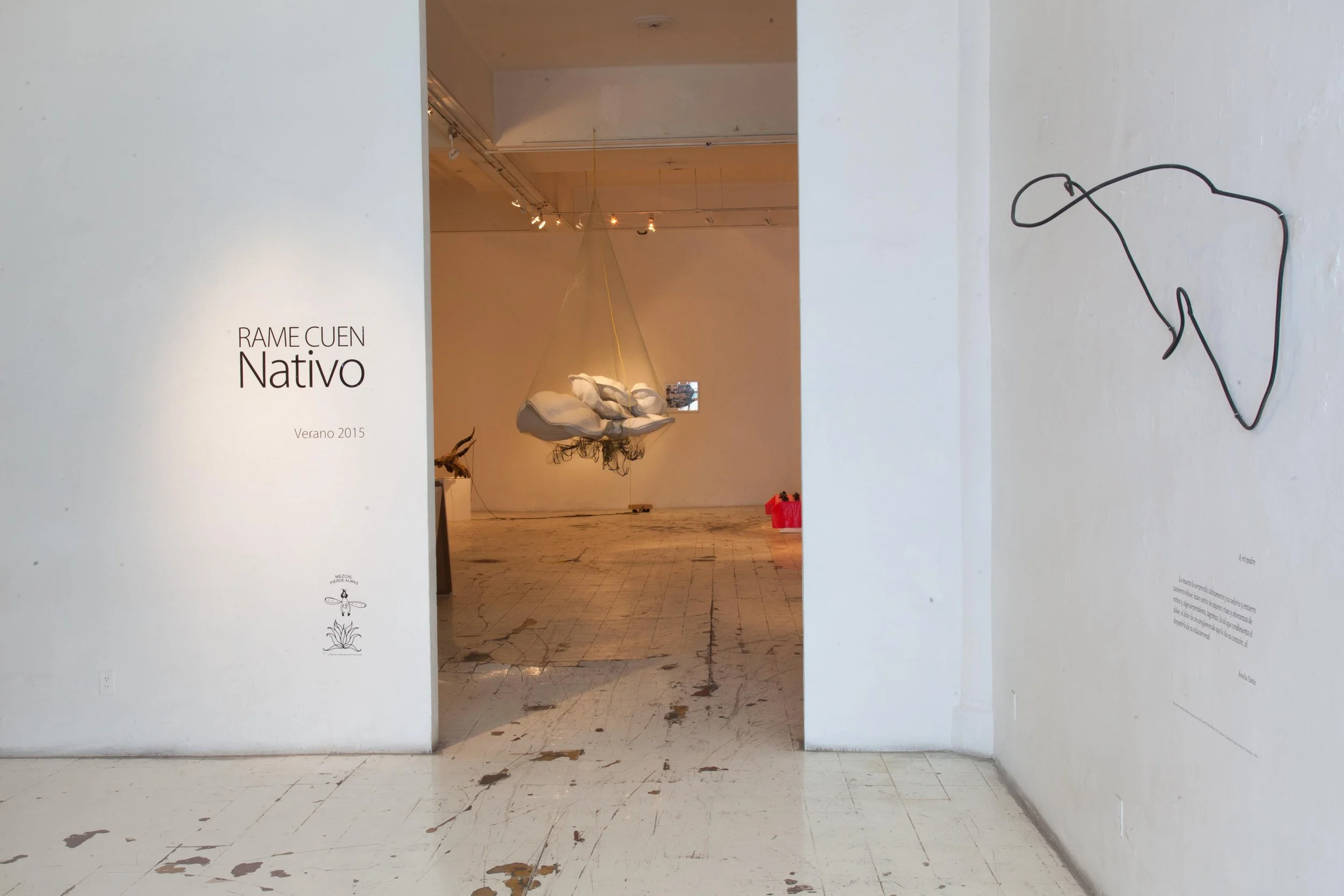
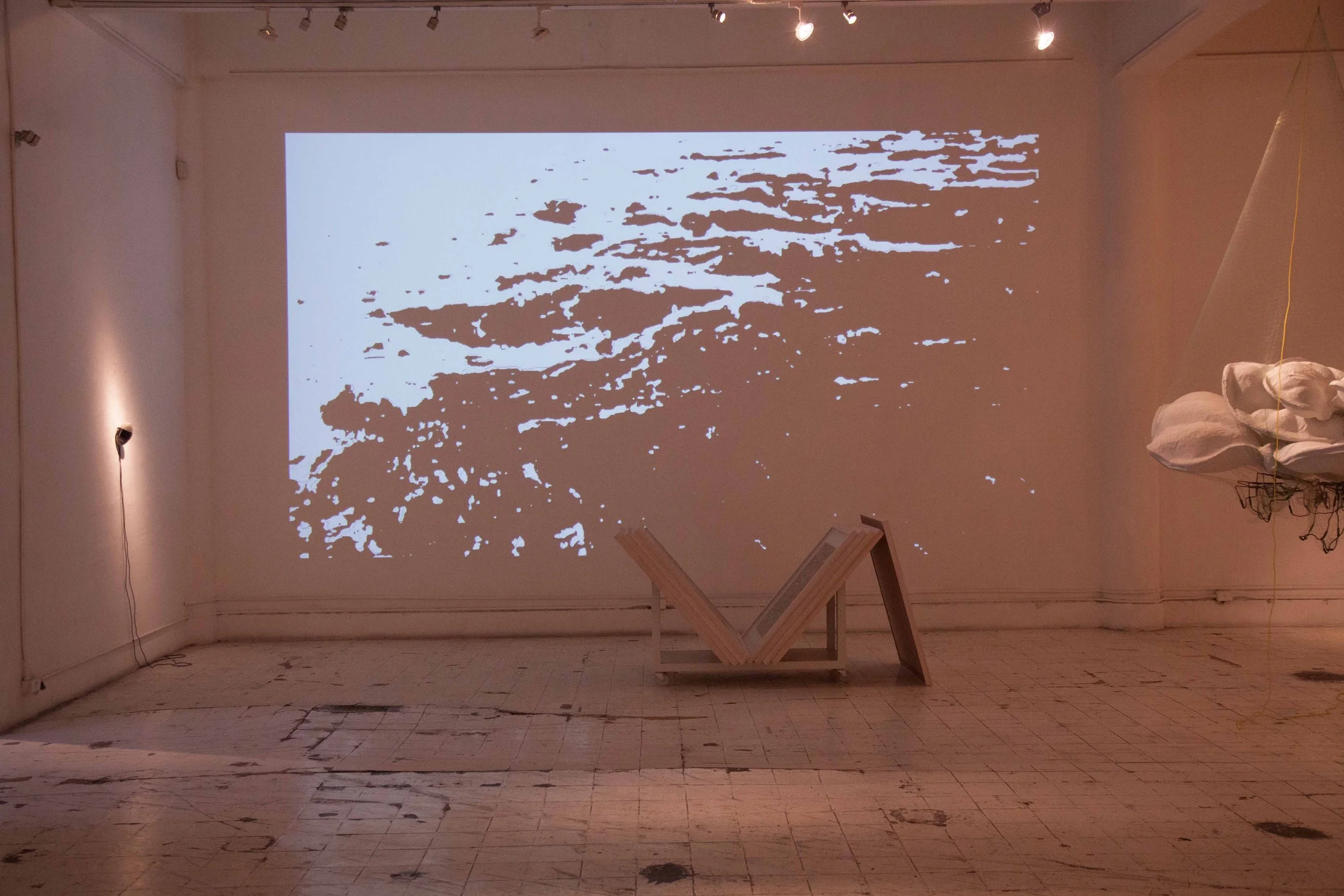
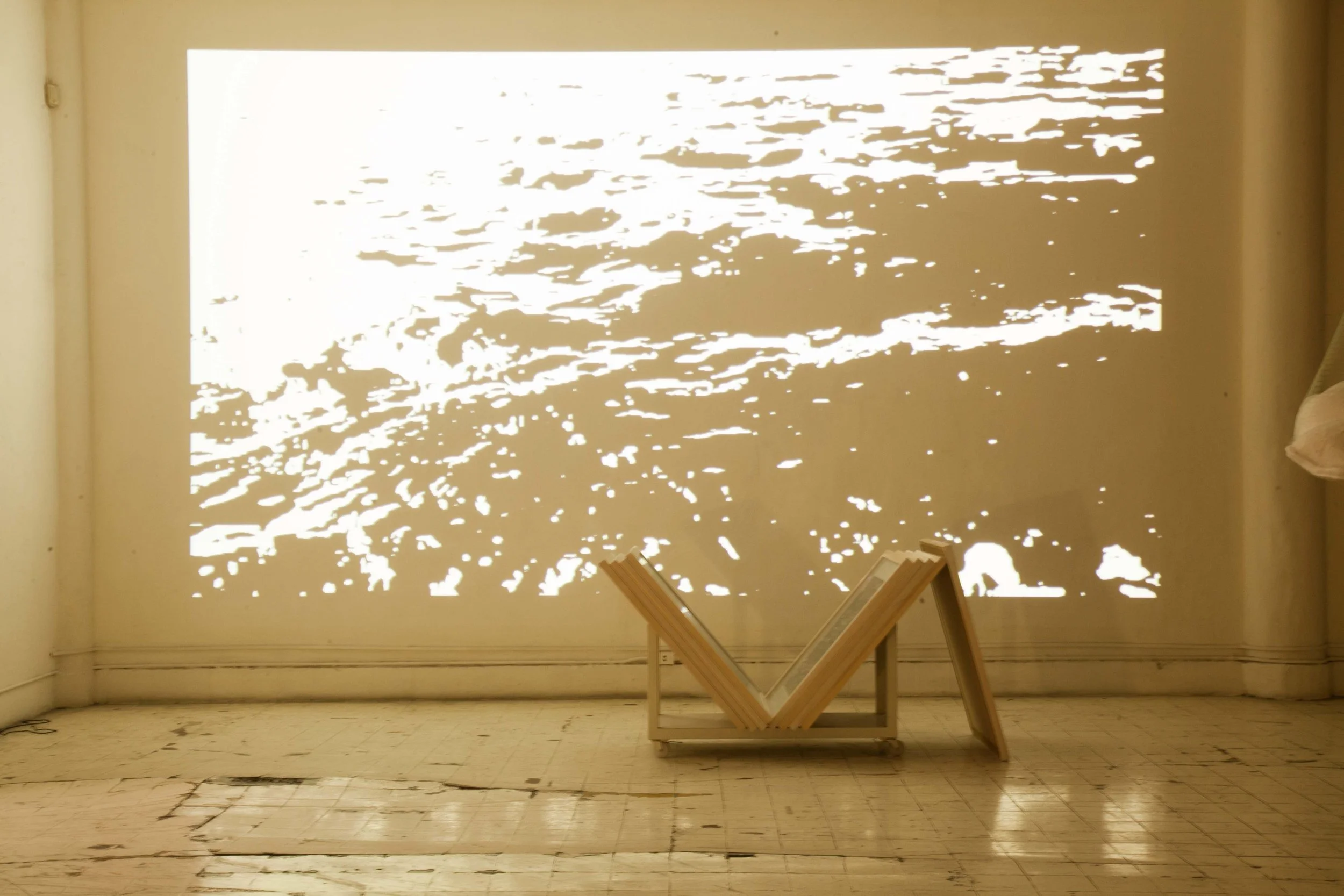
La primera raíz, nombrada Orgánico, salió en el estudio de Rame. Una nochecita de mayo del 2013. Amigos y colegas nos dimos cita en el taller del artista. Ahí conocimos los enormes frutos de Parota, que aluzados desde dentro proyectaban las imágenes de un lugar en la Costa de Oaxaca. El primer paso del camino hacia el terruño paterno. La segunda y la tercera expansión. fueron en el IAGO Juárez y en el Jardín Etnobotánico: ambas instalaciones trabajaron con el Huanacaxtle en diferentes Materiales, película 8mm, madera, bronce y resina. En la primera una proyección y un ensamble y en la segunda los frutos del árbol en la propuesta artística de Rame: referir su arte al lugar abierto y al aire libre. Ahí podemos reconocer el anclaje de la propuesta disciplinar de Estudio Abierto practicada por el artista desde entonces.
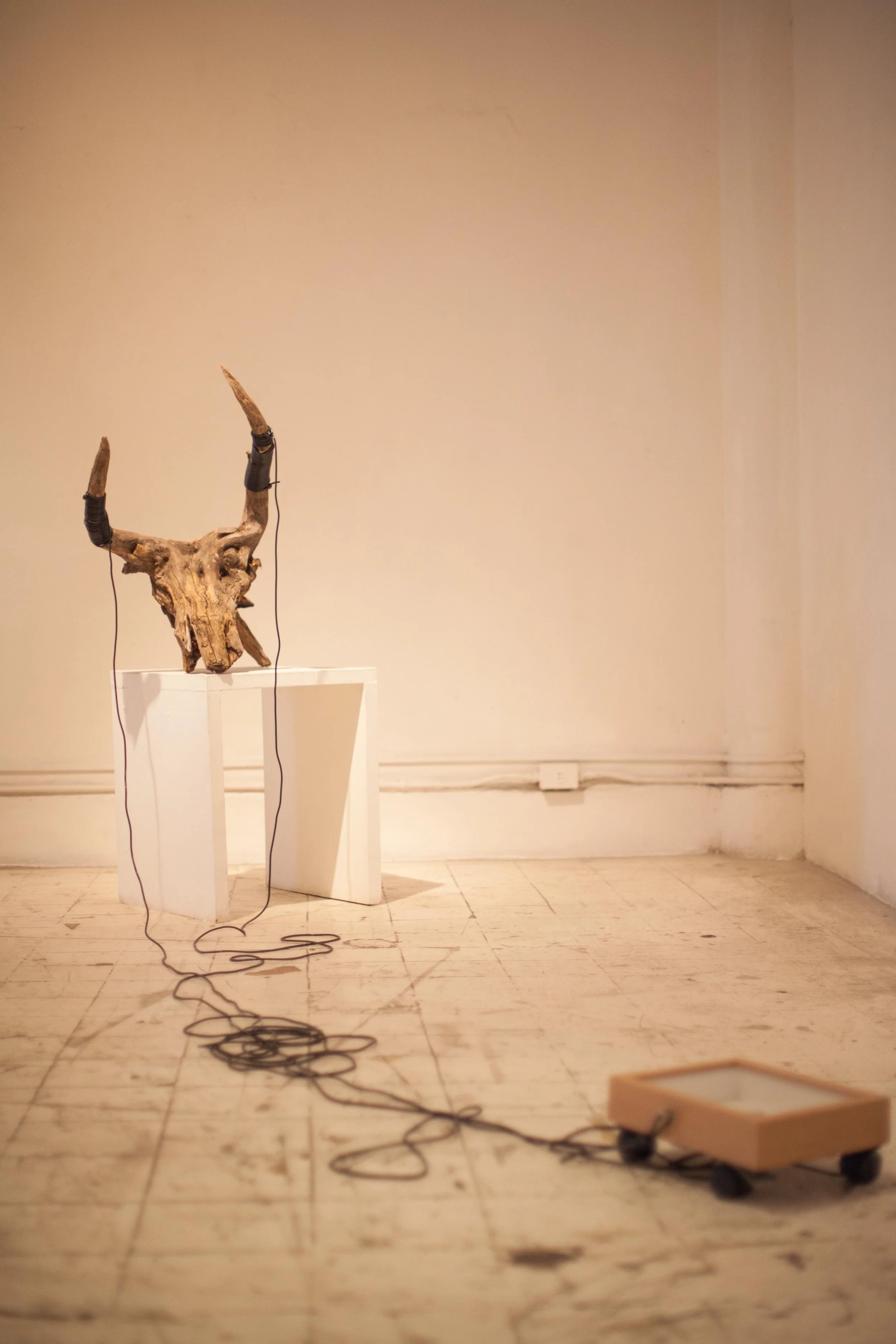
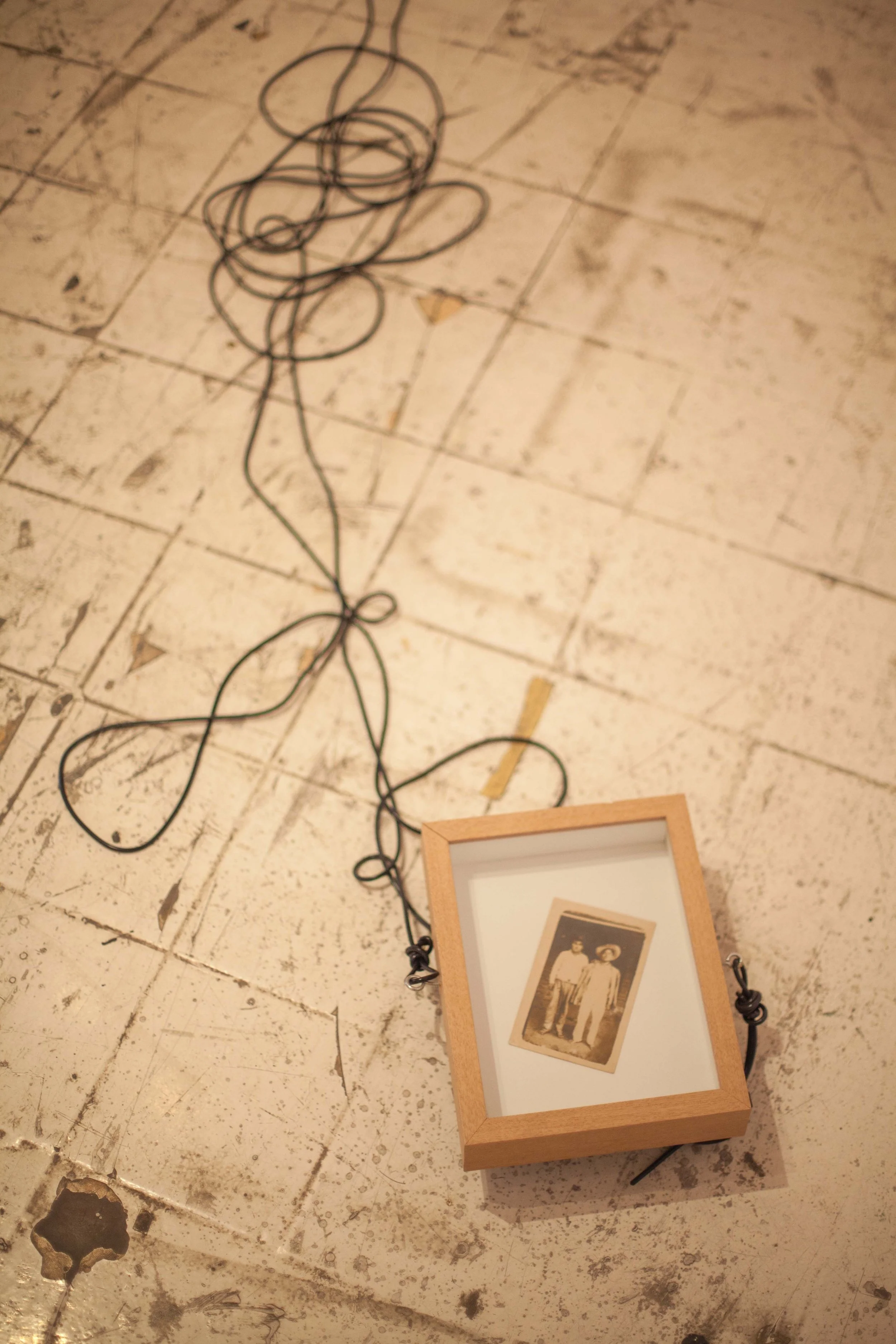
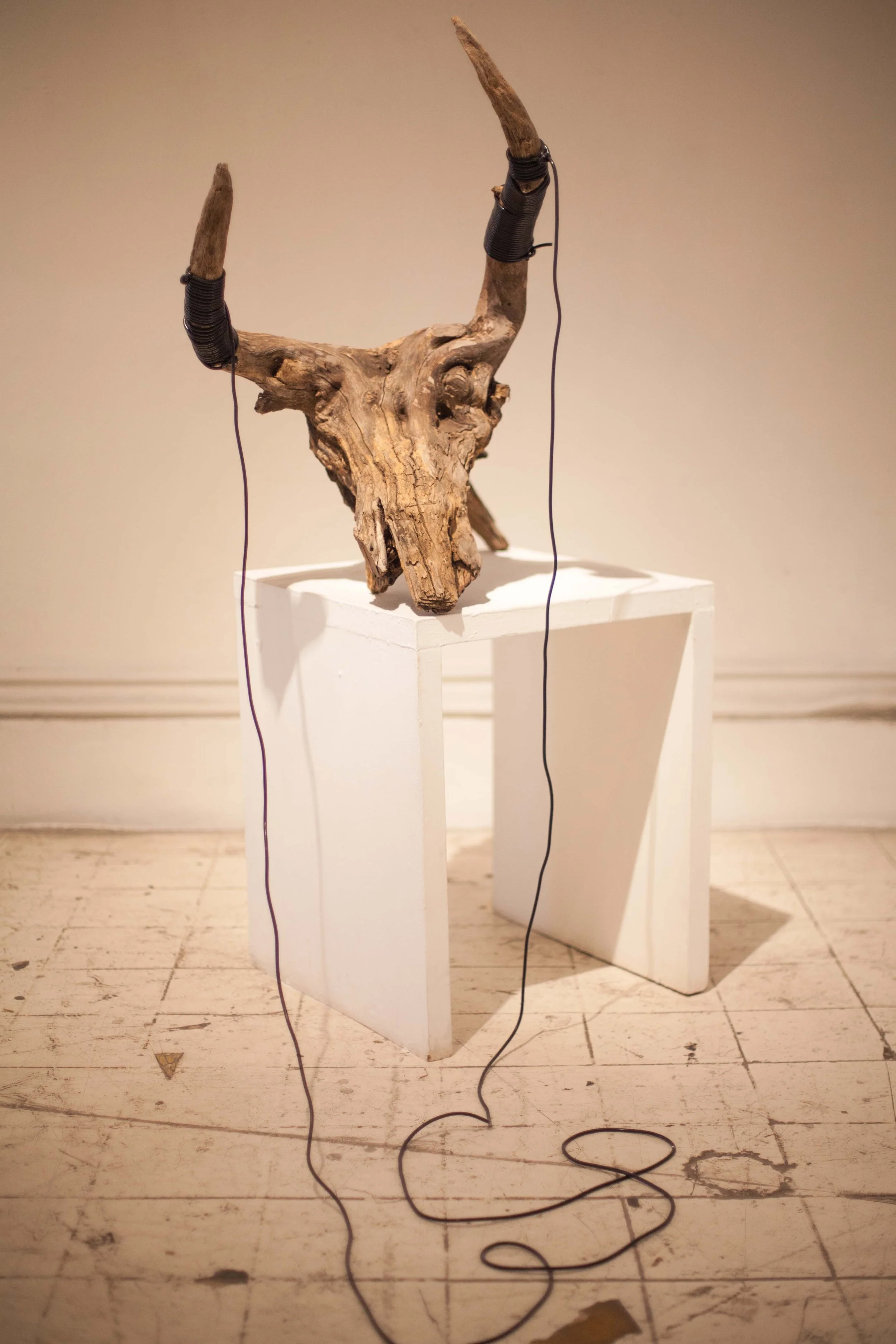
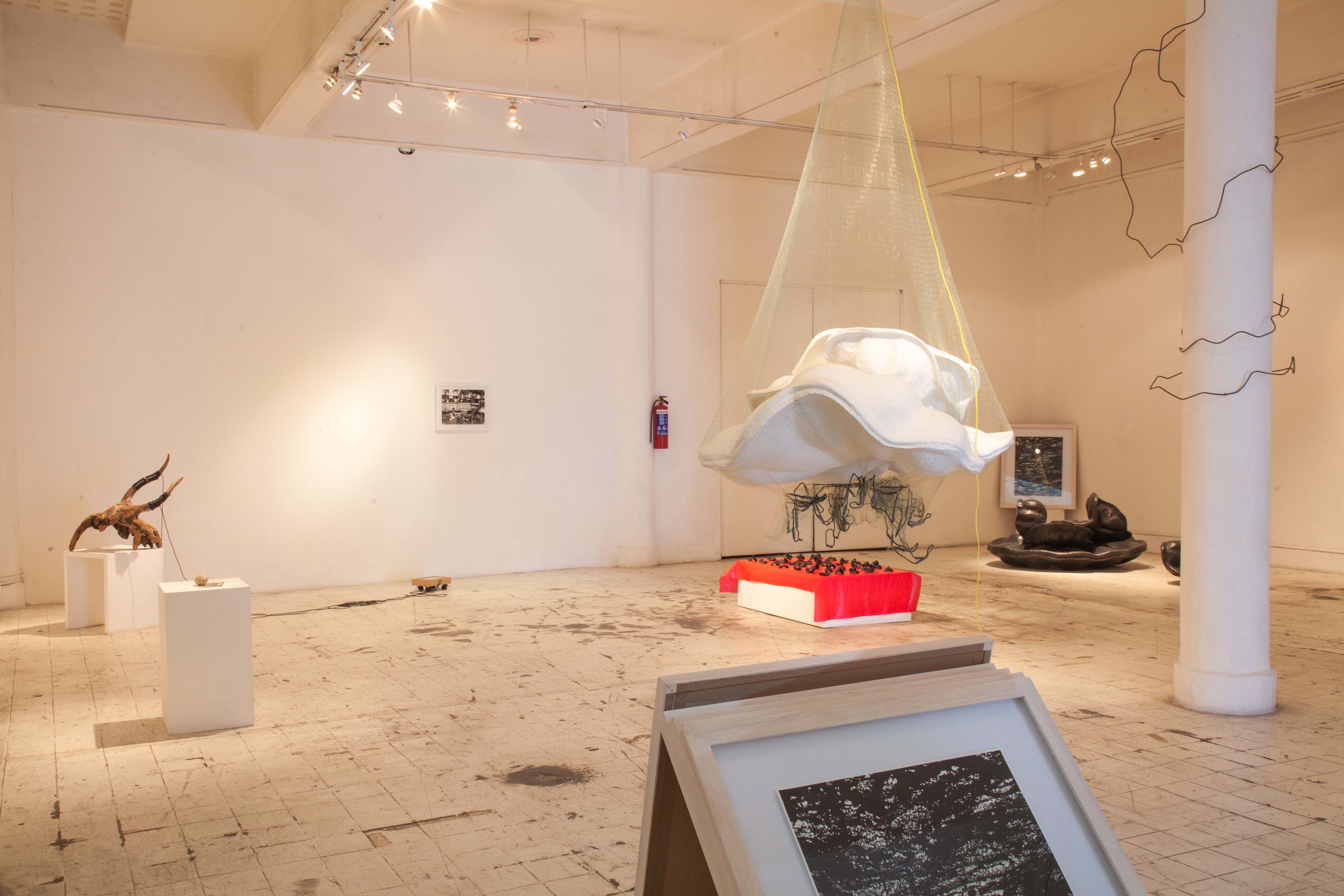
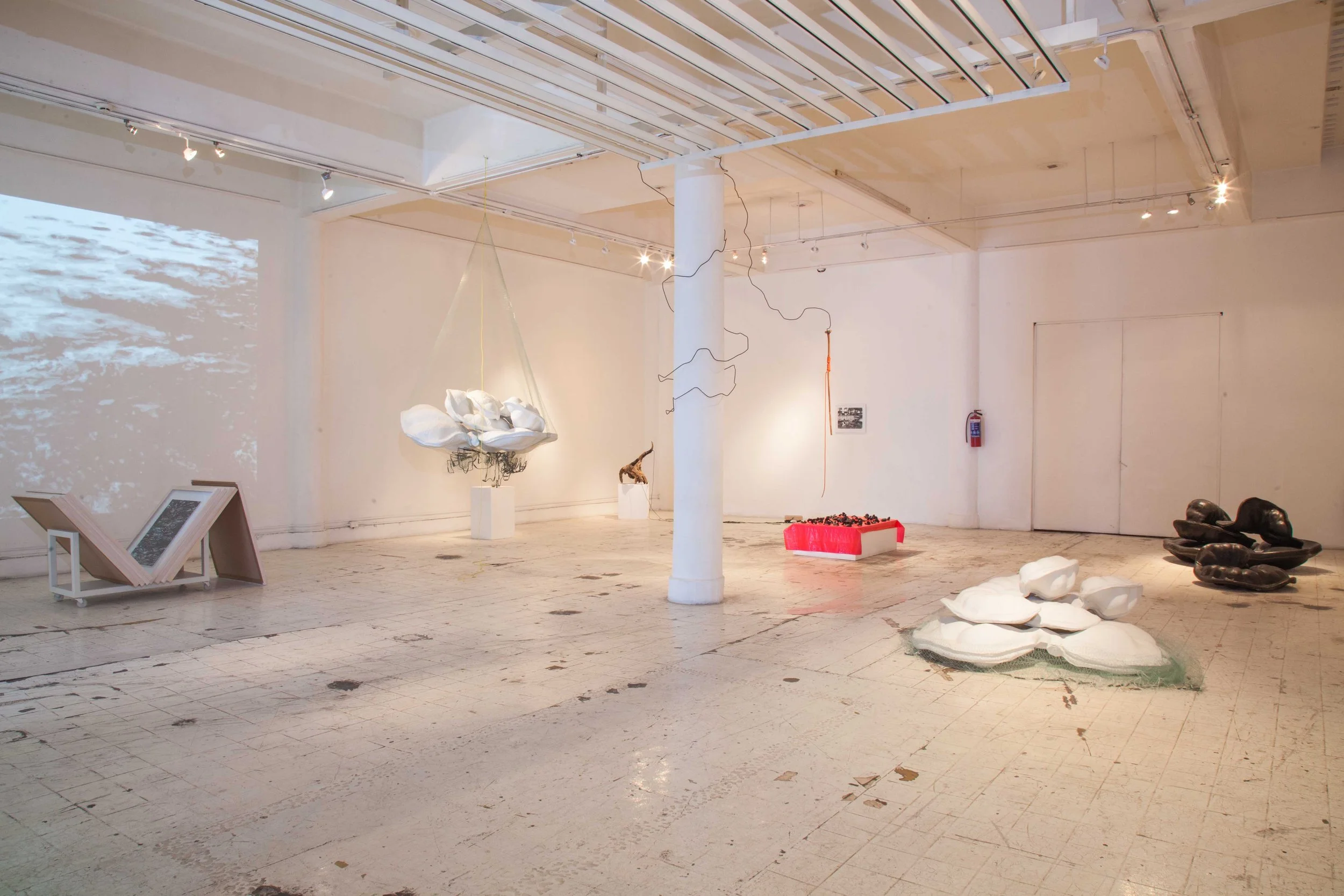
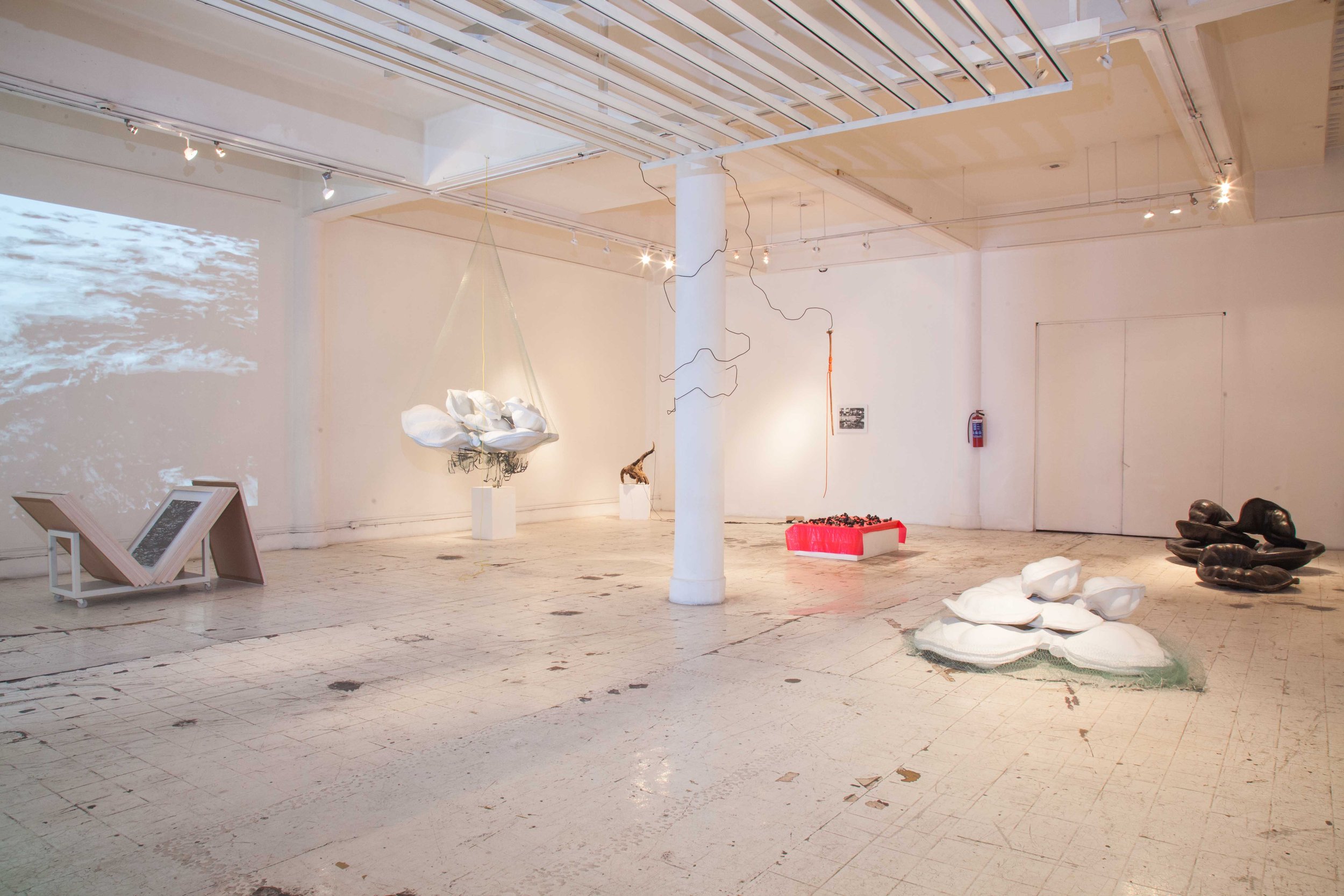
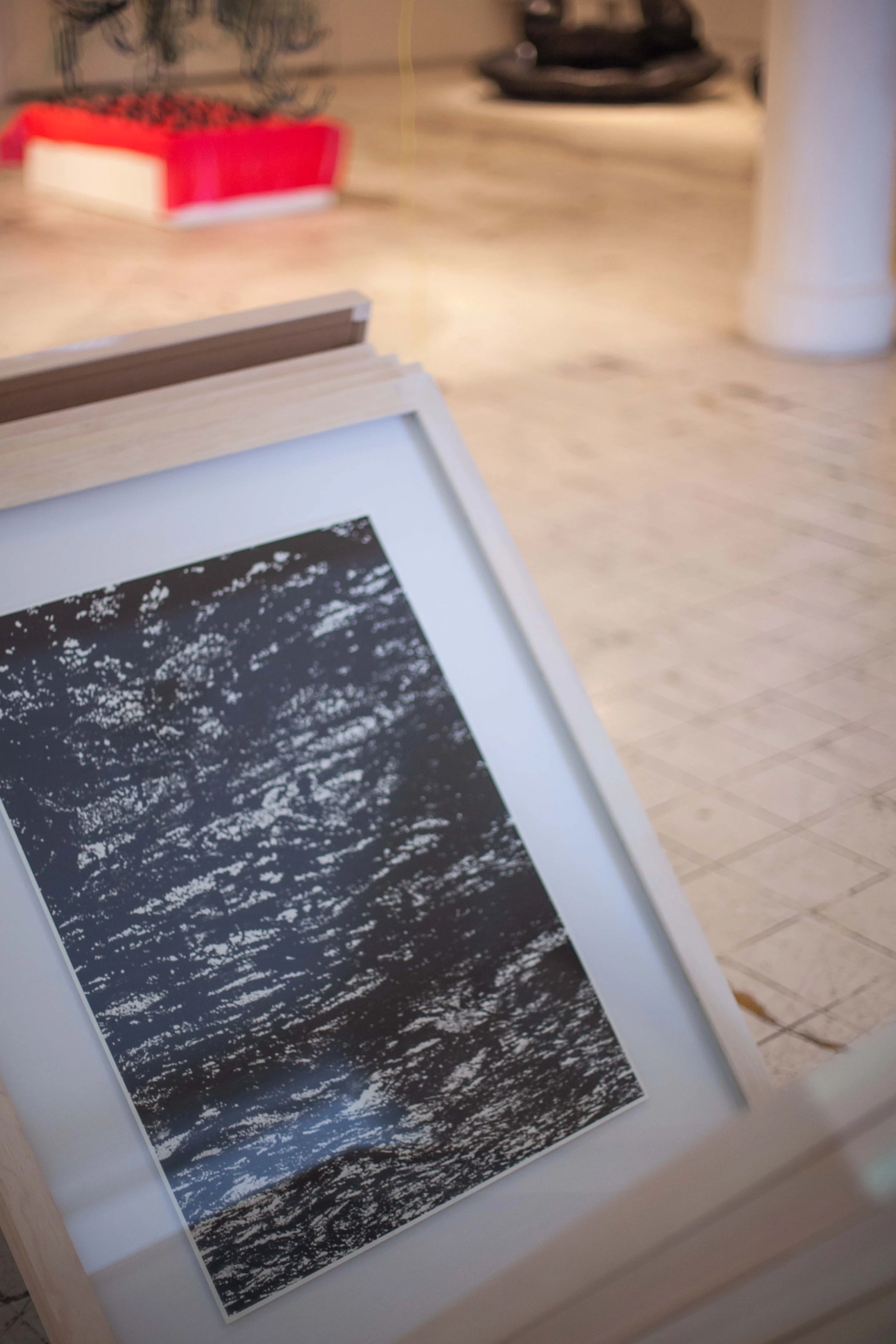
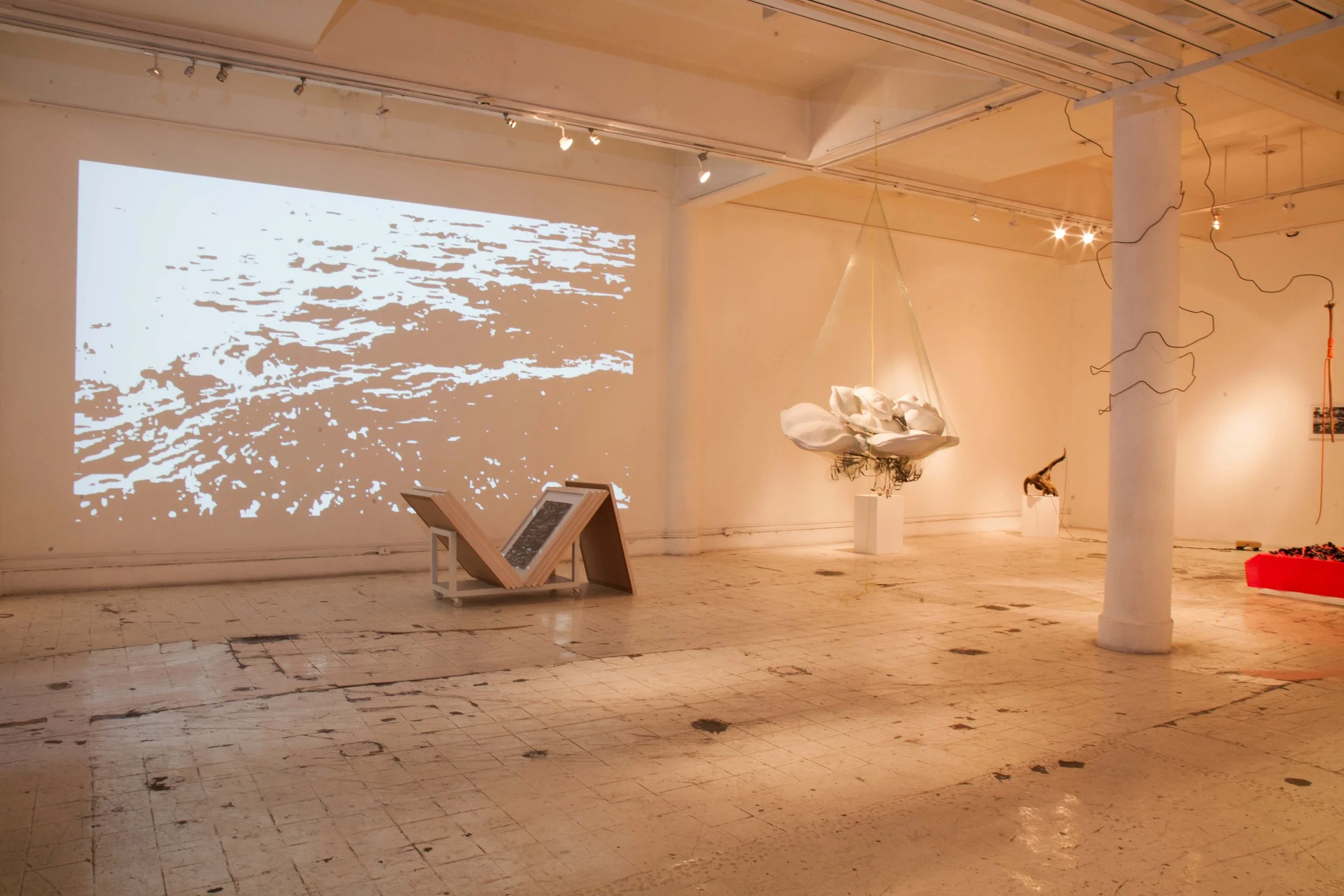
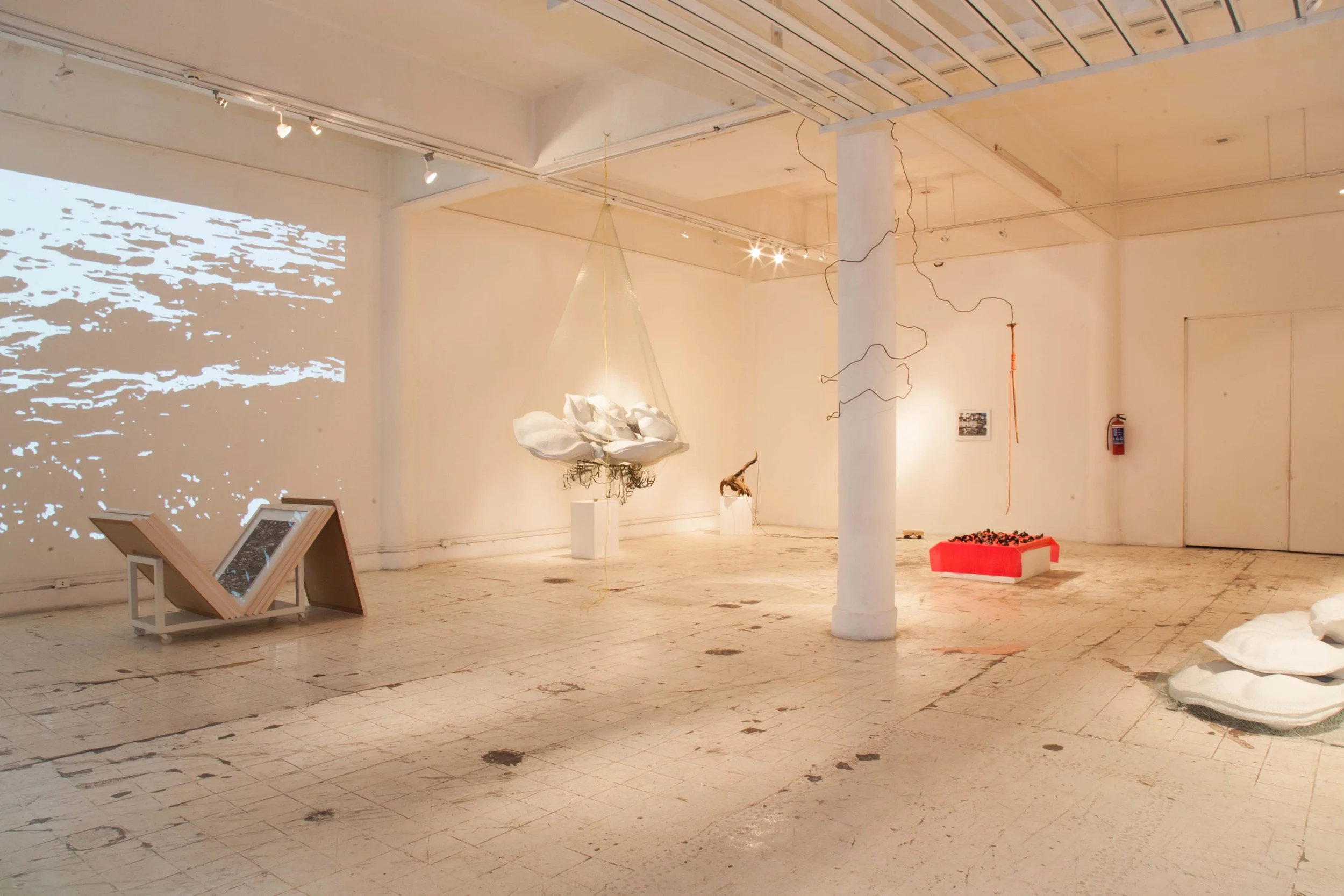
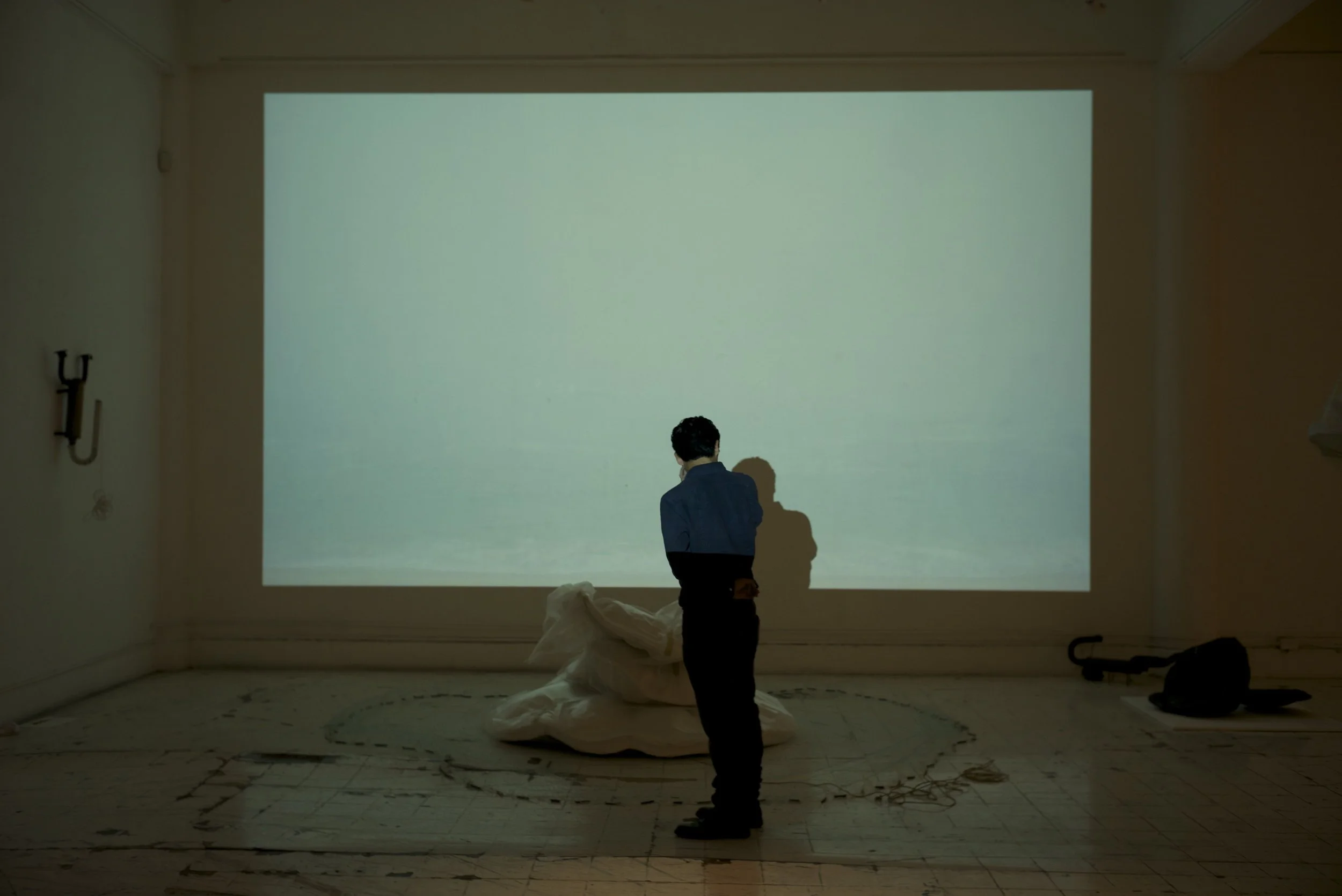
La cuarta fue una raíz más grande y larga, ya que todo el espacio de la Galería Ouetzalli (Av. Juárez) fue tomado por Rame como el campo creativo para realizar una instalación. La galería como el estudio del artista, al tiempo que era un gran lienzo espacial. En esta raíz de NATIVO, el vocabulario se amplió a fotografías conectadas con objetos: también se incluyó la proyección de vídeo y la gráfica además de las piezas mostradas anteriormente del fruto del árbol cuyo nombre náhuatl significa ·oreja [de] árbol" hechas en resina y bronce.
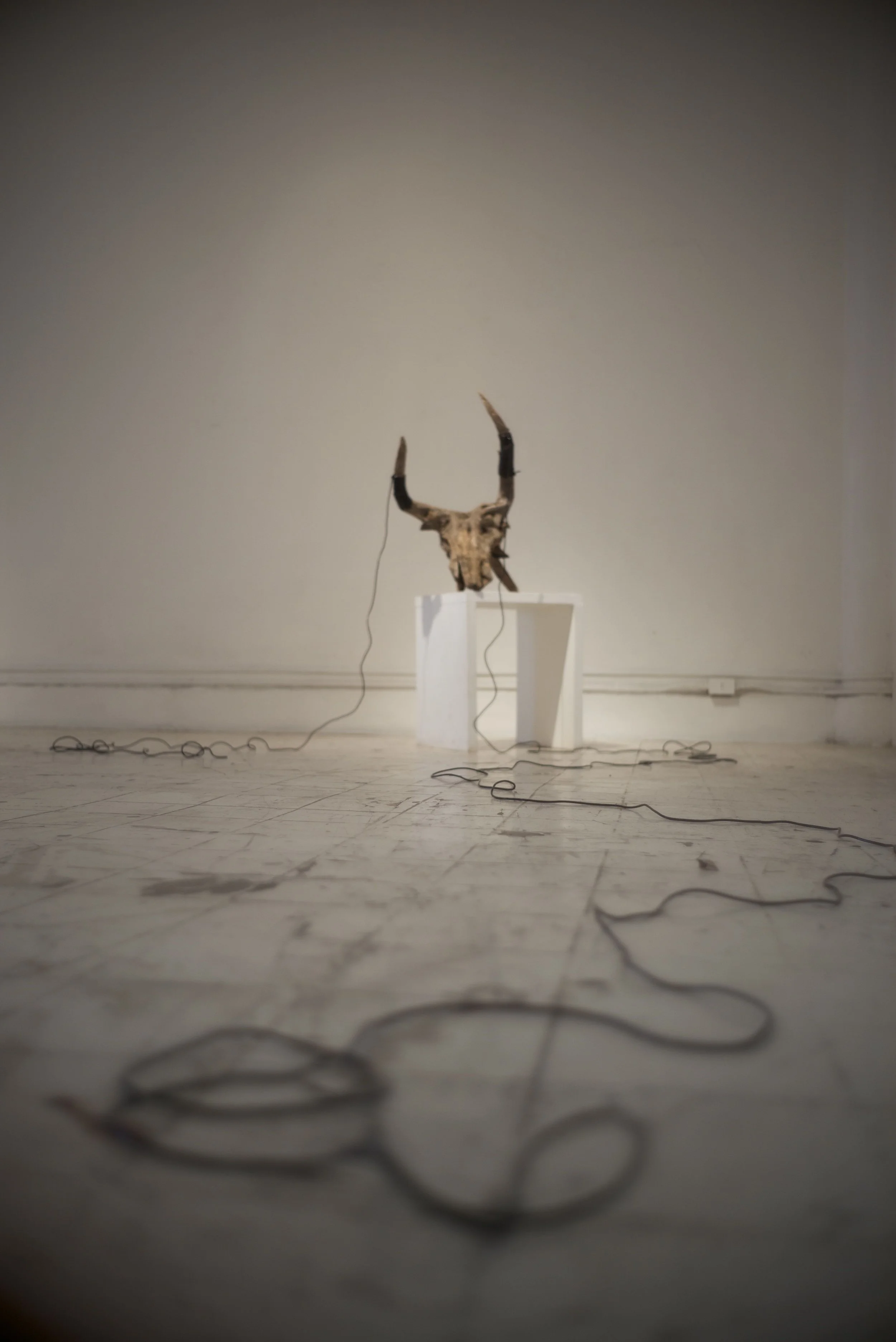
En la quinta raíz, la del afecto profundo, el andar de NATIVO avanzó hasta el estado de Coahuila. El Museo de Artes Gráficas vio llegar a Rame con un titipuchal de cosas: que poco a poco, en intensas estancias y recorridos del artista dentro del museo fueron encontrando su lugar. Y ahí se consolidó
NATIVO como un Replicante. Se engarzaron el contenido anímico del proyecto y el contenedor filosófico de las acciones hechas. El primero refiere al significado que Rame ha procesado en los pasados cuatro años del reconocimiento de ese terreno en la Costa de Oaxaca, herencia de su padre, como un espacio de reforestación, un intercambio y trueque. El segundo es la conceptualización consciente del crear andando, cuyo valor primordial es integrar a la identidad el valor de continuo avance y cambio. Encarnando así al Replicante.
Olga Margarita
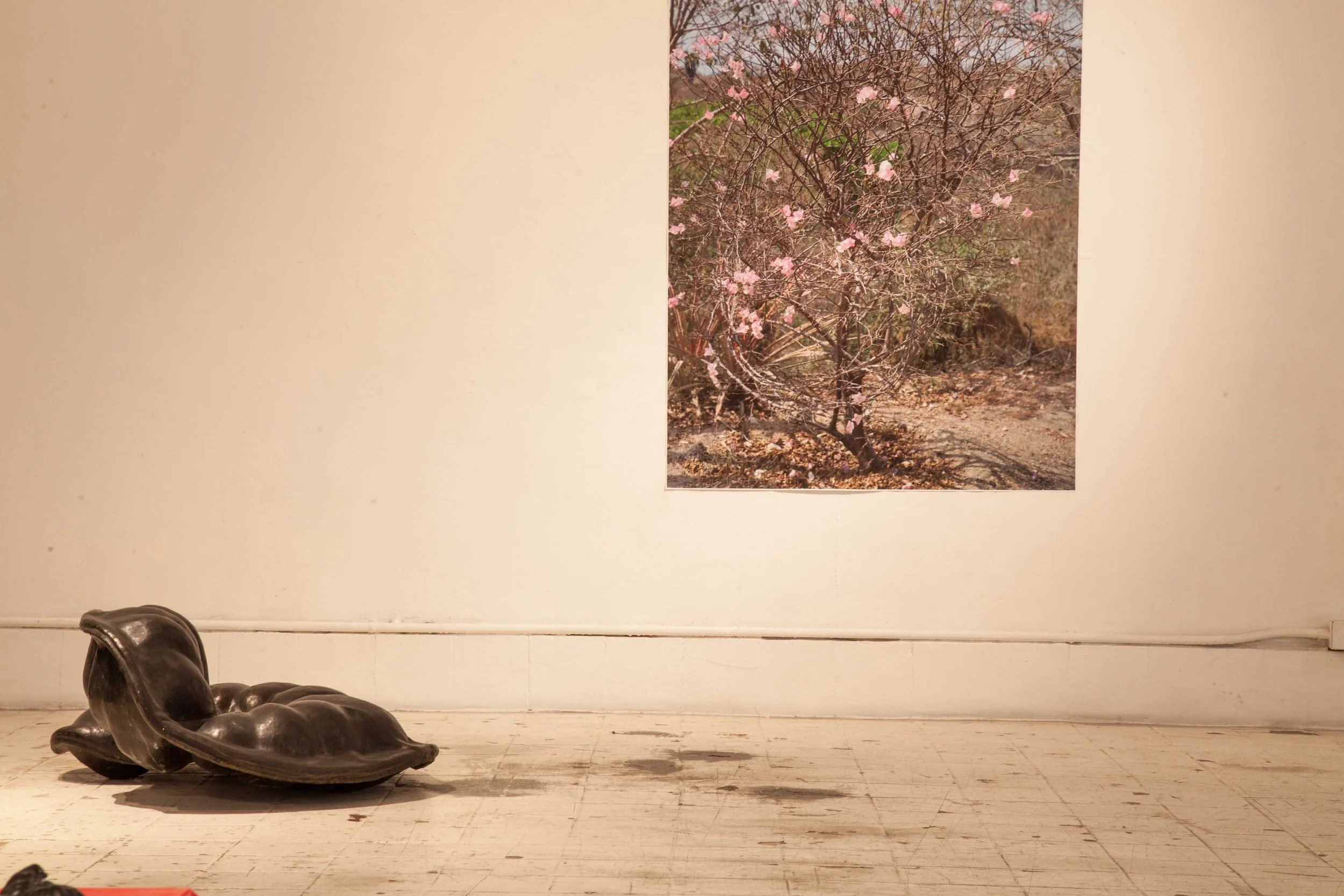
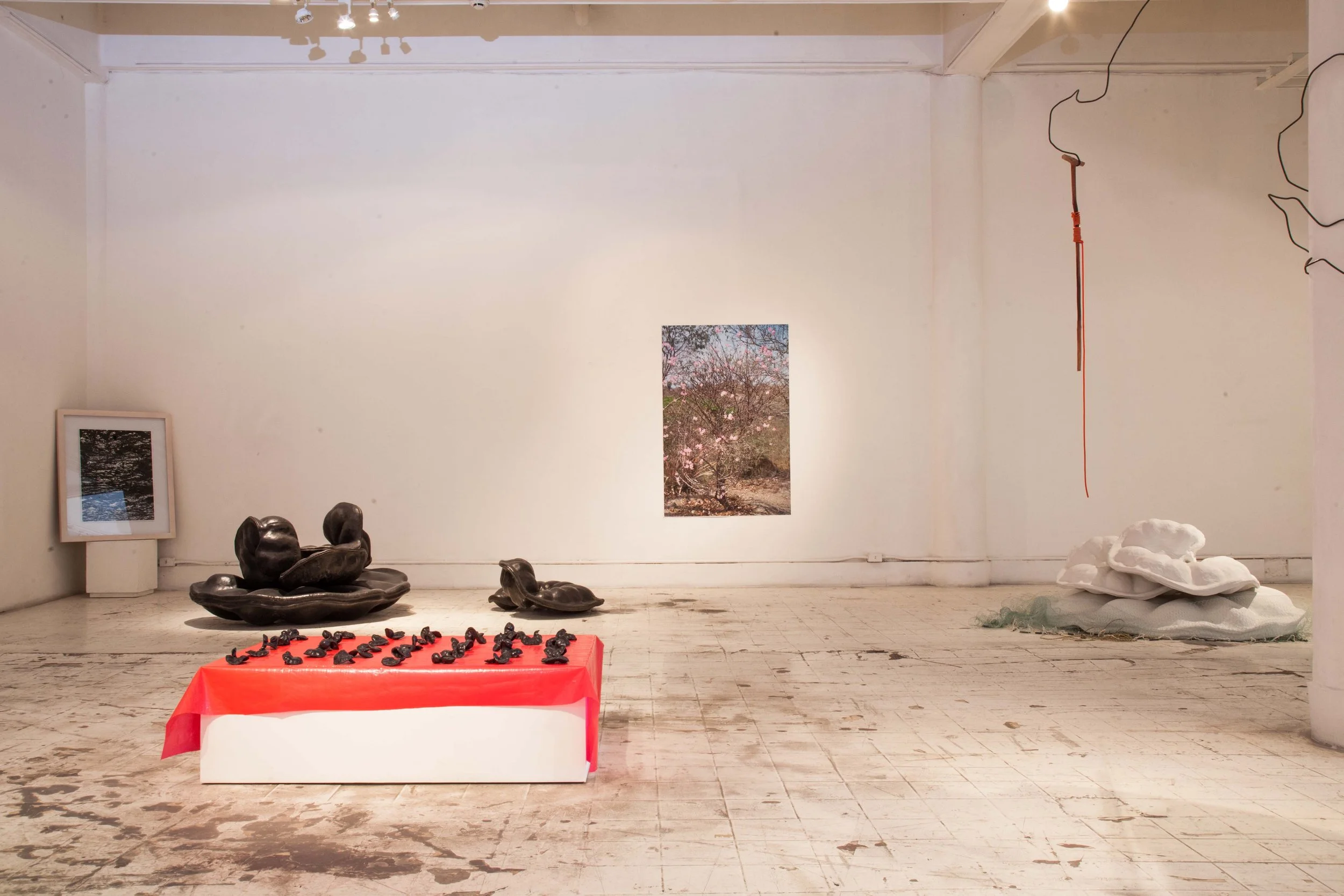
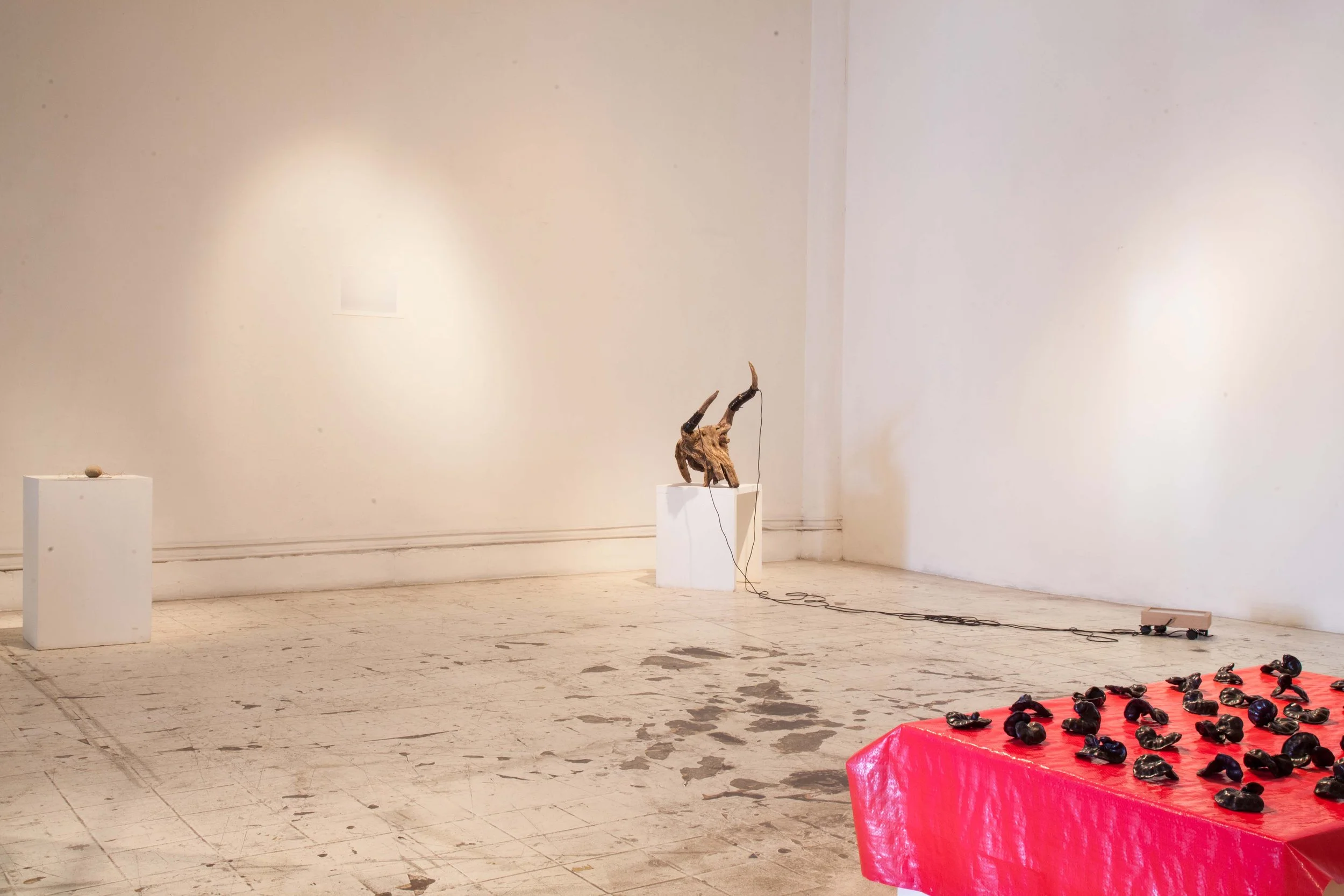
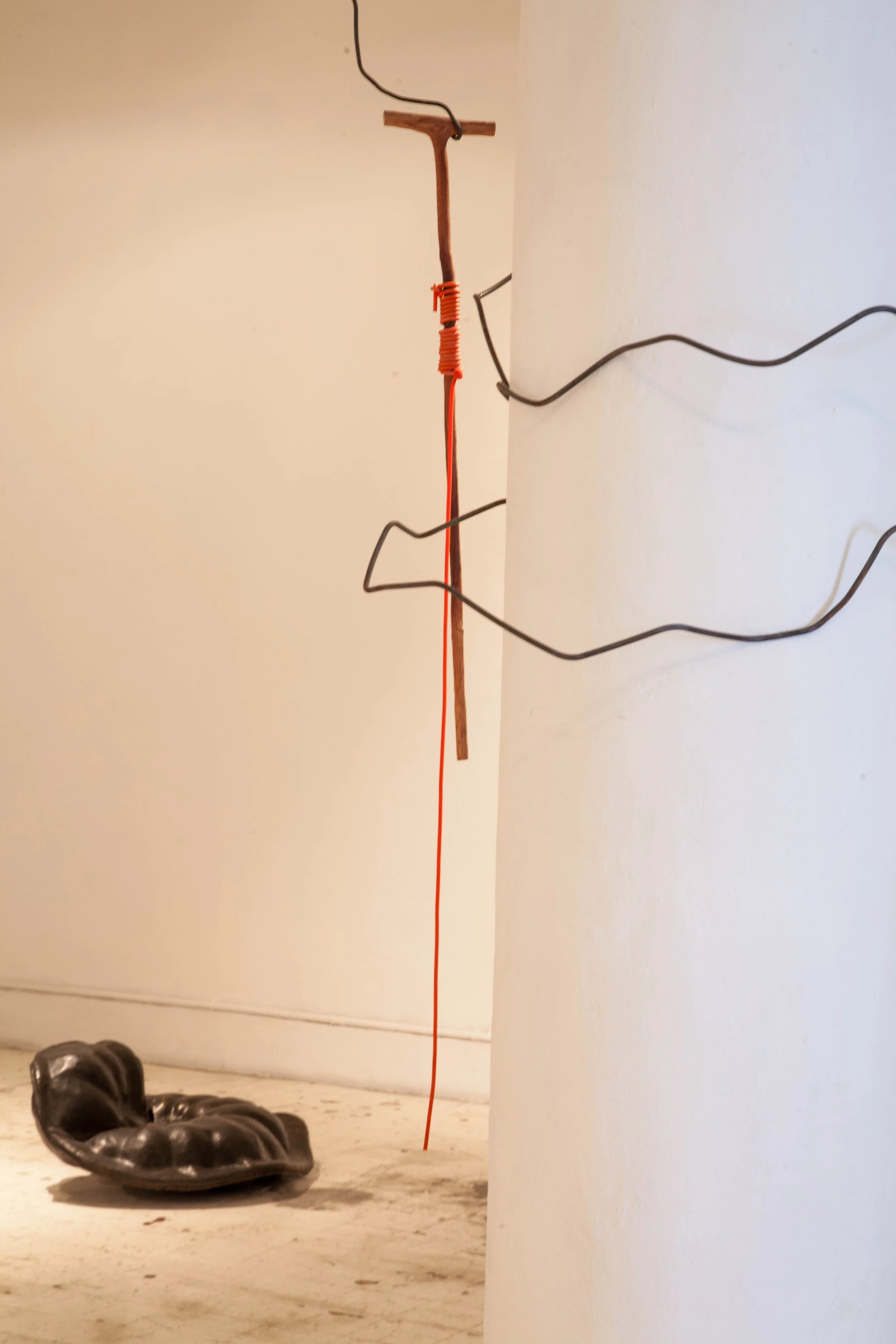
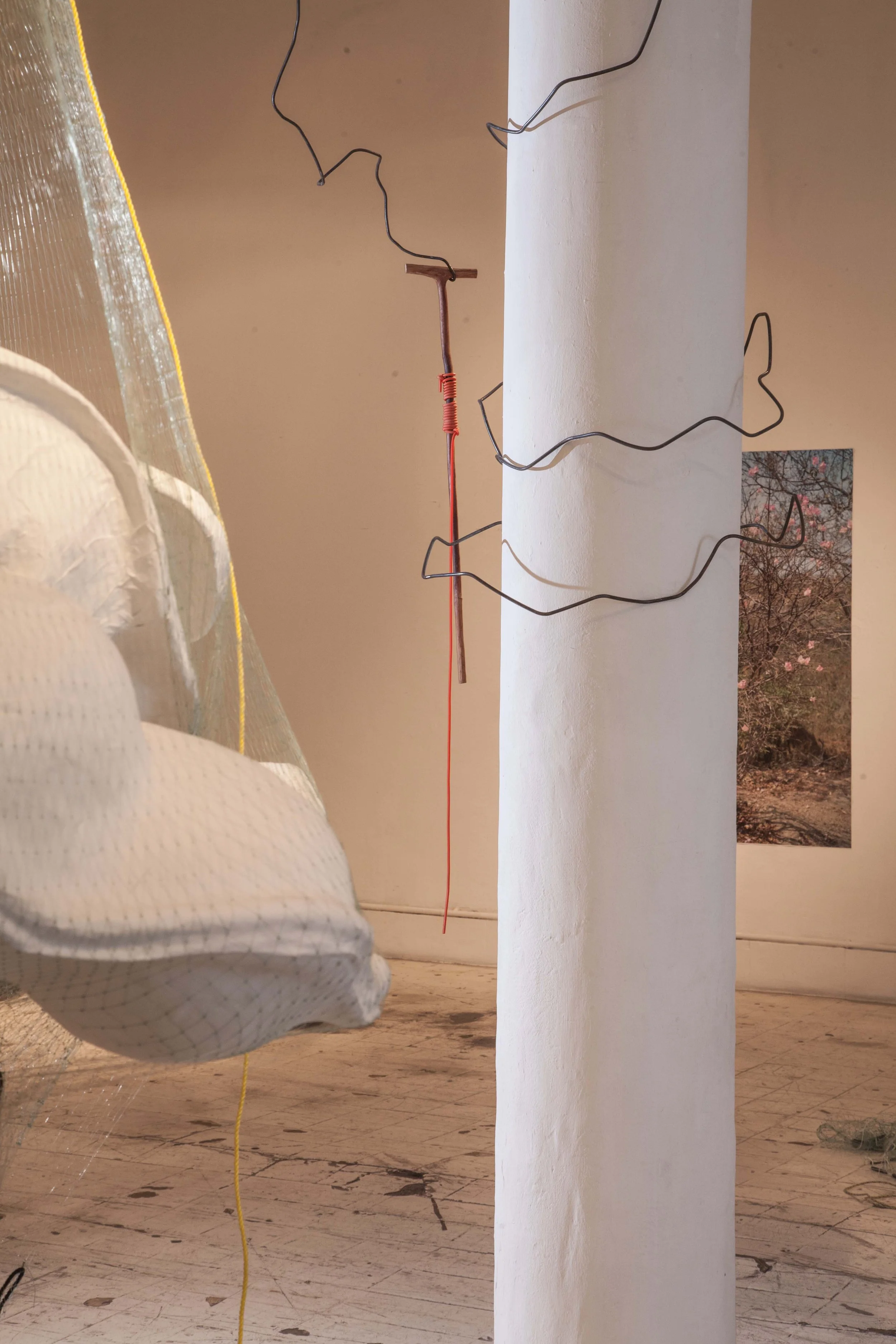
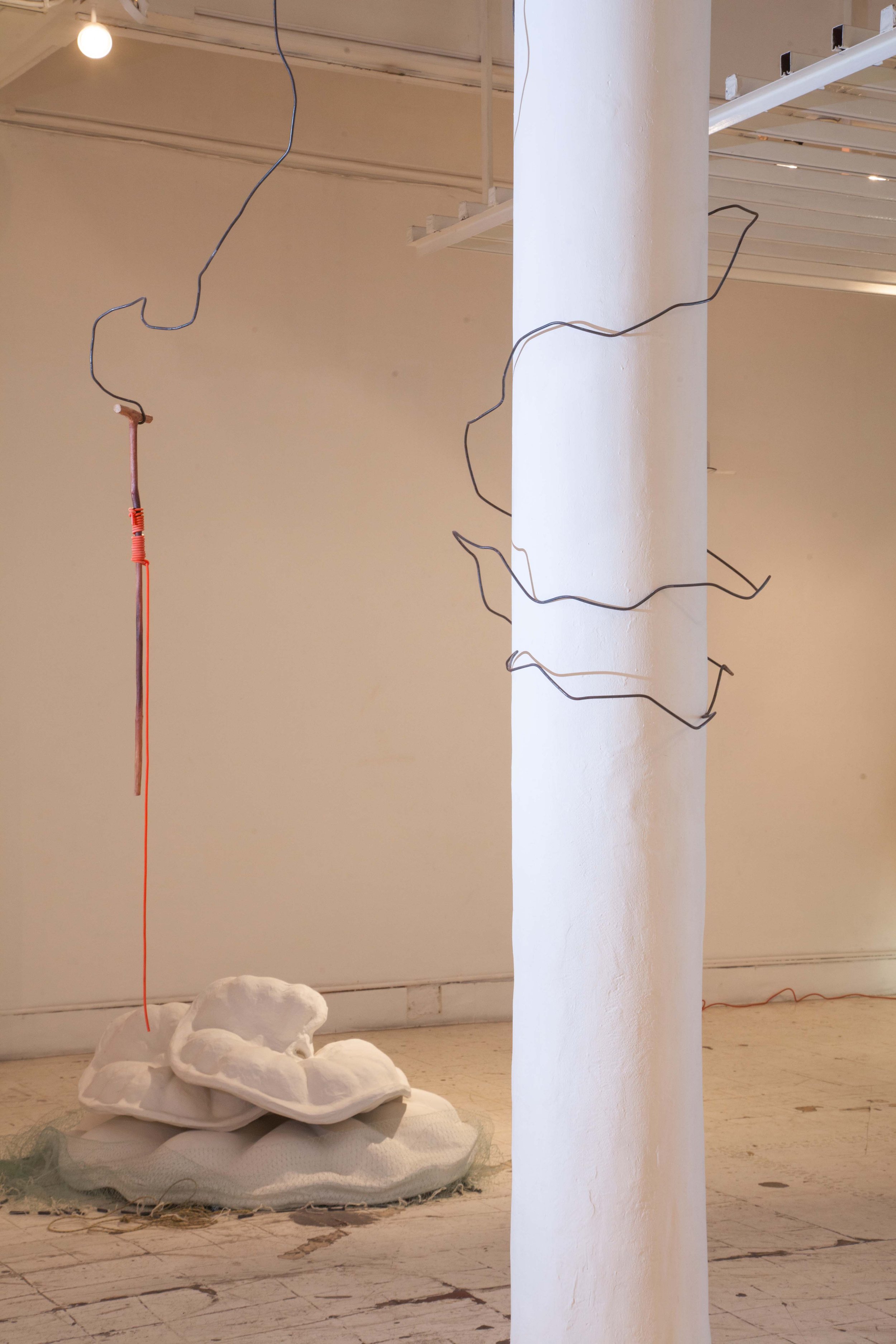
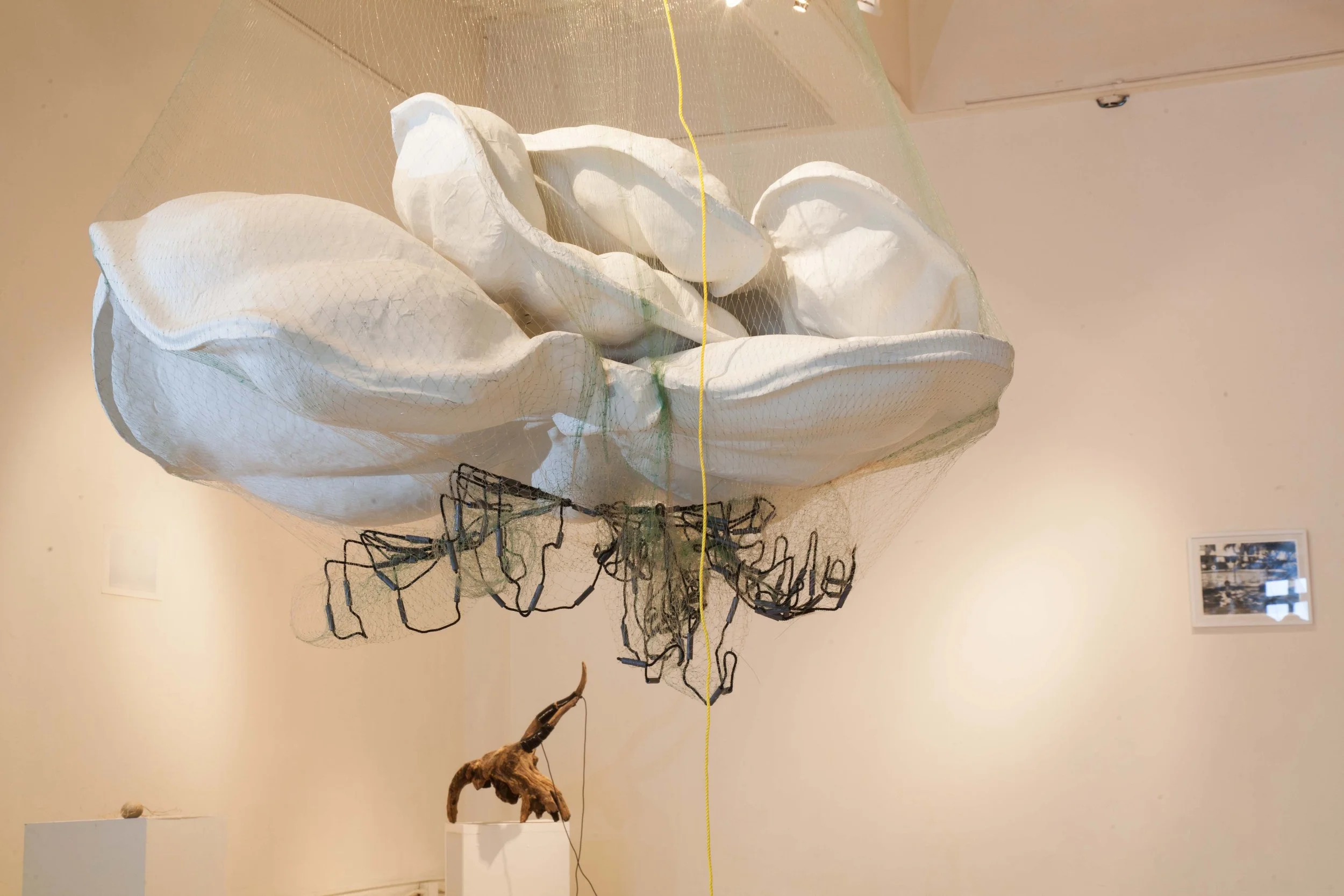
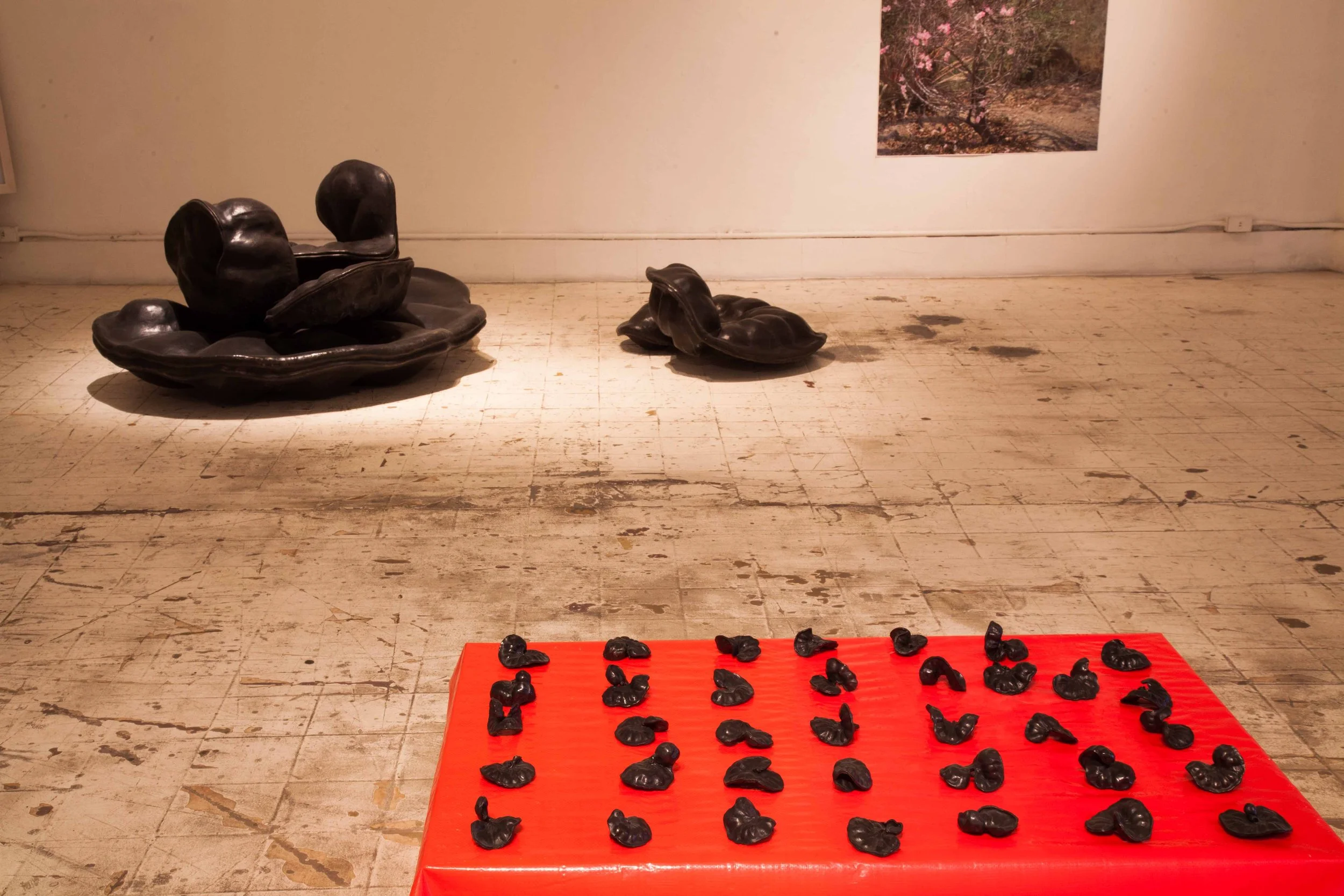
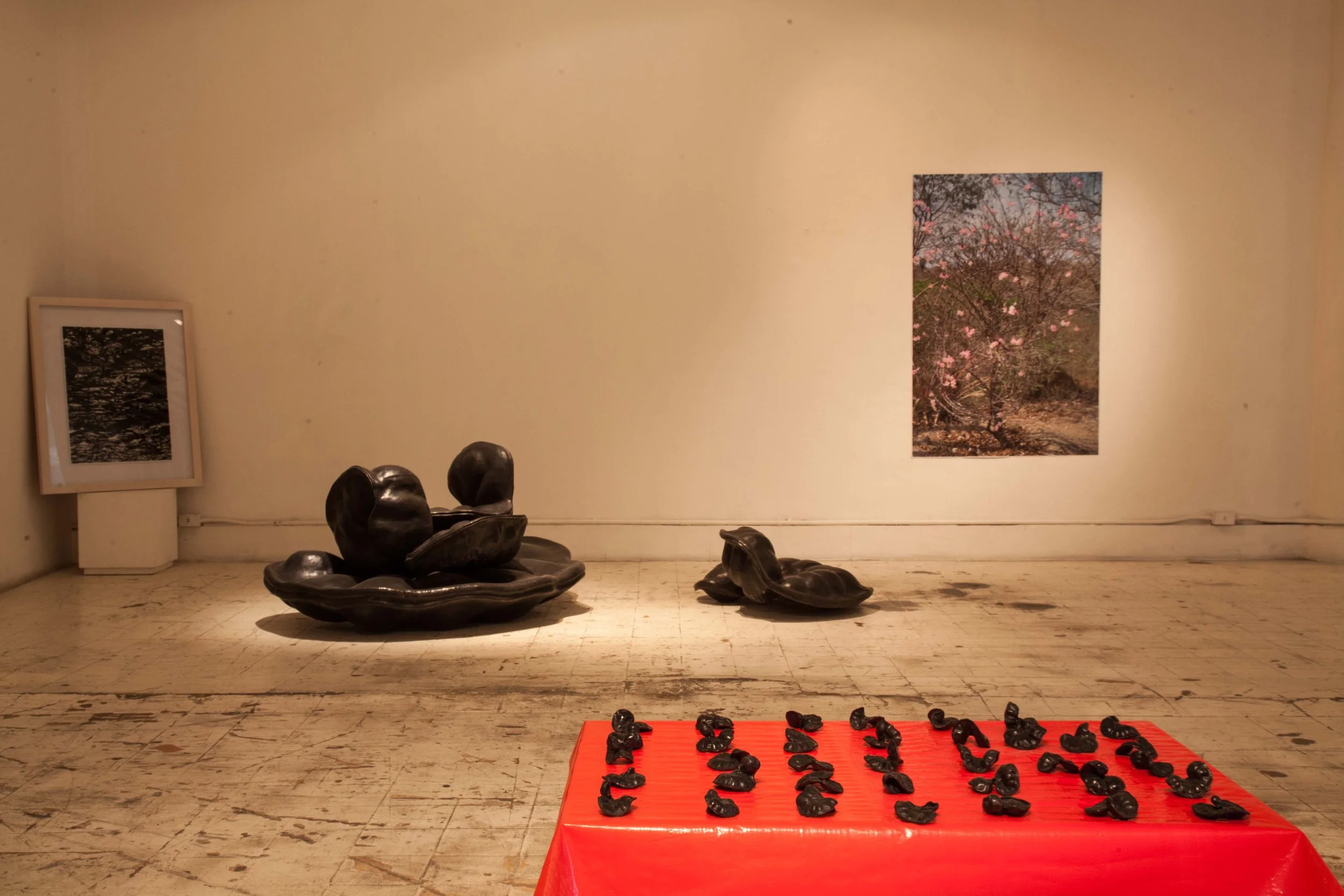
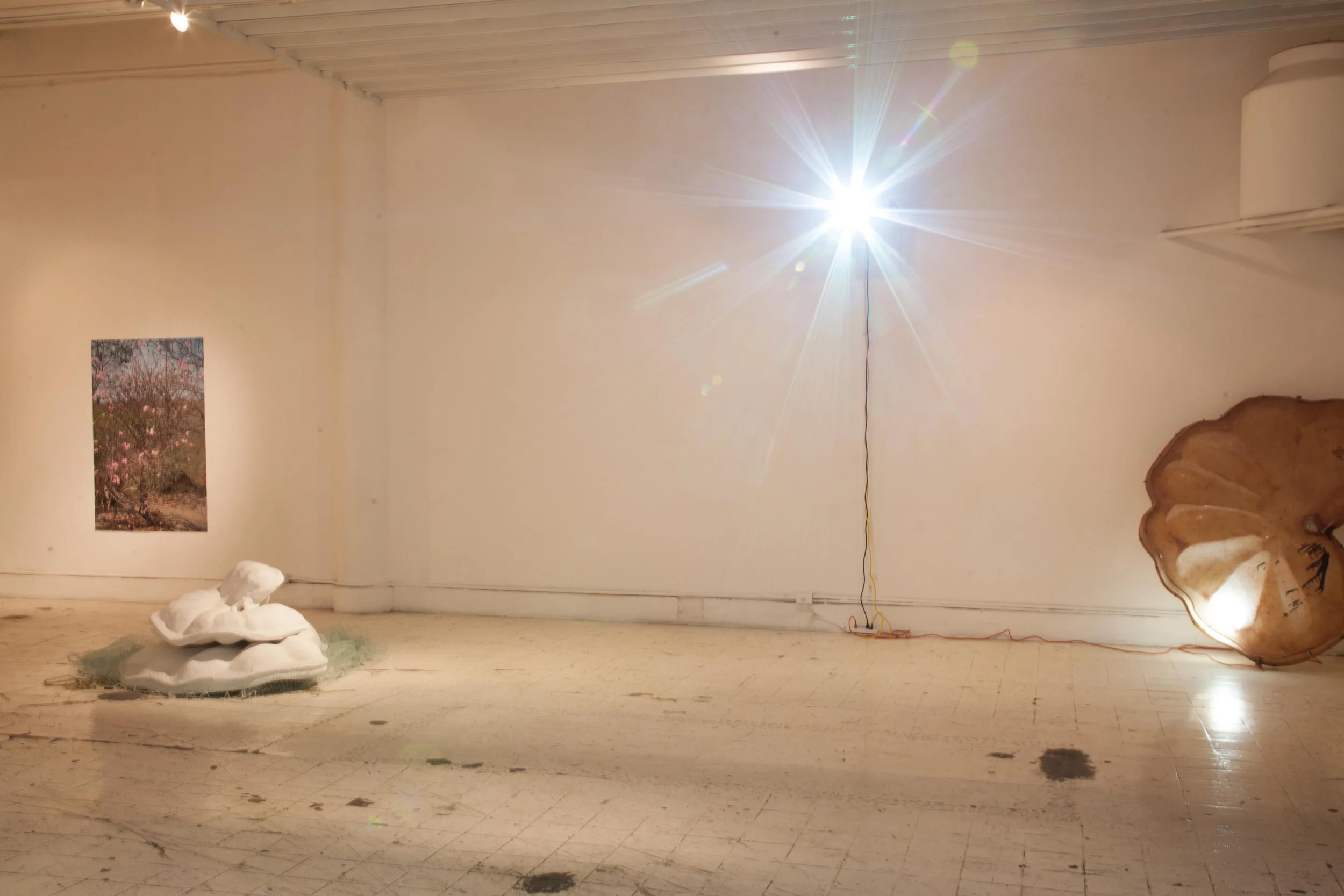
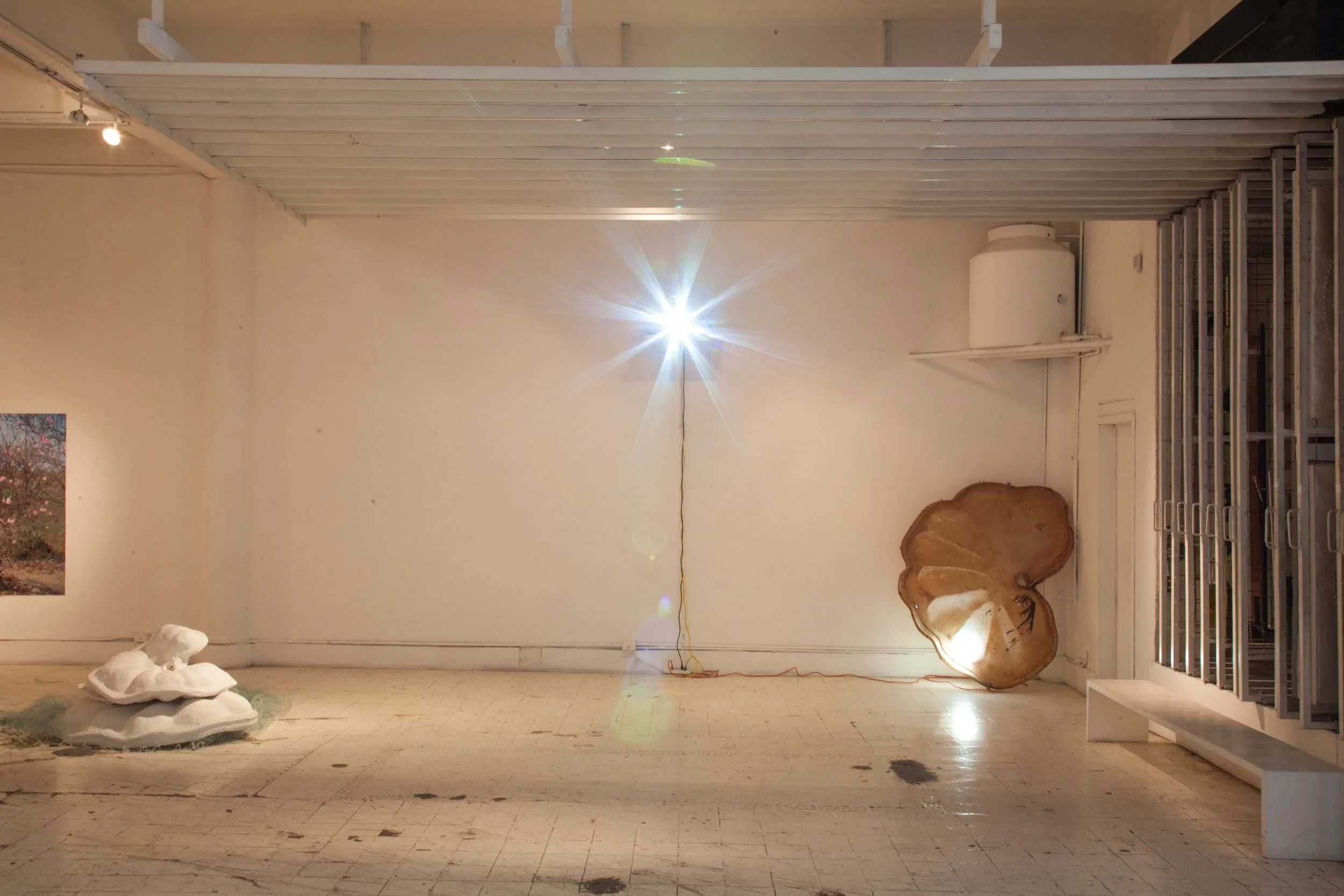
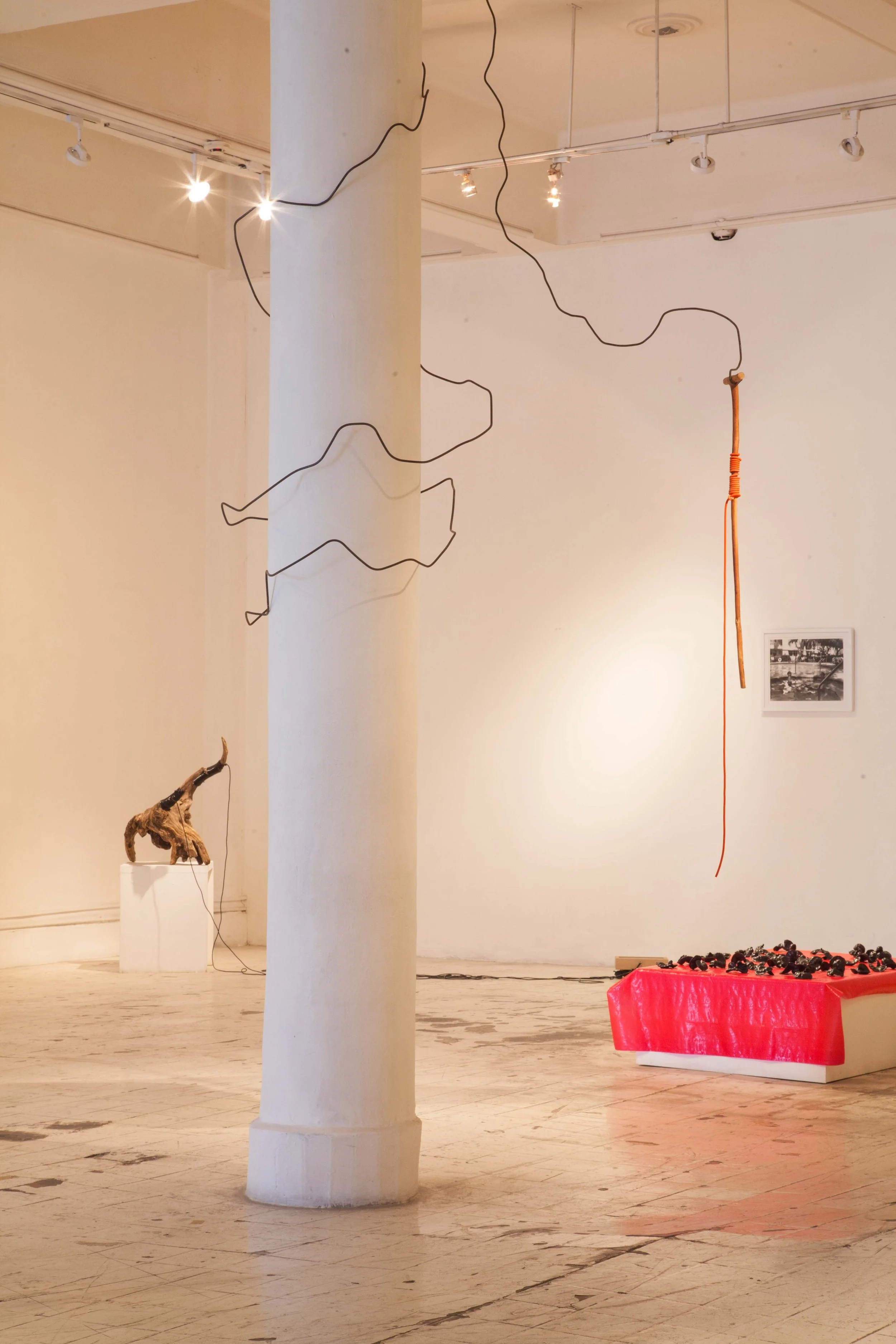
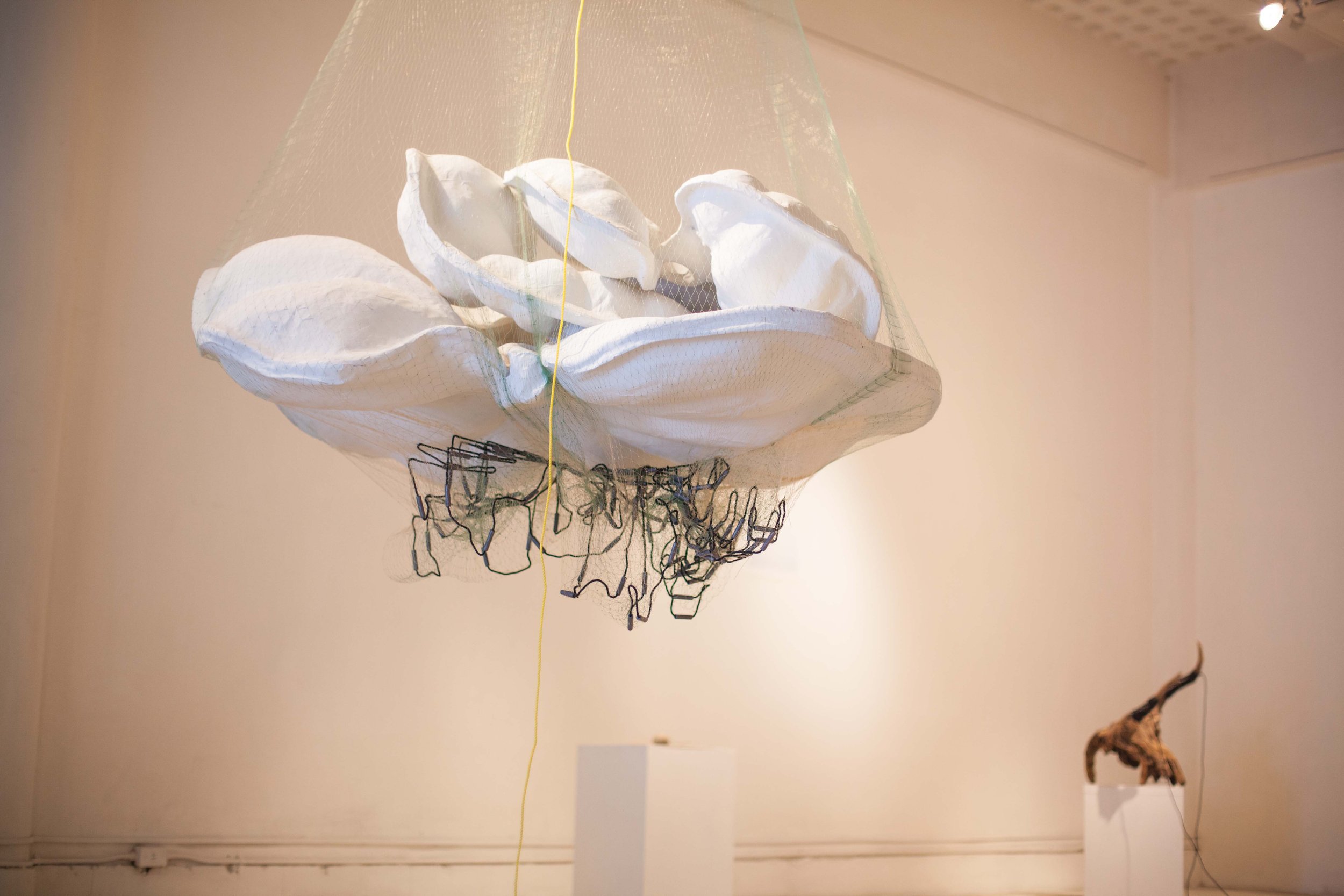
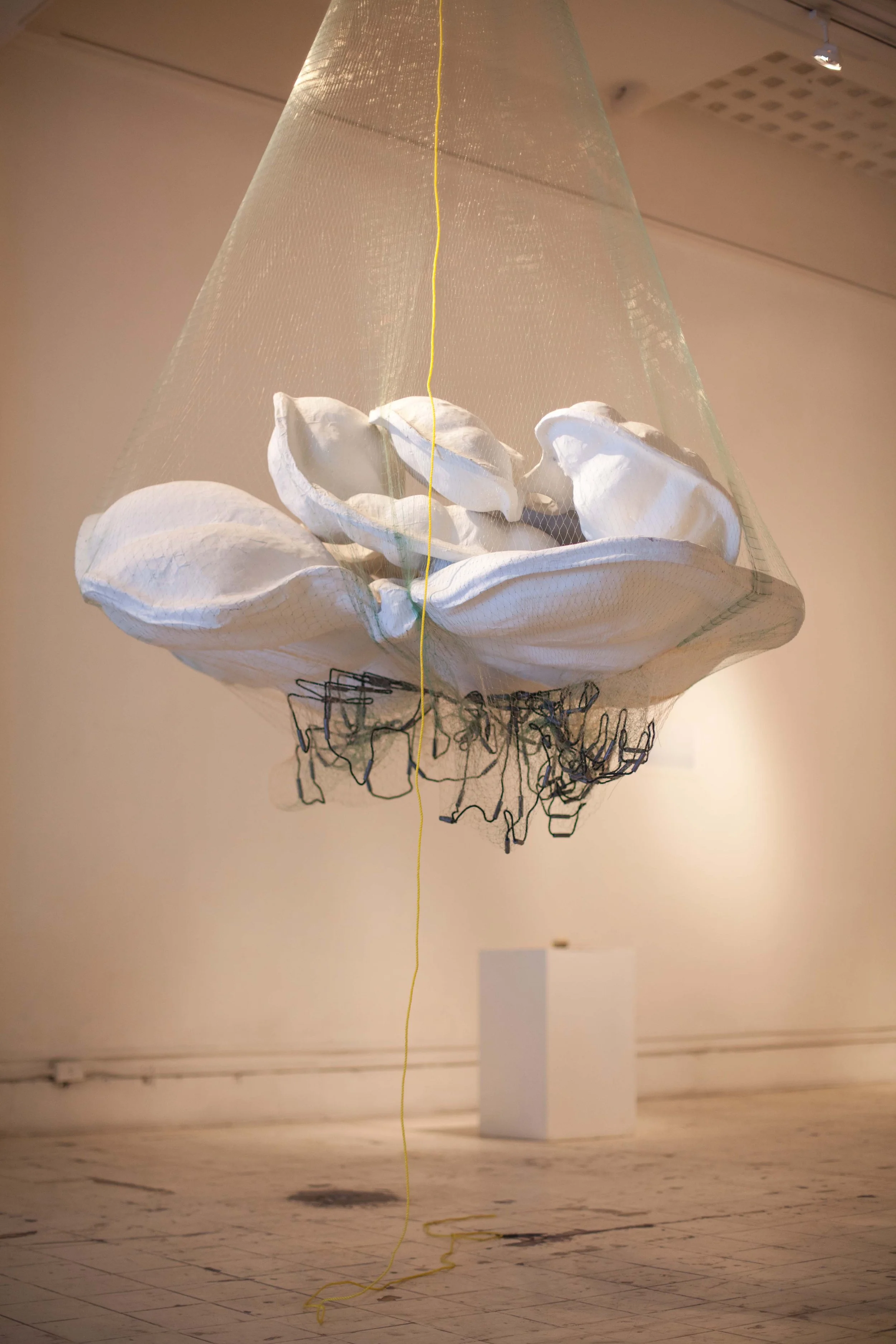
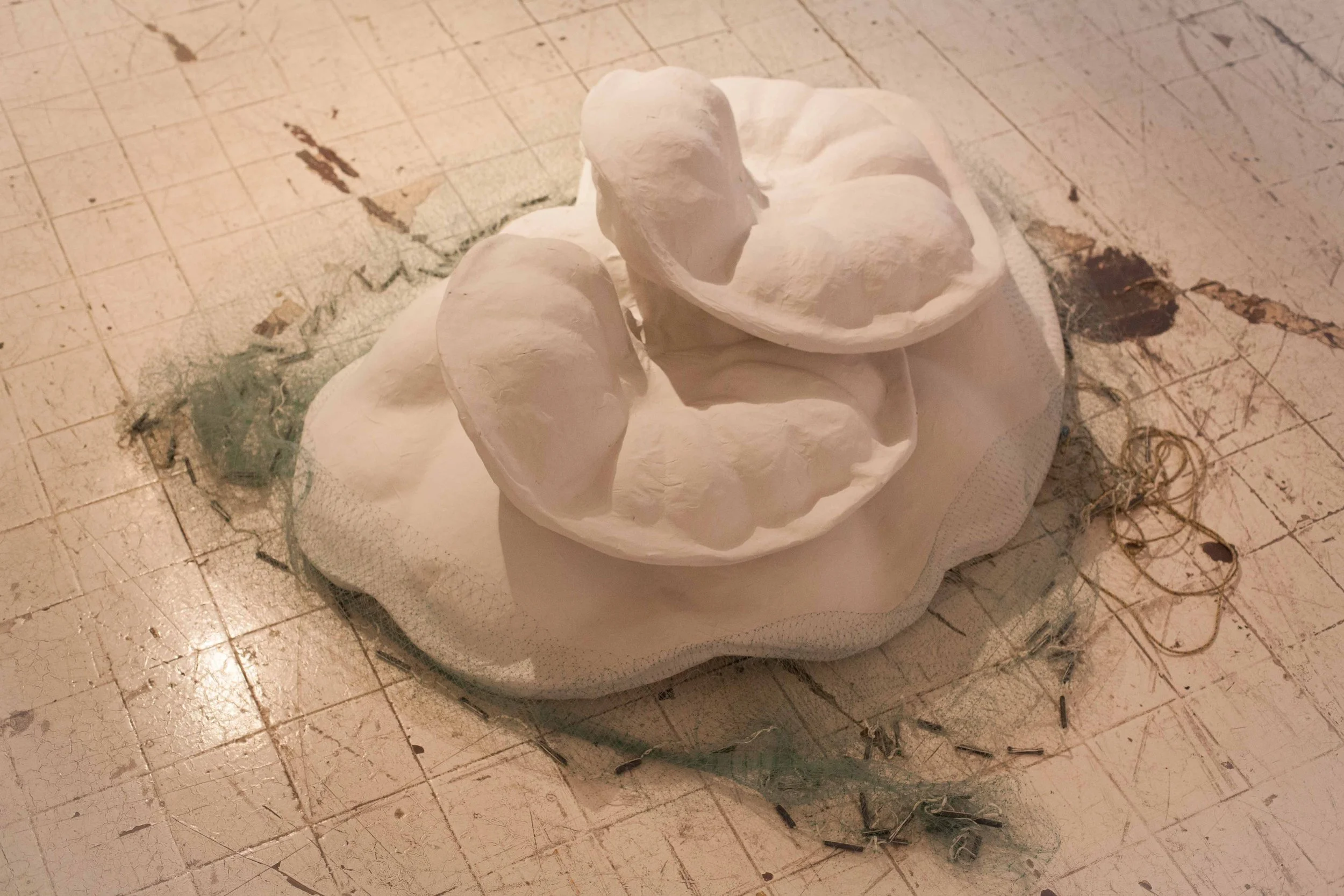
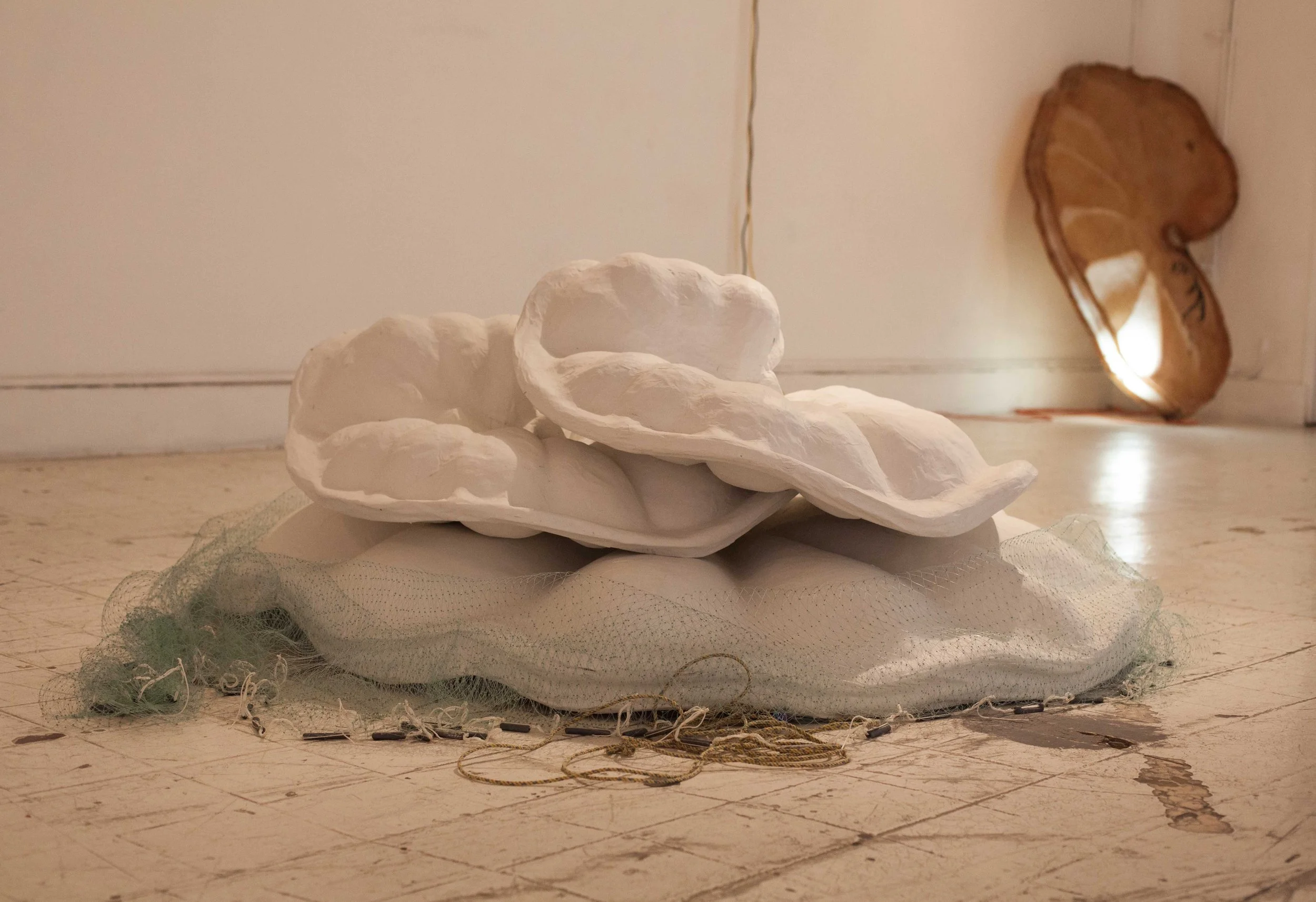
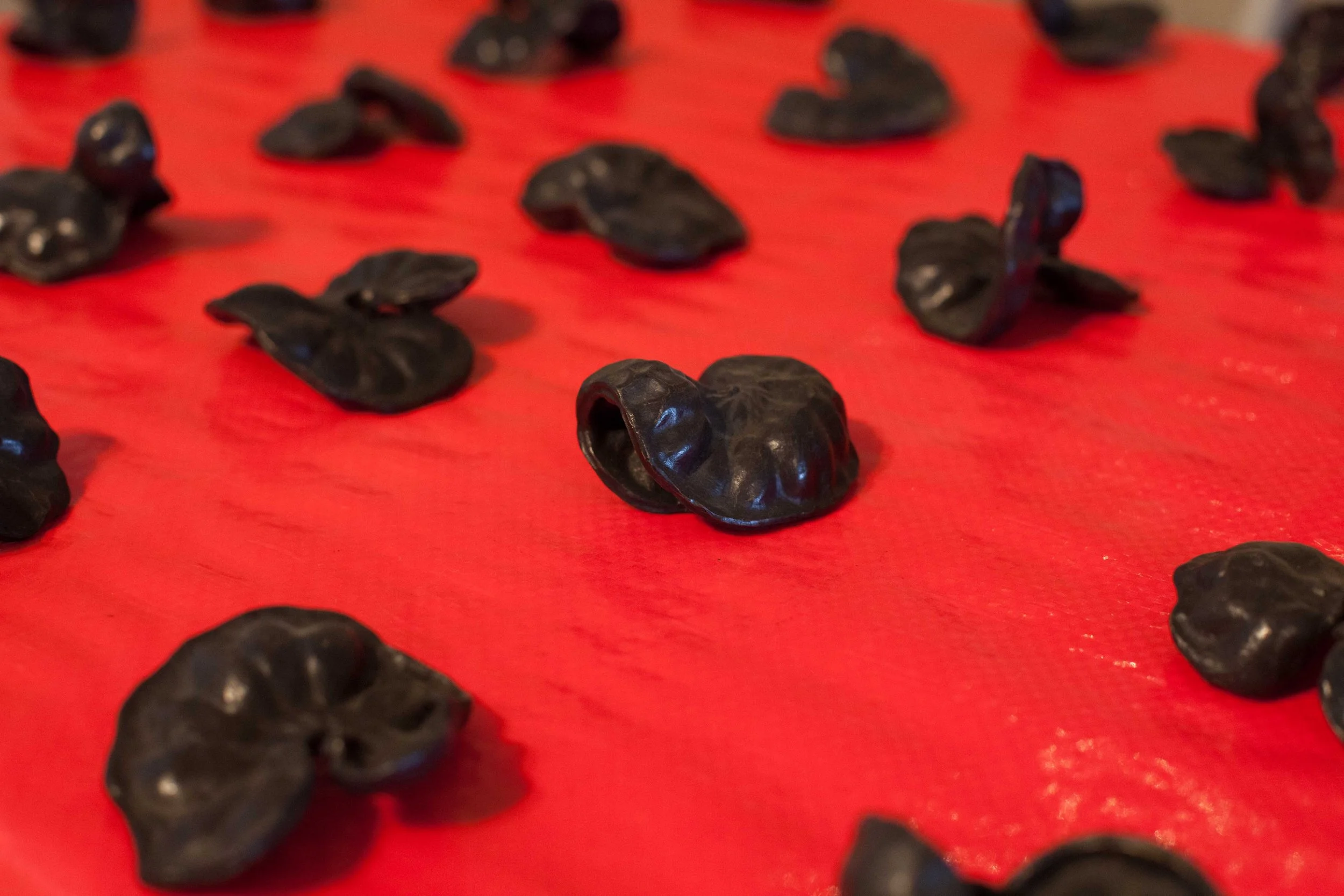
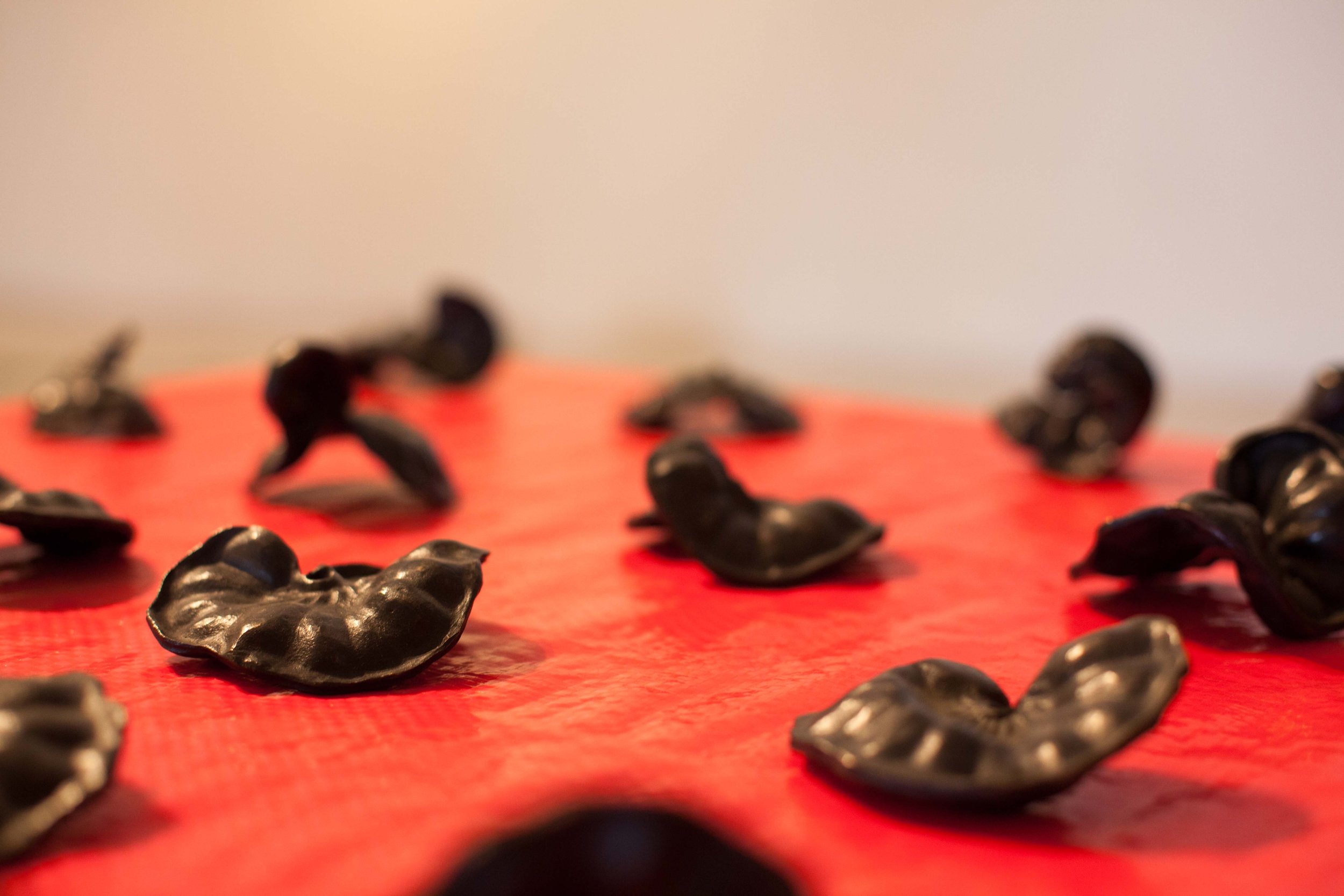
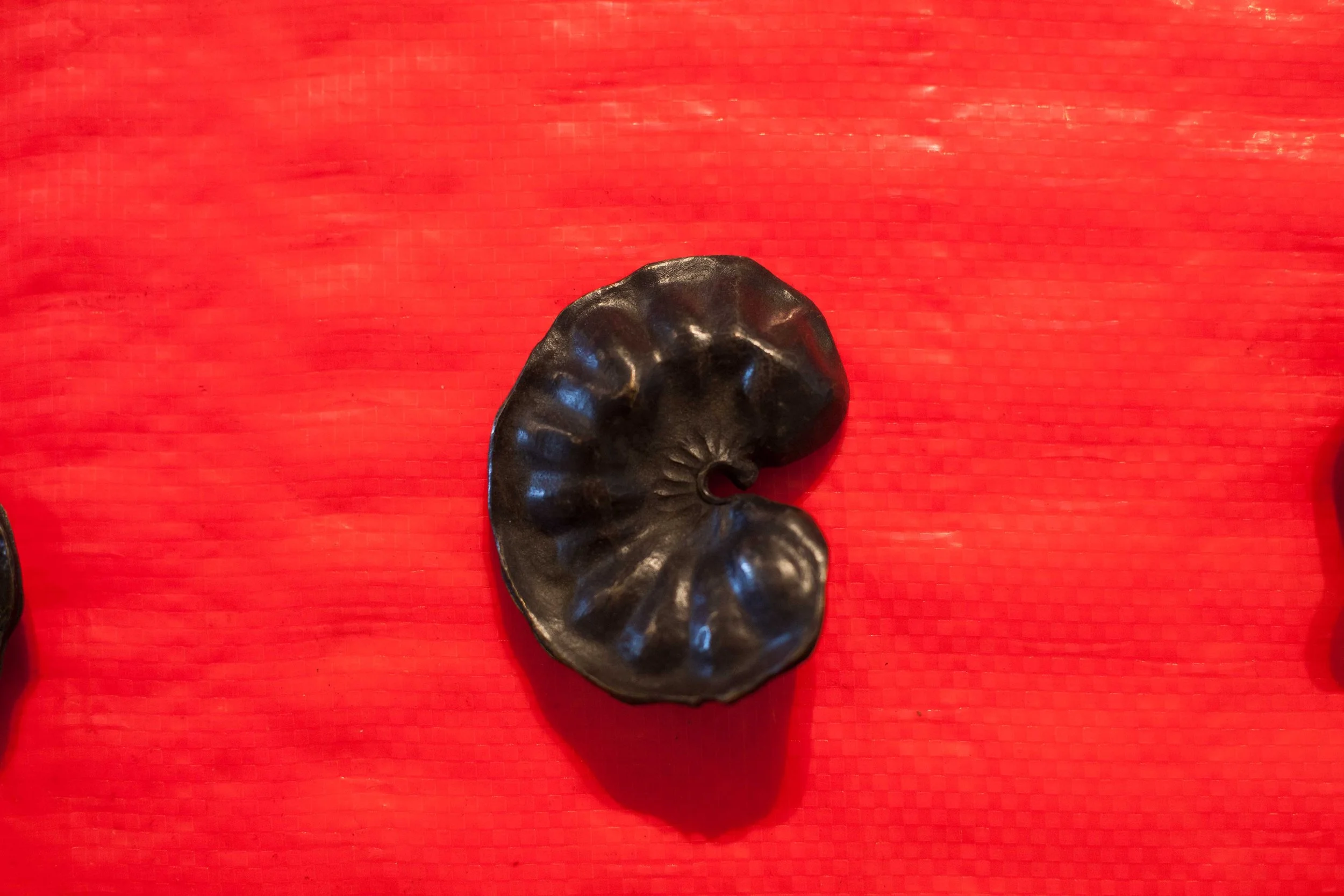
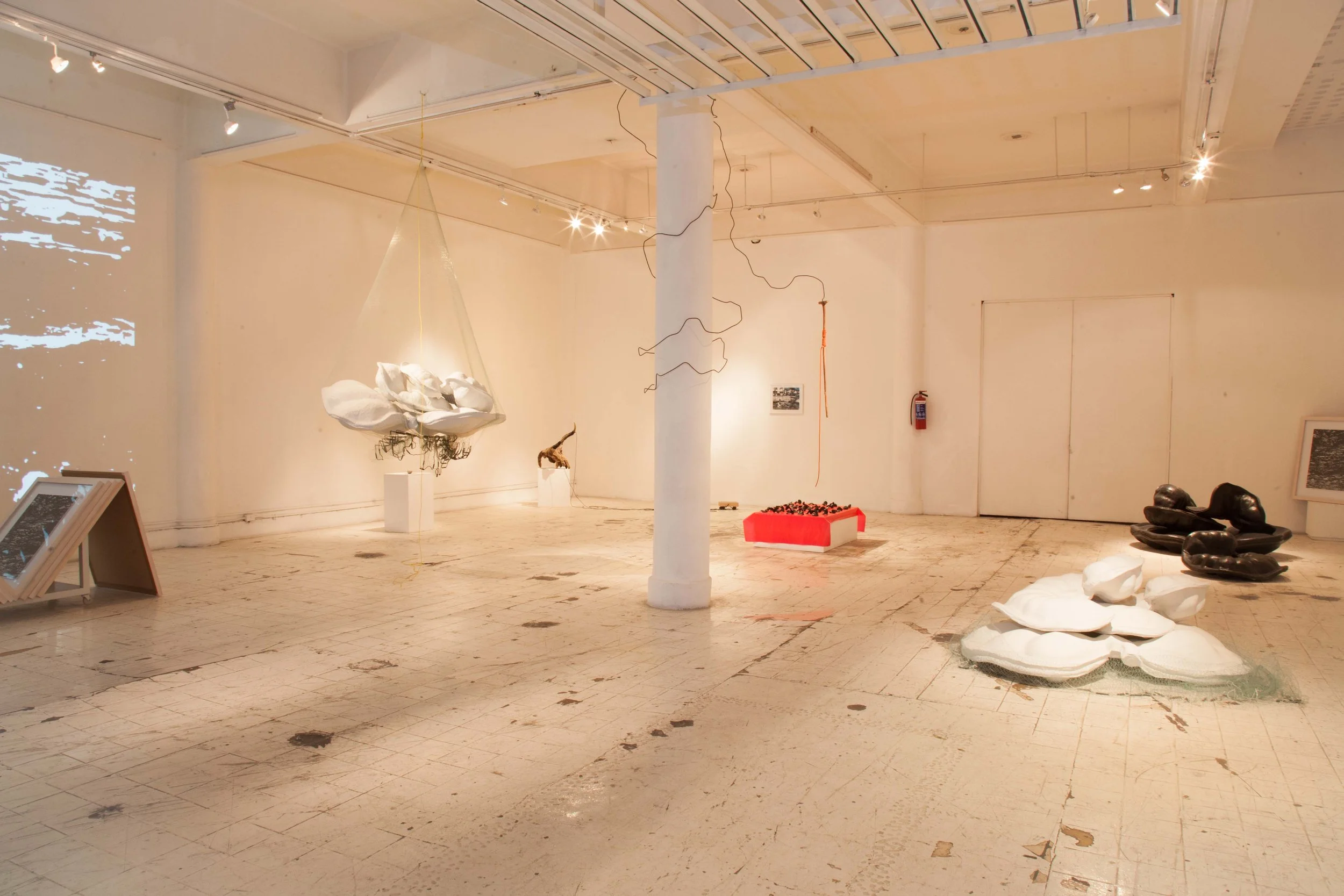
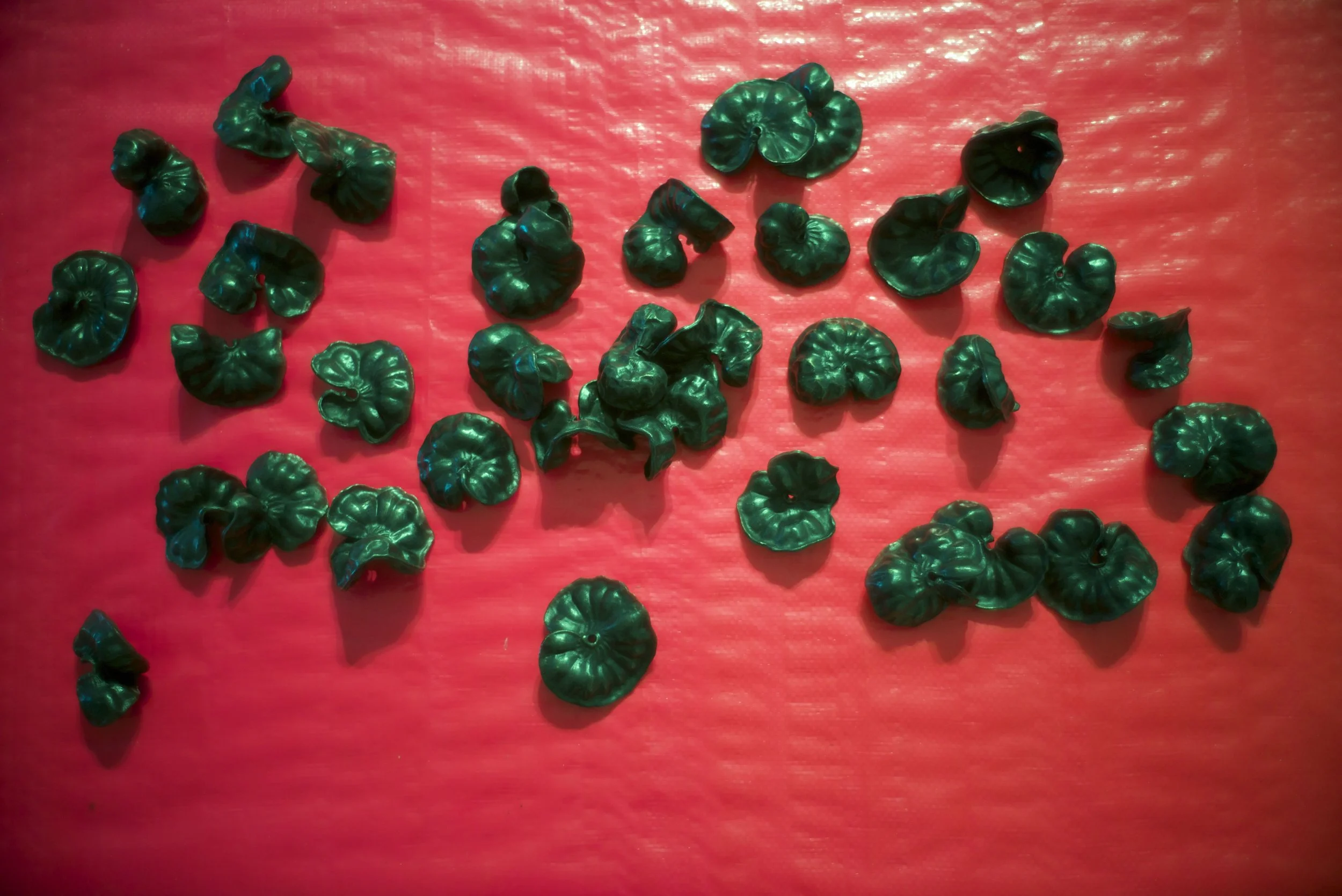
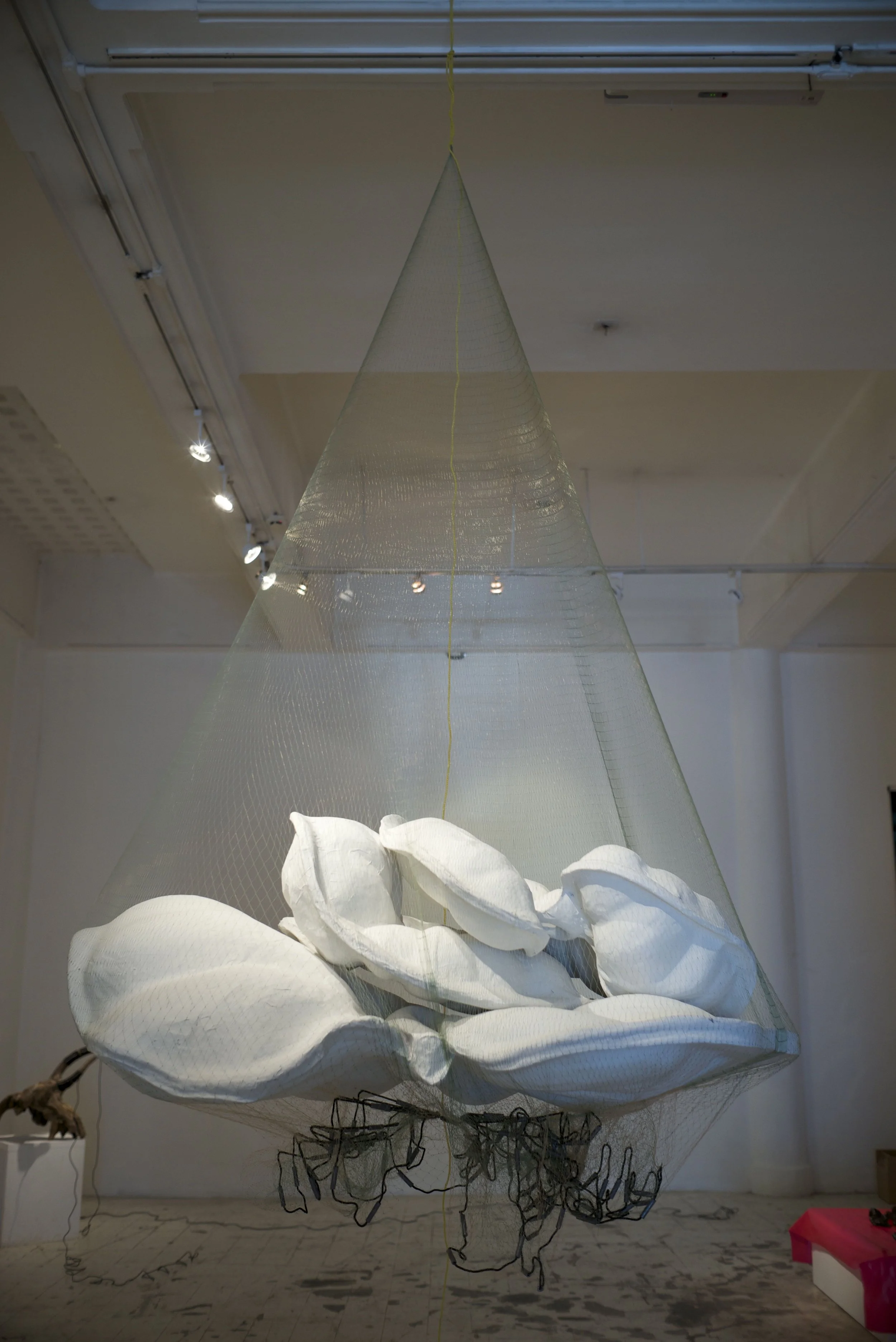
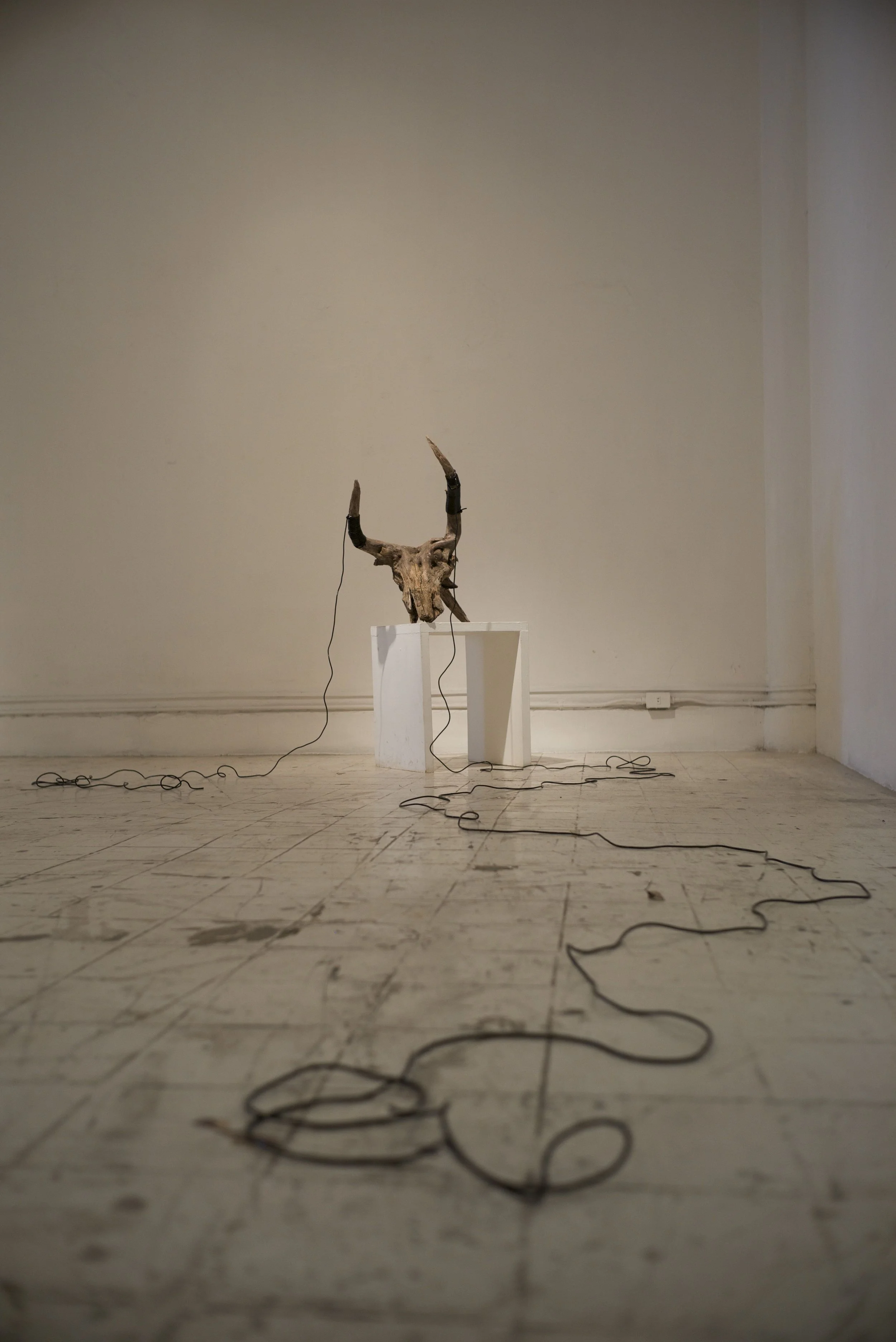
The floor of the gallery is heavily marked with dirty streaks and grime from its former use. This gritty floor makes a suitable ground for the sculptures, which reference plant life found in a scrubby terrain. Around the room are three bronze clusters of pod-like “fruit”—meant to suggest the dark, brown-black fruit of the huanacastle, a tree whose meaning in Zapotec is “the tree that listens.” Their scale is exaggerated; the scale shift is almost hallucinatory. (At the least, it is emphatic, underlining its symbolic significance.) A white one is suspended in a net, like the kind of container one uses to store garlic; another, a dark one, sits on the floor, and yet another stands on its side in front of a light, looking somewhat like a clam shell, lustrous with the light shining through. On a smaller scale is a low table with a red plastic cover, upon which sit 32 bronze casts of the same huanacastle fruit, this time life-size. Traditionally, the tree was an important source of nutrients in Oaxaca, and its fruit was a common sight drying on plastic coverings in the sun and moonlight. The number 32 is meaningful, being the artist’s age when his father died. The fruit becomes an offering and the table an altar. (In actuality, the artist’s family, as a memorial, planted many huanacastle trees on a piece of the father’s land near the coast of Oaxaca.)
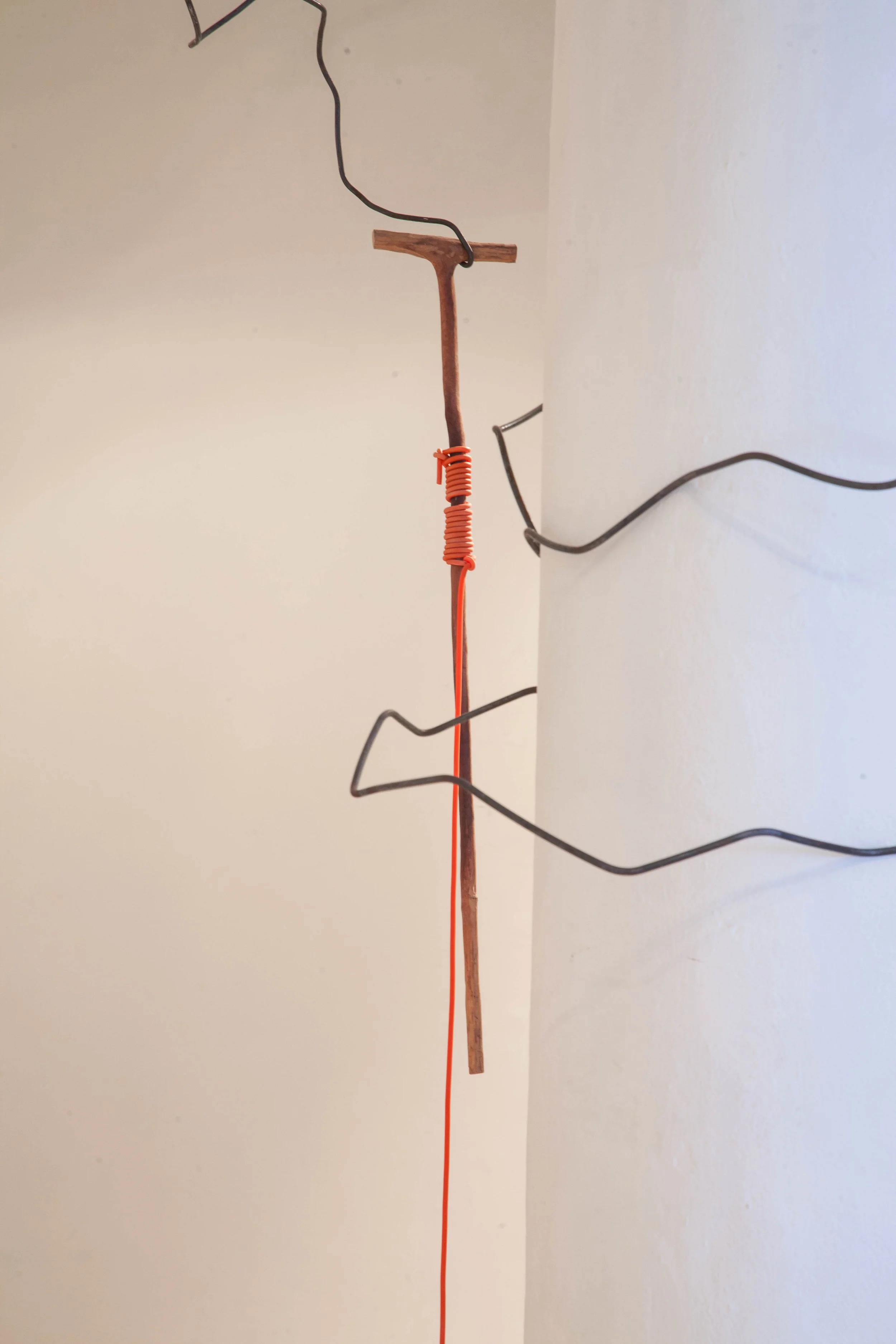
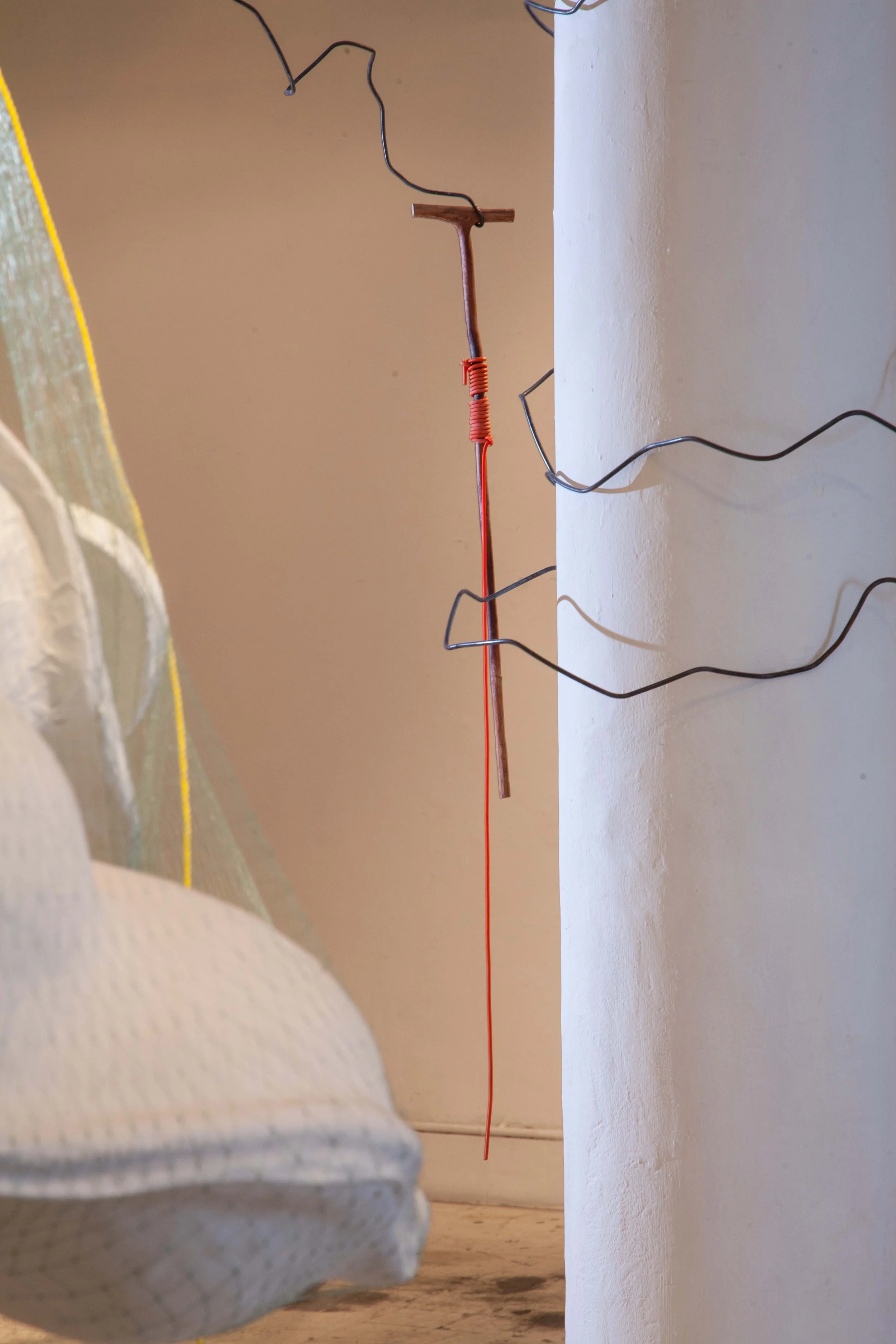
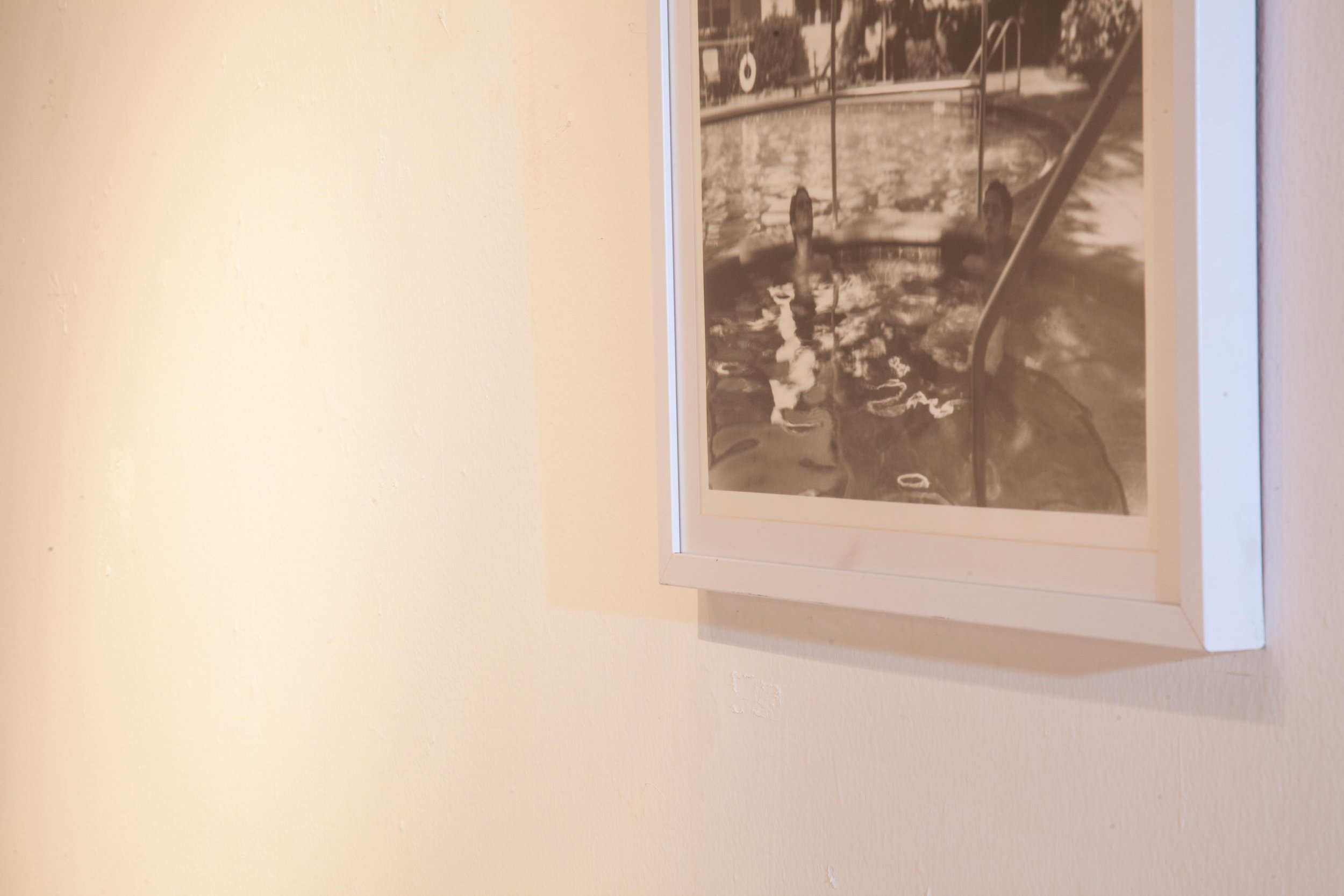
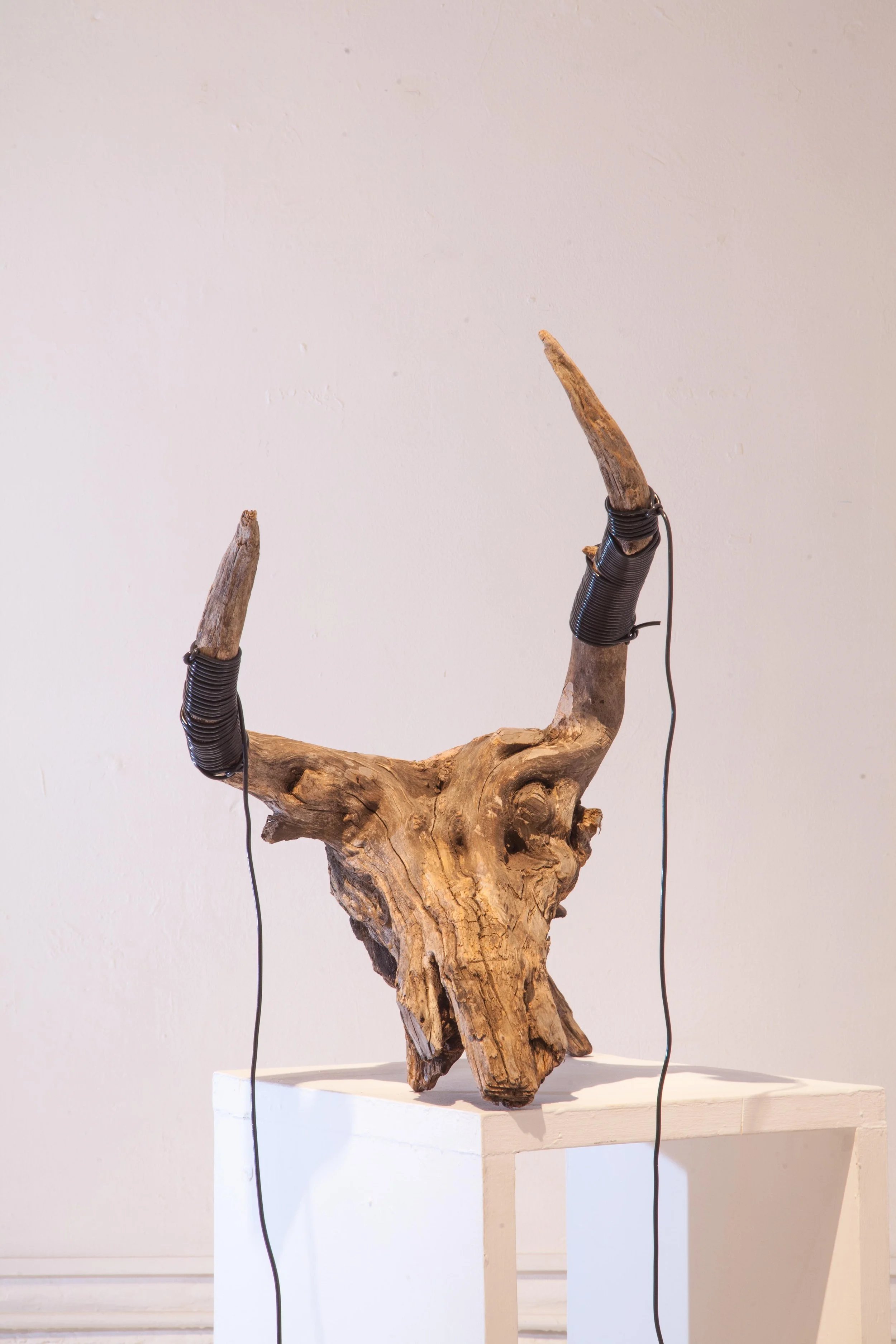
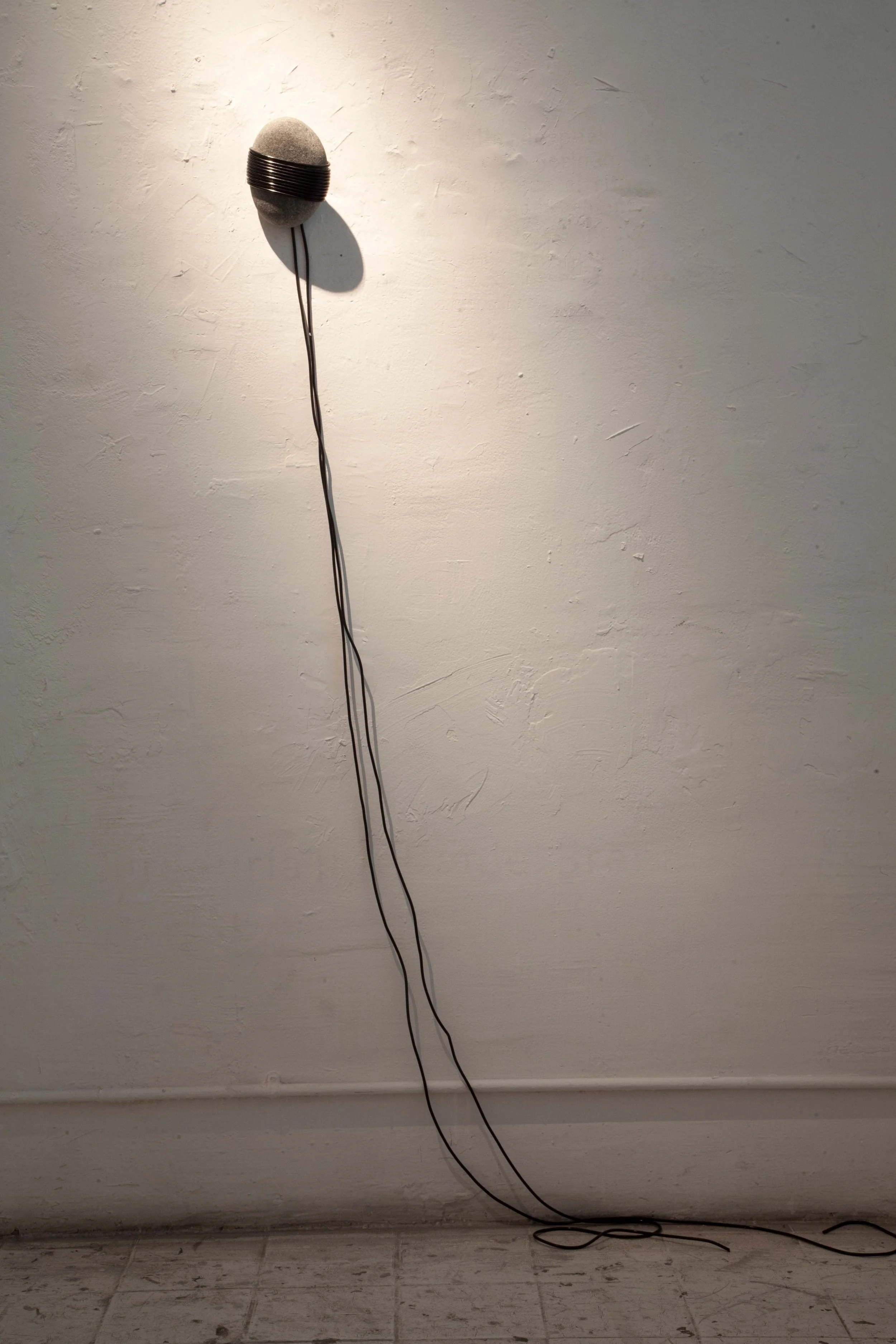
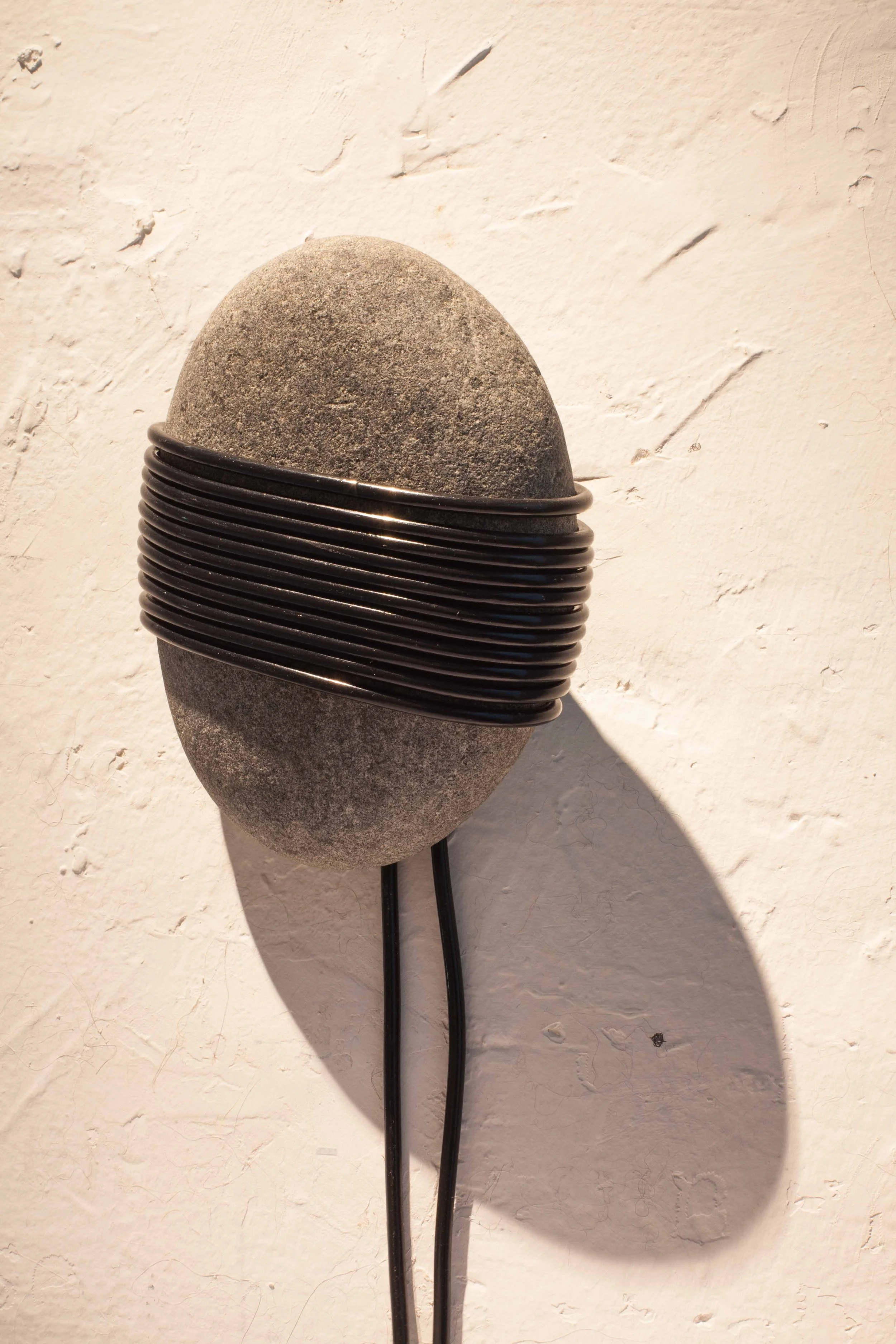
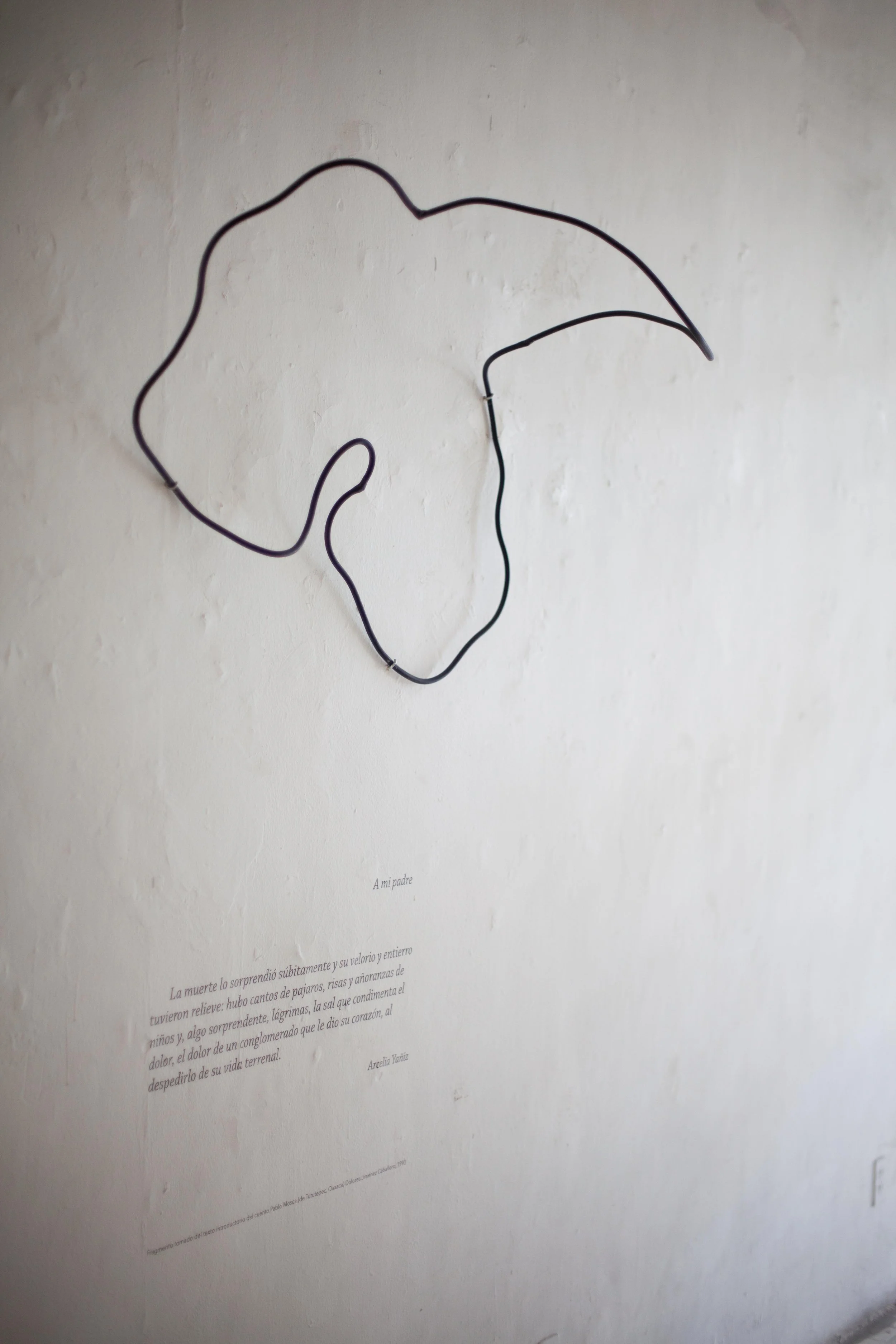
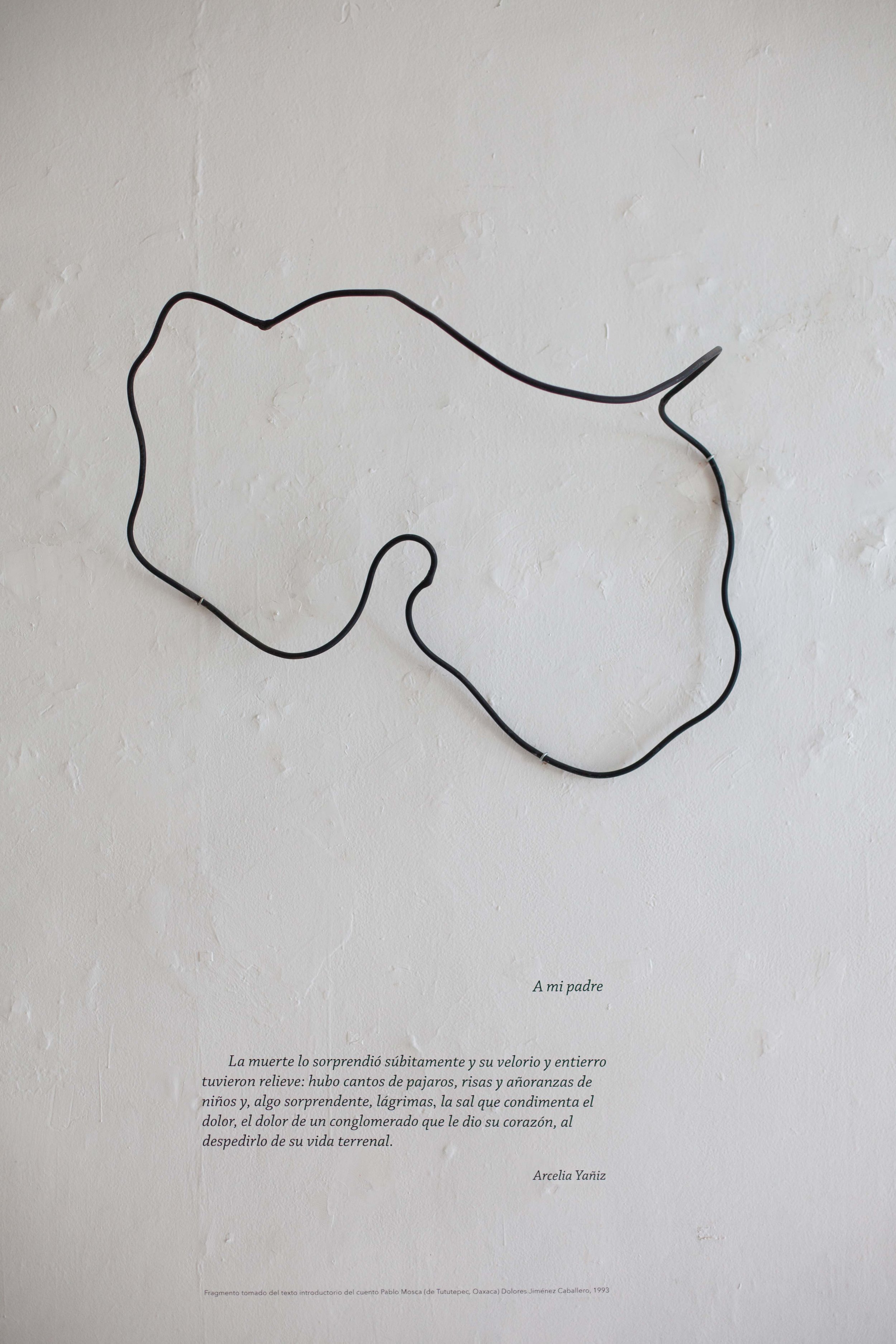
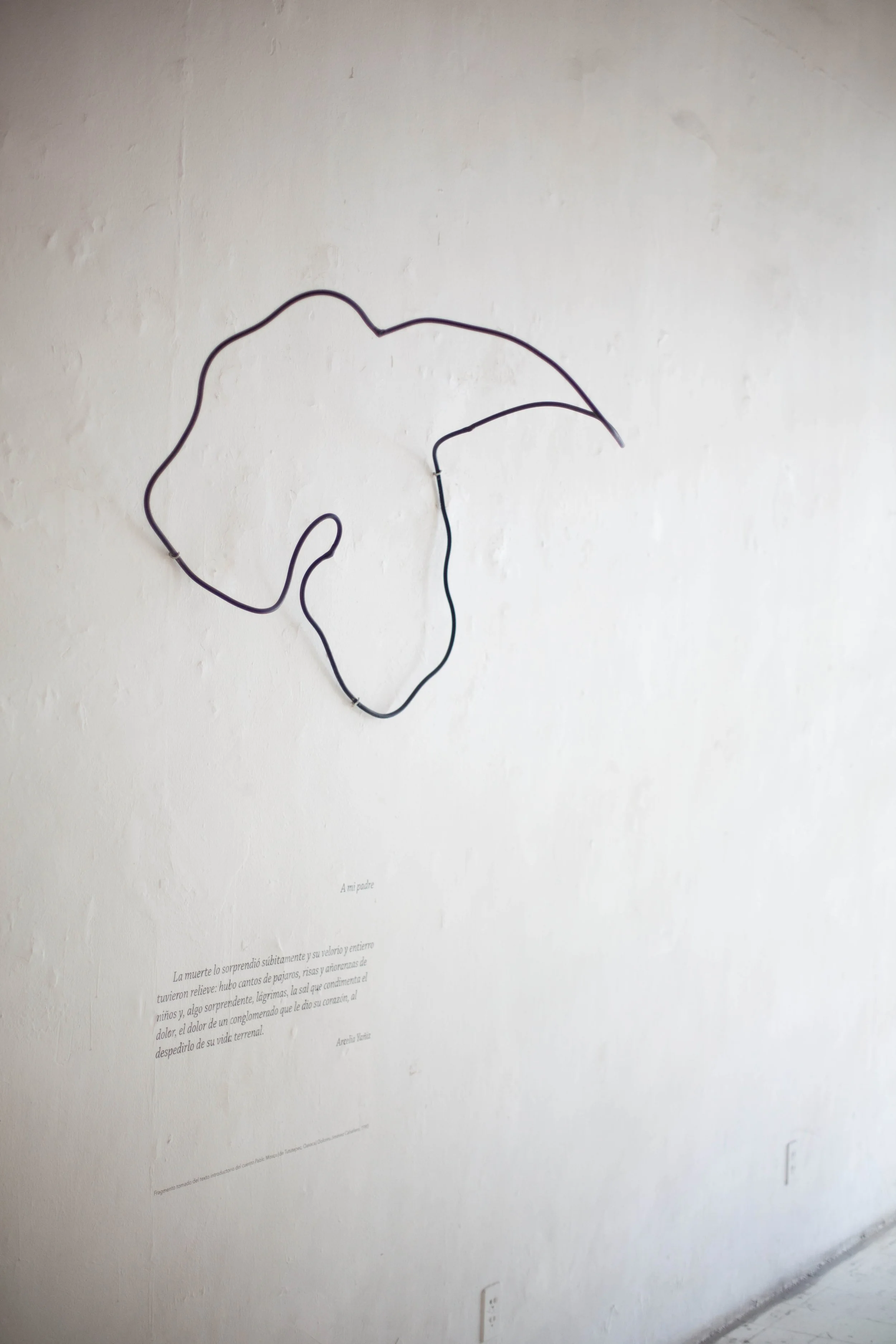
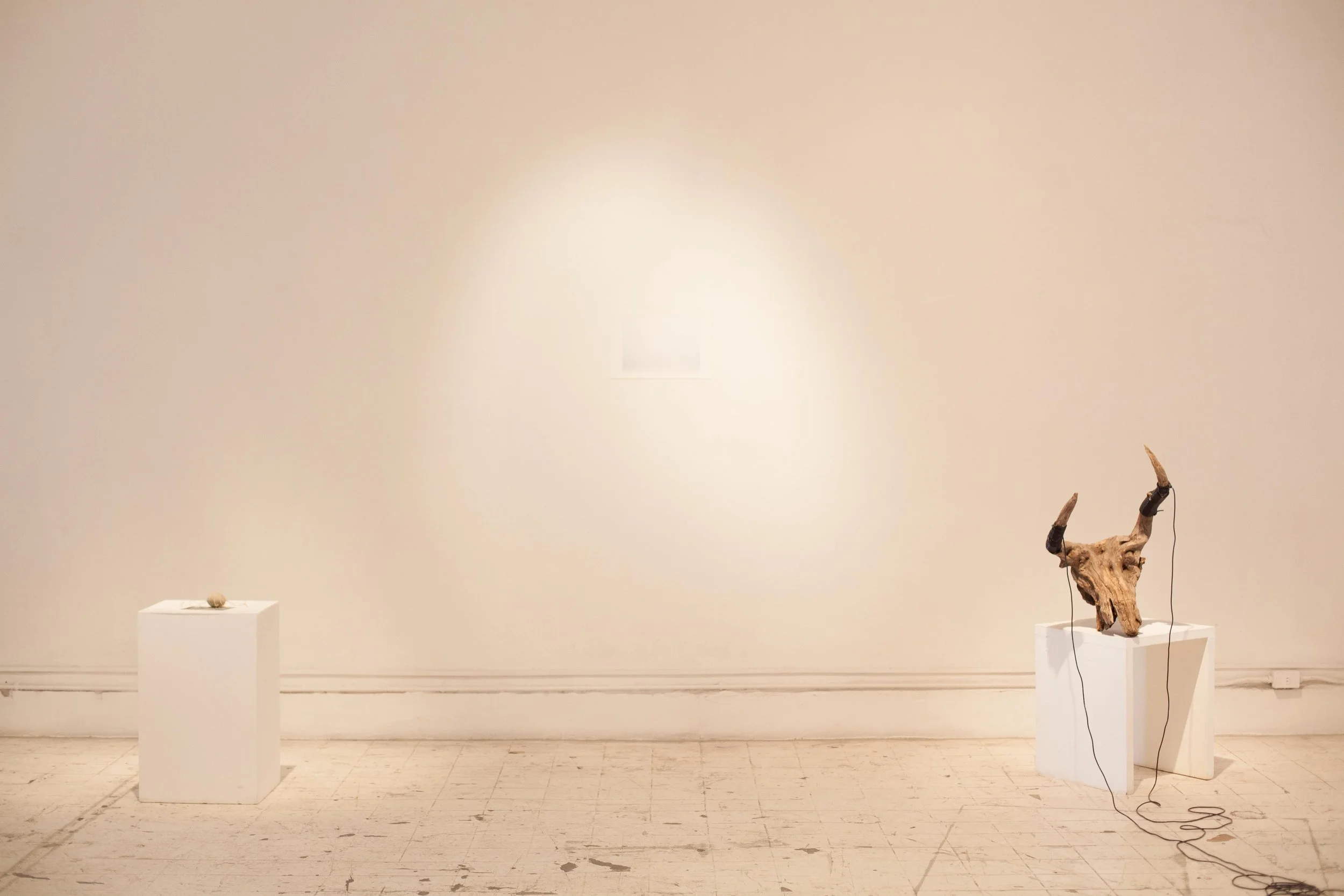
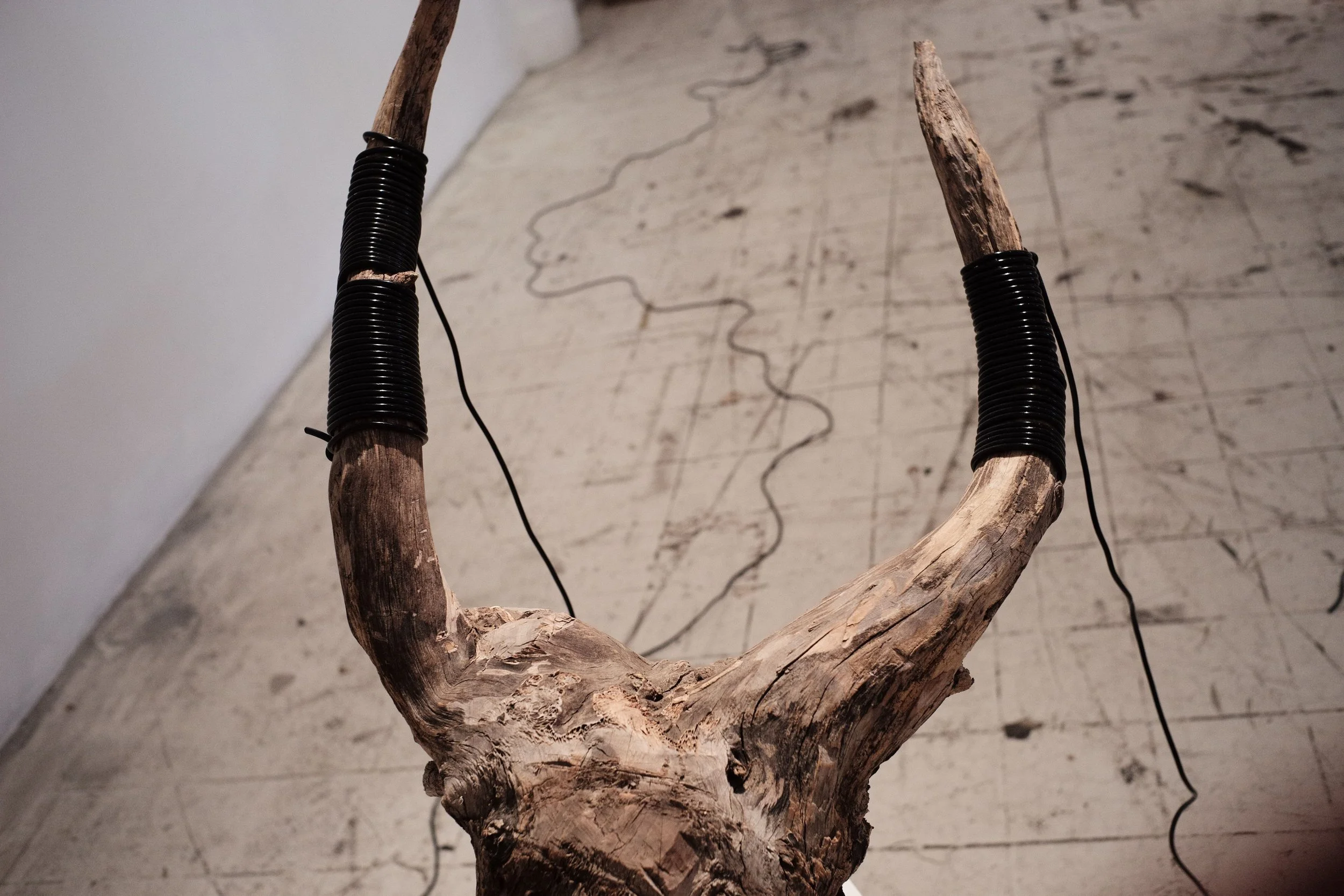
A thick black wire wraps around a central column in the space and juts out from it like a streak of lightning, holding at its tip a baton, wrapped in cord, referencing the batons found in Oaxacan villages, whose communities adorn them uniquely and pass them on from generation to generation, a token of power and authority. Thus, the idea of tribal governance hovers over the show, like an incantation. Photography and painting have an intertwined relationship that goes back to the 19th century, but Jimenez-Cuen’s attempt to create an interface between photography and sculpture is a new direction. Their combination is incongruous and formally challenging. The artist asks them to work together in Nativo, to represent seascape and landscape, with human presence denoted by the family photographs.
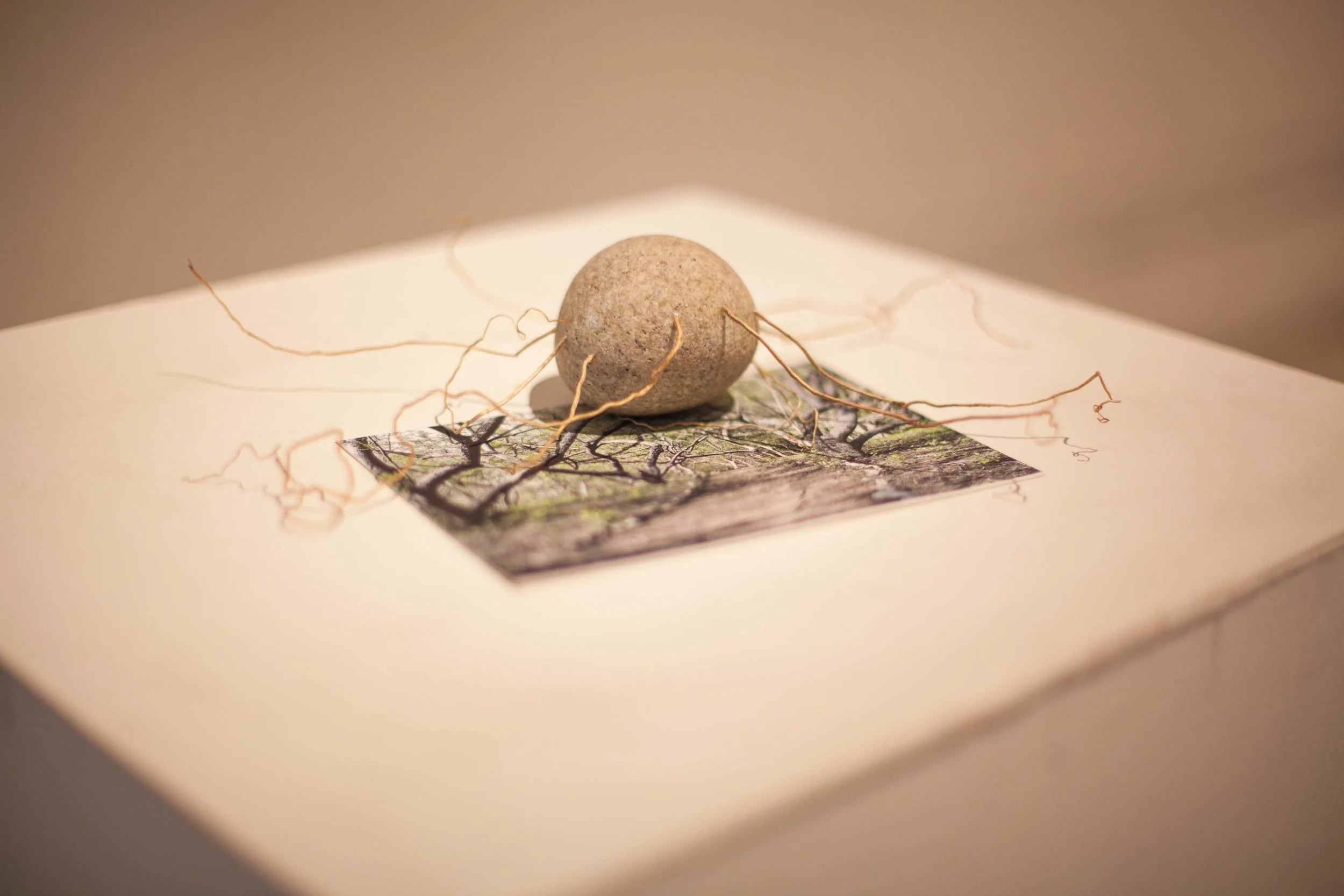
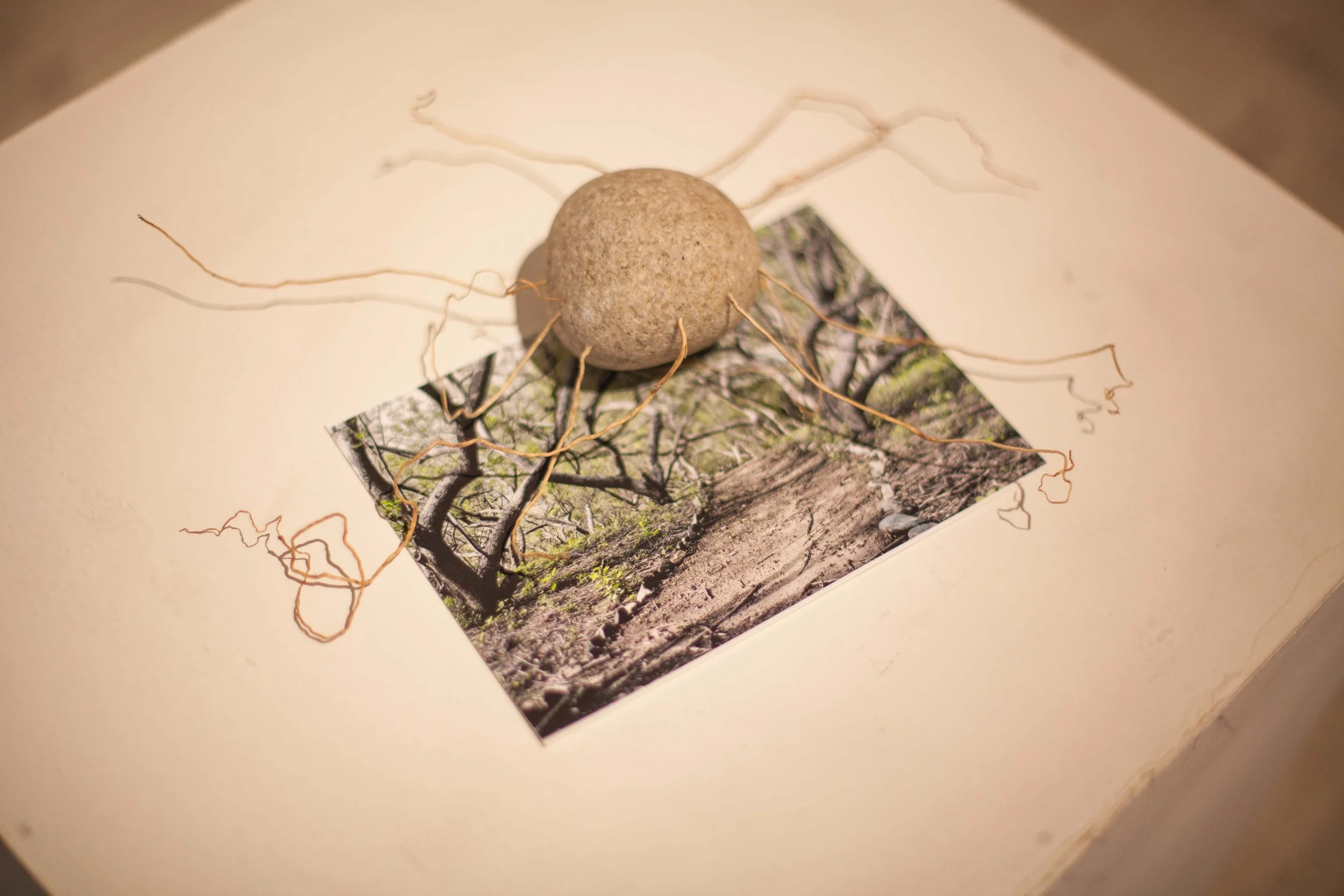
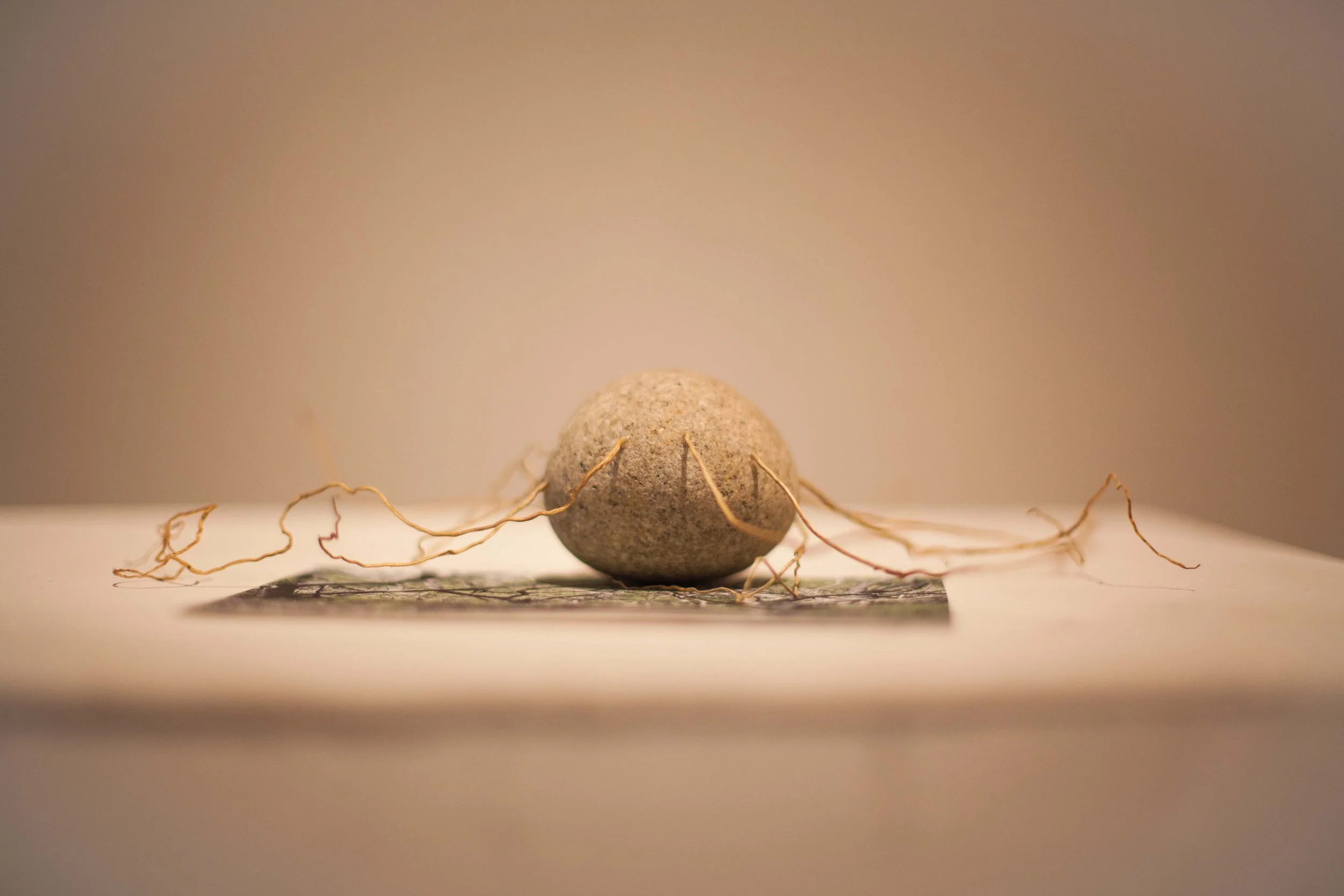
Besides the ambition of this sculpture/ photography pairing, perhaps the most striking aspect of Nativo is the casual shift in scale among the sculptural objects, from the exaggerated scale of the oversized pods to the miniature scale of a stone with roots growing out of it. Macro and micro perspectives share the same elemental stage, as the artist looks backwards and forwards through time to understand his place and identity.
—Allen Frame lives in New York where he teaches photography at the School of Visual Arts, Pratt Institute, and the International Center of Photography.